Vitalik Buterin Calls for Specialized Appchains Over Generic L2s
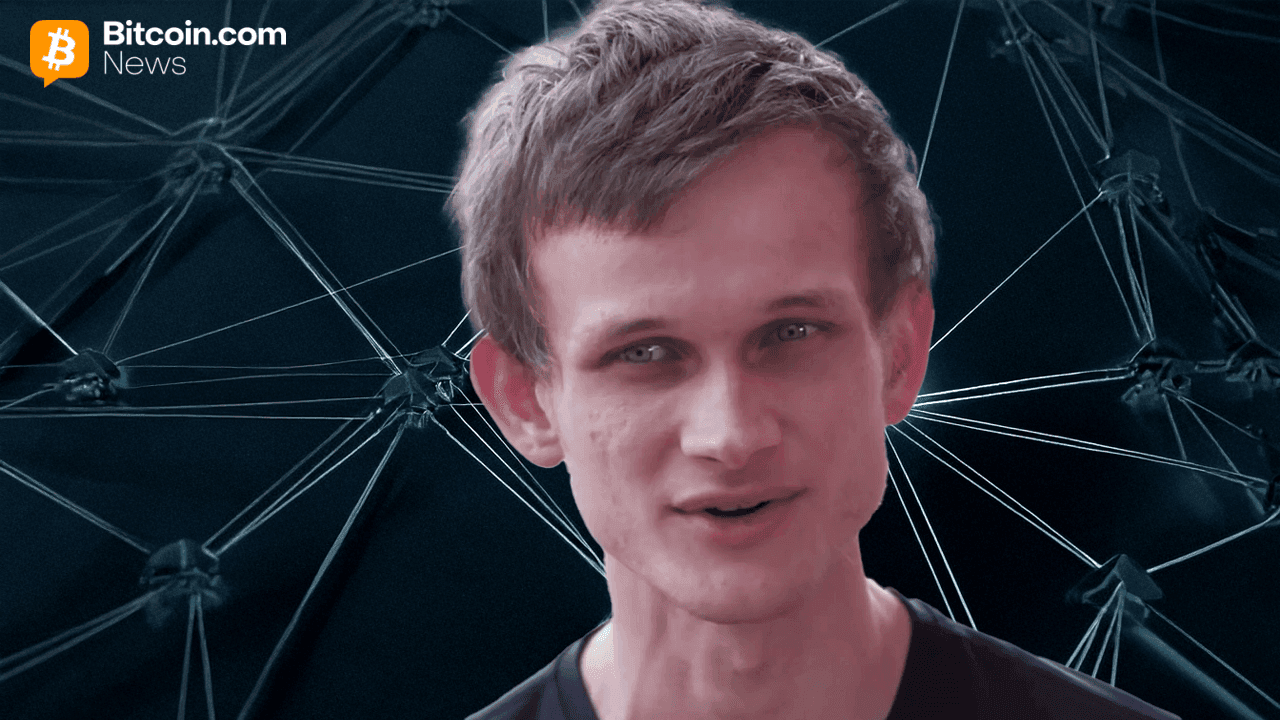
In a recent X post, Vitalik Buterin argued that two developments have quietly undermined the rollup-centric roadmap: slower-than-expected progress toward fully trustless stage-2 rollups and Ethereum’s own accelerating layer-one (L1) scaling, with low fees and sharply higher gas limits projected into 2026.
Buterin’s core point is blunt. L2s were once envisioned as “branded shards” of Ethereum, inheriting its full security guarantees while offloading execution. That framing, he said, no longer holds. Ethereum’s L1 is scaling directly, while many L2s are unwilling—or unable—to meet the security and decentralization standards that vision implied.

The post suggests that if an L2 never intends to move beyond stage 1, then it’s effectively just another chain with a bridge. While this may be rational for regulatory or business reasons, it should be described honestly. If that’s the case, then L2s are not scaling Ethereum in the strict sense originally promised.

Rather than discarding L2s entirely, Buterin laid out a narrower and more demanding role. Future L2s, he suggested, should focus on clear value-adds beyond raw scaling—such as privacy-focused virtual machines, ultra-low-latency execution for gaming or high-frequency trading, non-financial applications like identity or social platforms, or designs that push throughput far beyond what even an expanded L1 can handle.
The timing of the X post fueled debate after Buterin shared it on X, prompting sharp reactions from Ethereum developers and critics alike. Many approved of the message. Over the years many ETH devs have argued that gaming and high-frequency trading never belonged on L1s in the first place, and that application-specific chains make far more sense than one-size-fits-all rollups. Buterin’s post arrives just as Citrea has gone live, a development that could cast a chill over the latest Bitcoin scaling push and other efforts that rely on Ethereum.

Crypto journalist and podcaster Laura Shin weighed in on the exchange, noting that Buterin’s remarks echoed criticisms that have circulated for years. Shin said she wasn’t criticizing the position itself, but was struck by how long parts of the Ethereum community resisted acknowledging those trade-offs. “I’m just amazed that he said what a lot of critics have been saying for a while, and that for a long time some ETH people refused to acknowledge,” Shin wrote.
Beyond philosophy, Buterin’s post also revisited technical proposals aimed at tighter Ethereum- L2 integration. He highlighted the idea of a native rollup precompile—a built-in mechanism for verifying zero-knowledge Ethereum Virtual Machine proofs directly on L1. Such a feature, he argued, could enable safer interoperability and synchronous composability without relying on security councils or bespoke governance layers.
That vision connects to a separate research post Buterin published earlier this month on combining based rollups with sequenced rollups. The design attempts to balance low-latency transaction ordering with the ability to compose L1 and L2 actions atomically—an elusive goal in today’s fragmented rollup environment.
Also read: Bed Bath & Beyond to Acquire Tokens.com to Launch Tokenized Real‑estate Platform
Still, Buterin acknowledged the trade-offs. Some designs require L2s to revert when L1 reorgs, while others sacrifice permissionlessness unless forced-inclusion mechanisms are added. In a permissionless ecosystem, he argued, imperfect designs are inevitable; the priority is clarity about guarantees and risks.
The broader takeaway is less about abandoning L2s and more about narrowing their mandate. Ethereum, in Buterin’s telling, no longer needs L2s to carry the scaling narrative. Instead, L2s must justify themselves on specialization, not branding.
As Ethereum’s base layer grows cheaper and faster, the question facing builders is no longer how to extend L1—but what genuinely new capabilities they can add without pretending to be something they are not.
FAQ ❓
- What did Vitalik Buterin say about Ethereum L2s?
He argued that L2s should no longer be framed as “branded shards” of Ethereum as L1 scaling accelerates. - Why does Buterin think the original L2 vision no longer works?
Because Ethereum’s L1 is scaling directly while many L2s have stalled short of full trustlessness. - What role does Buterin see for future L2s?
Specialized appchains focused on privacy, latency, or unique use cases rather than generic scaling. - How did others respond?
Many approved and some disapproved or made fun of the decision. Laura Shin noted that Buterin echoed critiques long voiced by skeptics that parts of the Ethereum community once dismissed.