Unlocking Bitcoin’s Address Book: From P2PK to Taproot
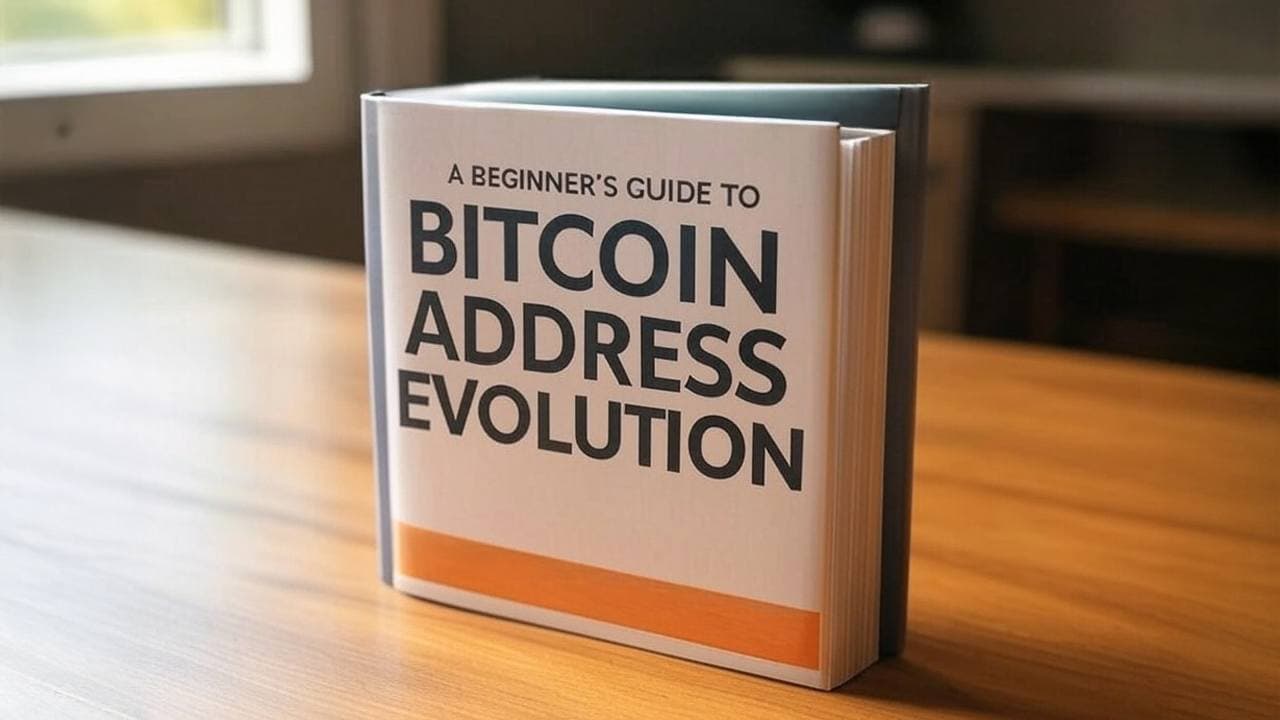
If you’re new to Bitcoin, understanding its address formats might feel like learning a new language. But fear not, because this informative editorial is here to guide you through the fascinating journey of bitcoin ( BTC) addresses, from the oldest to the newest. We’ll explore why these formats exist, how they work, and why they’ve evolved over time. Let’s dive into the world of Bitcoin addresses.
P2PK (Pay-to-Public-Key): The Genesis of Bitcoin Transactions
The journey begins with P2PK, the very first address format. Back in Bitcoin’s infancy in 2009, transactions directly used public keys. Imagine this like handing over your house key directly to someone; it was straightforward but not very secure or scalable. P2PK addresses were vulnerable because they exposed the entire public key, making them less private and more susceptible to quantum computing threats in the future.

P2PKH (Pay-to-Public-Key-Hash): Enhancing Privacy and Security
P2PKH came into play to address the security issues of P2PK. Here, instead of sharing your full public key, only a hash (a condensed version) of it is used for transactions. Think of it like giving someone a map to find your house rather than the key itself.
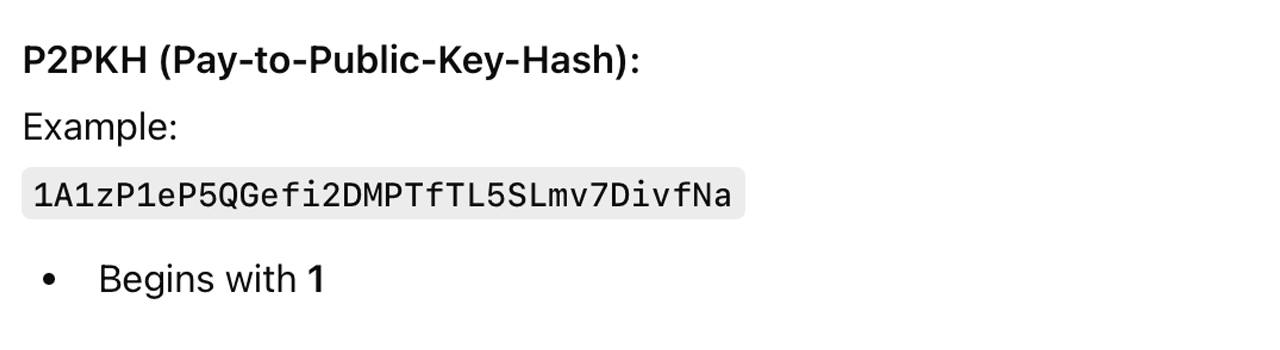
This format, starting with the number ‘1’, was a significant step toward privacy and security, making transactions cheaper and the addresses shorter. It’s the “legacy” address format many are familiar with today.
P2SH (Pay-to-Script-Hash): Introducing Flexibility
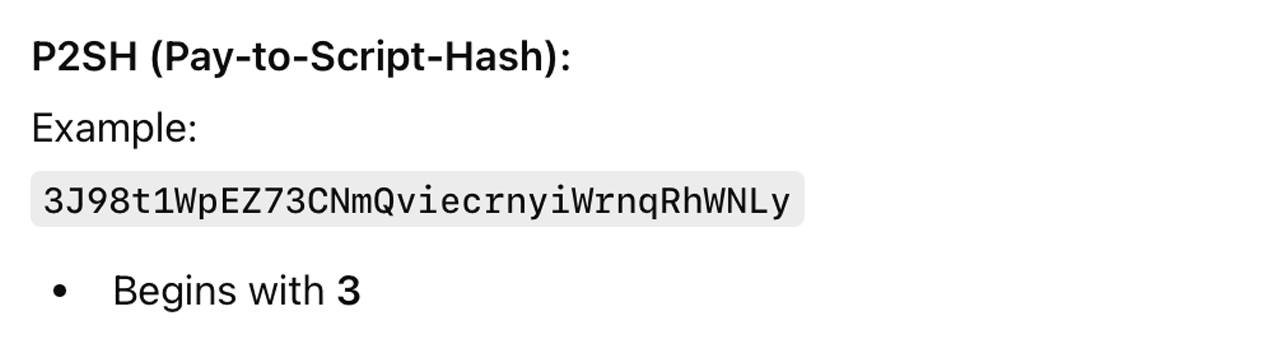
Introduced in 2012, P2SH brought a new level of flexibility to BTC transactions. These addresses, beginning with ‘3’, allow for more complex conditions to be set for spending the bitcoins. Imagine if you could set rules like needing multiple signatures to open a safe — that’s P2SH in a nutshell. This format was pivotal for multi-signature wallets and other advanced uses, enhancing security and enabling smart contract-like functionalities before they were common terms.
P2WPKH and P2WSH ( Segregated Witness): Addressing Scalability
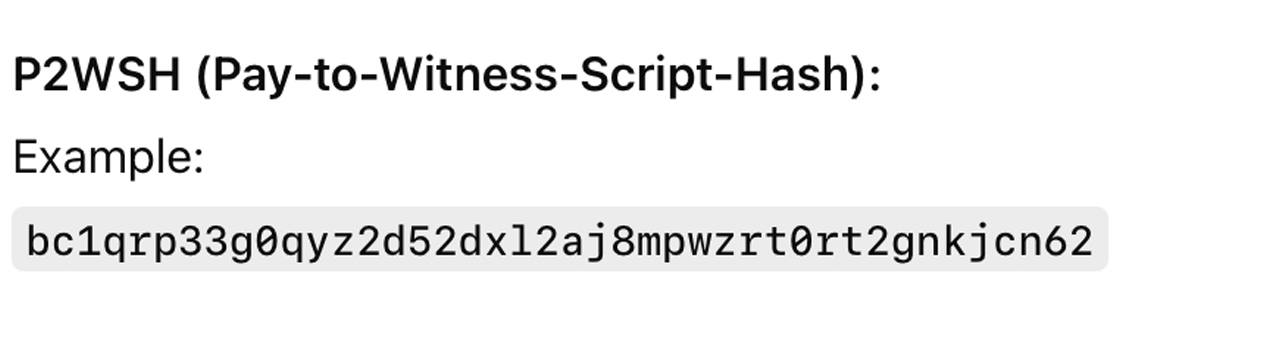
With the Segregated Witness (Segwit) upgrade in 2017, Bitcoin developers introduced P2WPKH and P2WSH. These formats, known as “Native Segwit” addresses, start with ‘bc1’.
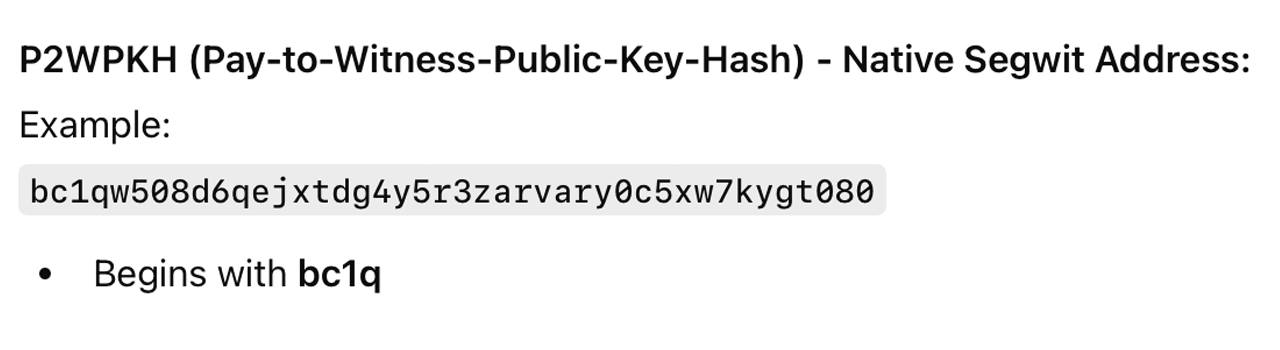
The primary aim was to solve Bitcoin’s scalability issues by restructuring how data in transactions was stored, making them smaller and thus reducing transaction fees and increasing the number of transactions per block. P2WPKH is essentially P2PKH with Segwit benefits, while P2WSH does the same for P2SH, allowing even more complex transaction scripts.
Taproot (P2TR – Pay-to- Taproot): The Future of Privacy
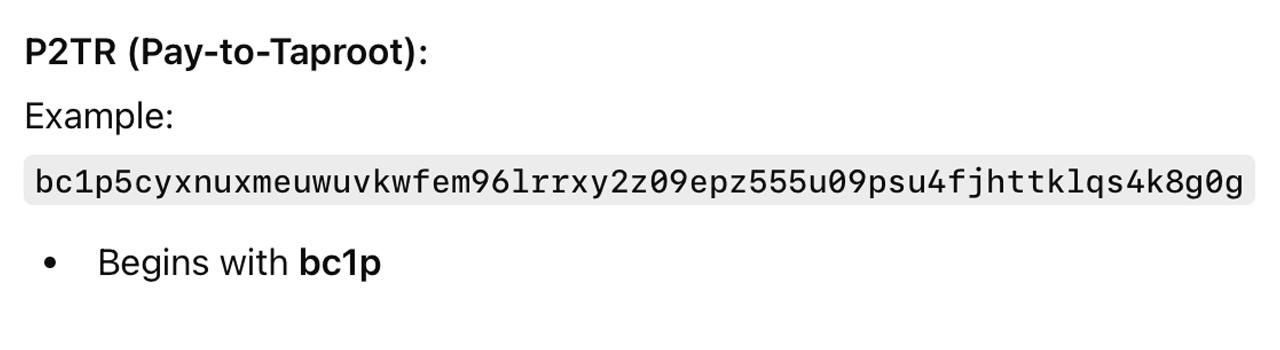
The latest twist in Bitcoin’s address saga is Taproot addresses, or P2TR, introduced in late 2021. These addresses also start with ‘bc1p’, offering enhanced privacy because all transactions look similar on the blockchain, regardless of their complexity. Taproot uses Schnorr signatures, which not only make transactions more private but also more compact, further reducing fees and increasing efficiency. Imagine if everyone in a crowded room whispered the same way, making it hard to distinguish who’s saying what; essentially, that’s Taproot’s privacy in action.
Navigate Bitcoin With Confidence
Why the Evolution? Each new format has been a response to Bitcoin’s growing pains. From enhancing security and privacy with P2PKH, to enabling complex transactions with P2SH, to dealing with scalability with Segwit, and finally, improving privacy and efficiency with Taproot, these changes reflect Bitcoin’s adaptation to its expanding user base and technological challenges.
What Does This Mean for Users? For Bitcoin newcomers, this evolution might seem complex, but it’s all about making your experience safer, cheaper, and more private. Whether you’re sending your first bitcoin ( BTC) or managing a wallet with multiple formats, this knowledge equips you to navigate the blockchain with confidence. As Bitcoin continues to evolve, so too will its address formats, each new version building on the legacy of the last to meet the demands of the digital age.