Unveiling the Ripple Effect: A Journey Through Ripple’s Origins and Impact
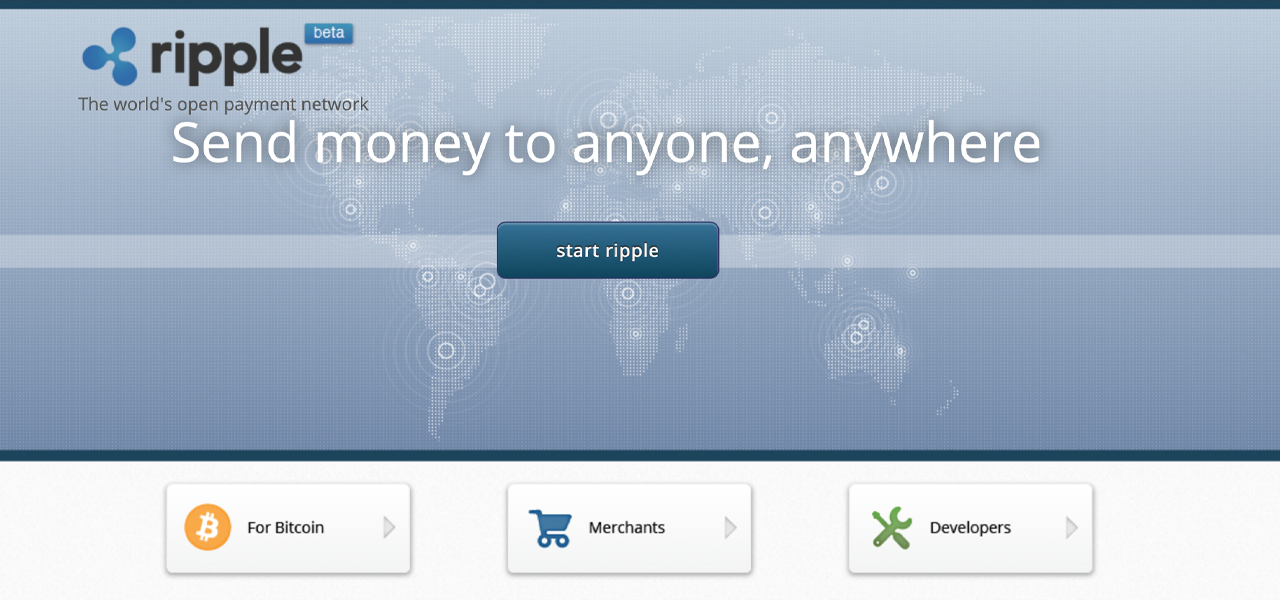
The origins of XRP can be traced back to 2004 when developer Ryan Fugger created a payments platform called Ripplepay to facilitate financial transactions. In 2012, Jed McCaleb, Arthur Britto, and David Schwartz built upon Fugger’s ideas to create Opencoin, which would later be renamed Ripple Labs. Ripple.com, once in the possession of a telecommunications company named Ripple Communications, underwent a pivotal shift in late 2012 when Ripple Labs assumed ownership.
The goal was to develop a real-time gross settlement system, currency exchange, and remittance network using the cryptocurrency XRP as a bridging asset. XRP was designed to offer speed, scalability, and stability. Transactions settle in 3-5 seconds, far faster than Bitcoin ( BTC), and the network can handle 1,500 transactions per second, dwarfing Bitcoin’s 7 transactions per second.
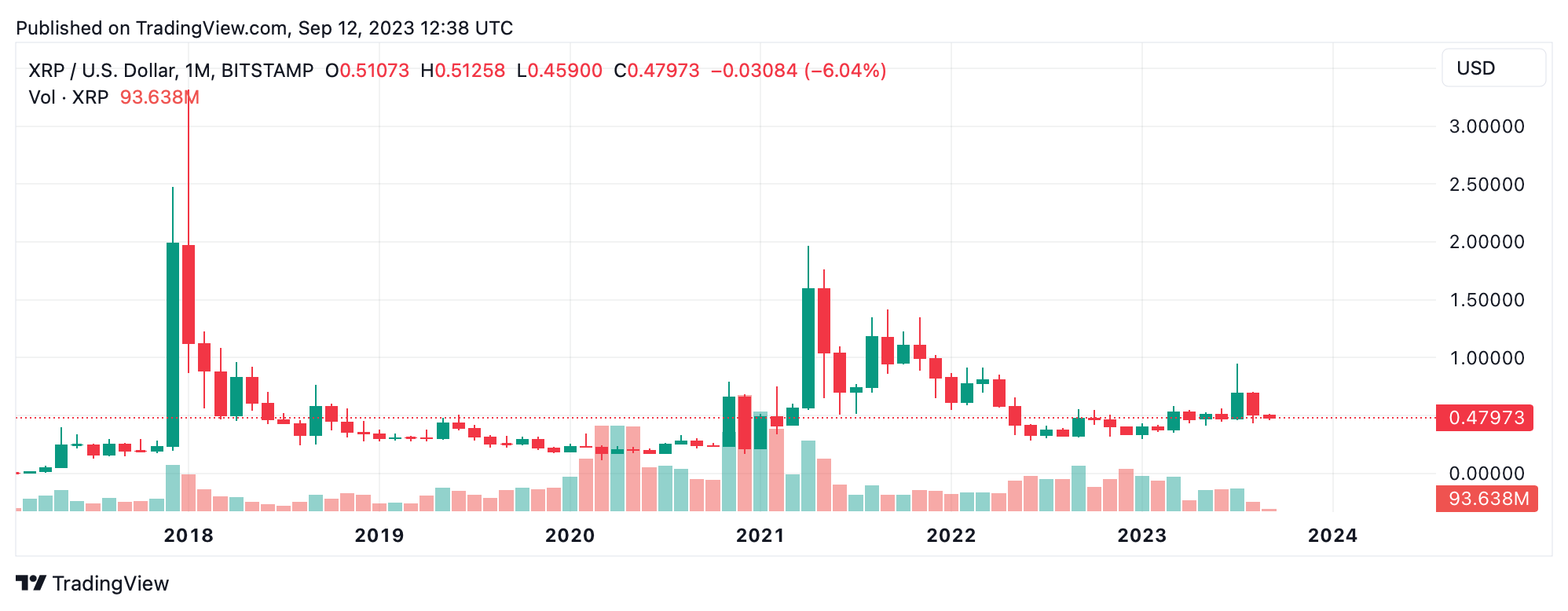
The total supply is 100 billion XRP, with 99,988,438 in circulation today, making it more abundant than scarce cryptocurrencies like BTC. XRP is currently the 6th largest cryptocurrency with a market capitalization of over $25 billion and 99 billion XRP in circulation. Nearly 5 million unique addresses hold XRP, though the distribution is top-heavy — the top 10 accounts own 11% of the supply and the top 100 holders command 33% of the total supply.
Ripple Labs continues to develop and promote Ripplenet, a network of banks and financial institutions that use XRP for global payments. Ripple claims this allows secure, instant, and nearly free cross-border transactions. Though founded by McCaleb, he left Ripple in 2013 to co-found the Stellar Development Foundation and XLM cryptocurrency, a fork of XRP.
Ripple is led by CEO Brad Garlinghouse, CTO David Schwartz, and other executives like Monica Long, the senior vice president of marketing, and Kristina Campbell, the firm’s chief financial officer. XRP’s main goal is to facilitate liquidity, instant settlement, and lower fees for the institutions on Ripplenet sending cross-border payments. Earthpoint, Fidor Bank, Bank of America, and HSBC are among the financial institutions that have utilized Ripple’s services.
The Regulatory Battle: Ripple’s Legal Challenges
However, some argue it is overly centralized and Ripple too closely controls the XRP supply. Understanding its origins and current landscape allows an informed perspective on the sometimes controversial, yet popular cryptocurrency. While new to many investors, XRP has been in development for well over a decade and it’s one of the oldest crypto projects. Nevertheless, Ripple has found itself entangled in a legal battle with the U.S. securities regulator for several years, and in the summer of 2023, the situation has taken an intriguing turn.
In December 2020, the U.S. Securities and Exchange Commission (SEC) filed a lawsuit against Ripple Labs and its executives, alleging they raised over $1.3 billion through an unregistered securities offering by selling XRP to retail consumers. This sparked a heated legal battle, with Ripple arguing XRP is sufficiently decentralized to be considered a commodity, not a security. The lawsuit has continued into 2023, creating massive uncertainty around XRP’s regulatory standing in the United States.
On July 13, 2023, Ripple Labs scored a partial victory in its legal battle with the U.S. Securities and Exchange Commission (SEC) over the sale of XRP tokens. The ruling by U.S. District judge Analisa Torres allowed some of the SEC’s claims to proceed to trial but dismissed others. However, the SEC is appealing the partial victory that Ripple Labs scored in its legal battle. On August 24, 2023, a judge granted the SEC’s request to appeal the matter.
What do you think about Ripple and XRP’s history? Share your thoughts and opinions about this subject in the comments section below.