

Central Bank Of Brazil Moves to Add Audit Requirement for VASPs
The Central Bank of Brazil has introduced yet another requirement to approve the operation of virtual asset service providers (VASPs) in the country.
Under Normative Instruction No. 739, issued on Friday, the bank now requires VASPs to present an independent audit from an entity registered with the Brazilian Securities and Exchange Commission (CVM) to issue operational licenses.
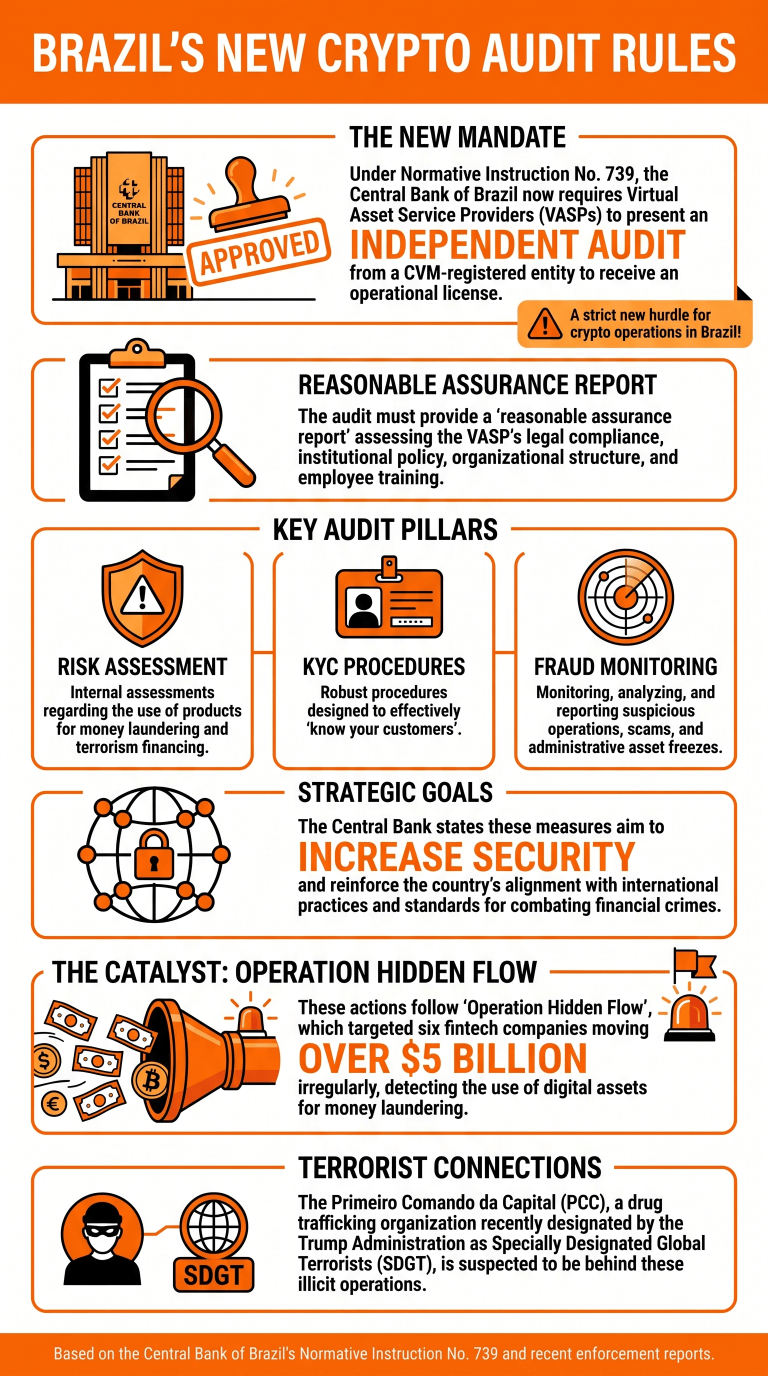
The audits, referred to as “reasonable assurance reports,” must contain data assessing the VASP’s legal compliance in different aspects, including institutional policy, organizational structure, and employee training; internal risk assessment regarding the use of the company’s products and services in the commission of money laundering and terrorism financing crimes; and procedures designed to get to know your customers.
Furthermore, this report should also assess the readiness of the audited VASP on monitoring, selection, analysis, and reporting of operations and situations suspected of money laundering and the financing of terrorism and weapons of mass destruction; monitoring and analysis of evidence of the occurrence or attempted occurrence of fraud and scams; and administrative asset freezes.
The bank stated that these measures aim to “increase the security of decisions in authorization processes, while reinforcing the country’s alignment with international practices and standards for combating these crimes.” It also reinforced that “verification by independent audit contributes to greater transparency and reliability in the controls adopted by companies in the sector.”
The actions come after Operation Hidden Flow, a high-stakes operation that targeted six fintech companies moving over $5 billion irregularly, detected the use of digital assets for money laundering.
The Primeiro Comando da Capital, a drug trafficking organization recently designated by the Trump Administration as Specially Designated Global Terrorists (SDGT), is suspected to be behind these operations.