
Why STRC’s Wild Session Matters to Bitcoin Treasury Bulls
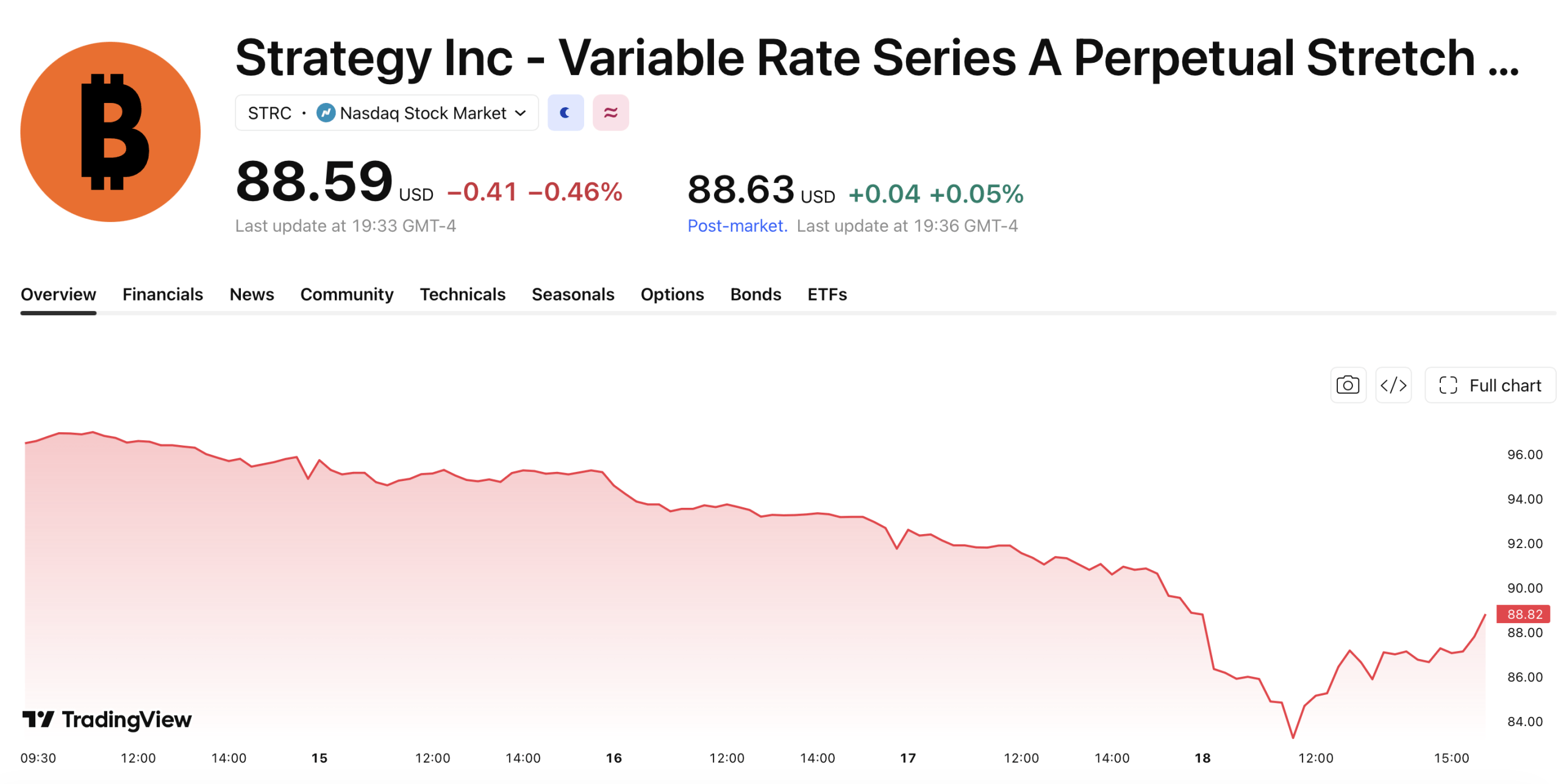
The move was not some polite tremor in the market’s teacup. STRC traded more than 10 million shares during a volatile session that shoved the security roughly 11% to 17% below its $100 par target, depending on whether investors look at the close or the intraday print.
For a product designed to behave like “digital credit,” the optics were awkward. Strategy, the bitcoin treasury company led by Michael Saylor and formerly known as Microstrategy, created STRC as a perpetual preferred stock with a variable dividend rate that can be adjusted monthly to encourage trading near par.
That mechanism is the grand idea. If STRC trades too low, the dividend rate can rise to lure buyers. If it trades above $100, Strategy can issue more shares through at-the-market programs to add supply and keep upside from running too hot.
The $100 Problem
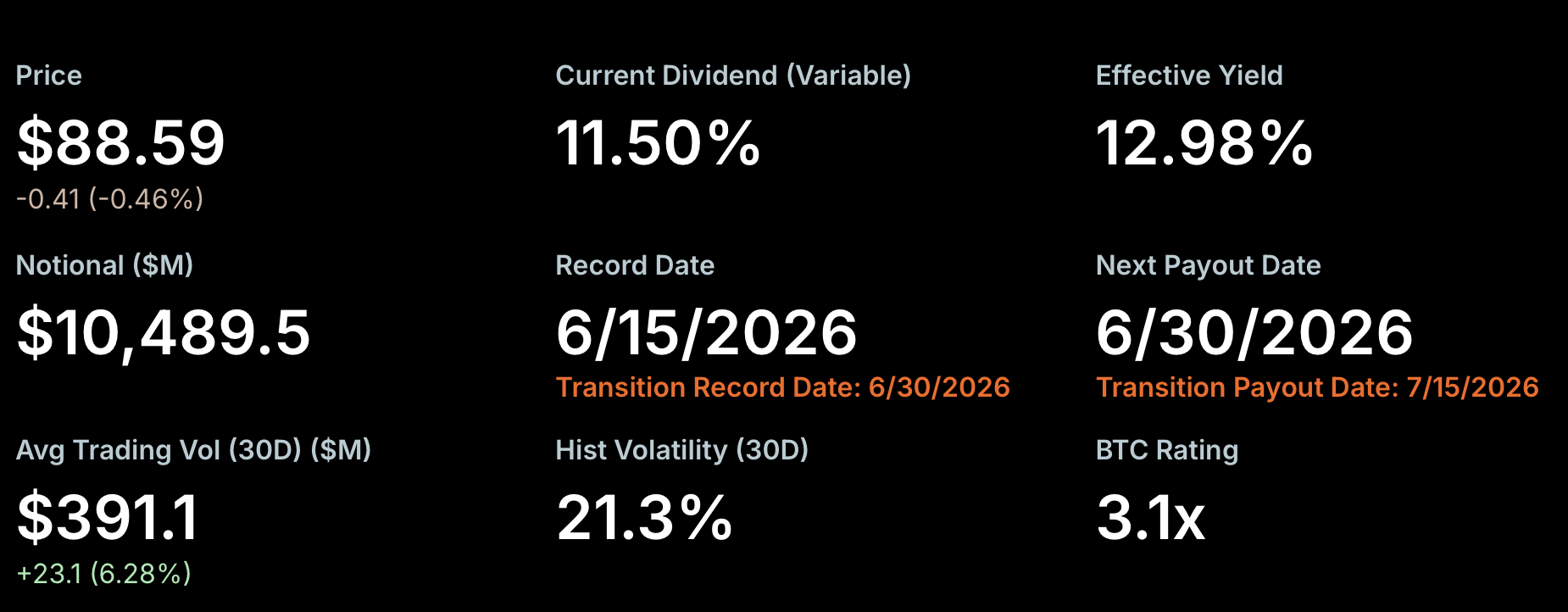
The current dividend rate sits at 11.50% annualized, paid semi-monthly in cash after shareholders approved a shift from monthly payments earlier in June. At Thursday’s closing price, the effective yield was roughly 12.98%, the sort of number that makes income investors lean forward and risk managers reach for coffee.
But the price action showed the market was not fully comforted by a bigger coupon. STRC’s fresh 52-week low, around $82.50 to $82.53, placed the preferred stock well below the level its mechanics were built to court.
Market commentary framed the episode less as a pure credit panic and more as a leverage flush. Investors who treated STRC like a calm, high-yield cash machine may have discovered the ancient truth of markets: Anything financed with leverage can develop claws when prices move the wrong way.
Jesse Myers of The Smarter Web Company said STRC’s fall to $82.60 looks like “a liquidation cascade,” not a failure of Strategy’s model. He said months of tight trading near $99 to $100 “invited leverage,” setting up a “leverage wipeout” as shorts and margin calls intensified selling. Myers argued on X that Strategy’s balance sheet remains unchanged, dividends can continue, and current buyers may be getting “a tremendous entry price.”
Responding to Myers’ STRC analysis, the X account Colin Talks Crypto warned that the pressure may not be finished if bitcoin’s bear market “is not over.” The account said BTC could fall further in the months ahead, potentially bottoming “in/around October,” and argued that additional weakness in bitcoin would amplify stress across STRC and related market positions.
Forced selling can become its own little monster. As prices fall, margin calls pressure leveraged holders, which can push more shares into the market and drag prices further from the instrument’s intended anchor.
Bitcoin Stack Meets Income Trade
STRC matters because it is not just another preferred stock sitting in a dusty corner of the capital markets. Strategy uses proceeds from STRC and sister securities, including STRK, STRF and STRD, primarily to buy more bitcoin.
As of mid-June, updates via company filings, Strategy held approximately 846,842 BTC. That makes the performance of its capital-raising machinery more than a side plot for bitcoin traders. It is part of the company’s broader acquisition engine.
STRC has roughly $10.49 billion in notional outstanding. It is listed on Nasdaq and available through most brokerages, making it easy for retail and institutional investors to access, but accessibility does not make it a money market fund in a tuxedo.
Strategy’s own disclaimers are central here. Dividends are not guaranteed, the rate can be adjusted lower, and the preferred securities are not directly collateralized by the company’s bitcoin holdings. They have a preferred claim on residual assets after debt, which is standard preferred equity territory, not a vault receipt for BTC.
Saylor’s AI-Designed Credit Experiment
The drama also revived old clips of Saylor discussing how AI helped him iterate on Strategy’s preferred stock lineup. In the interview, Saylor has described using AI to explore structures for a preferred product designed to remain stable around $100 while feeding Strategy’s bitcoin accumulation strategy.
That anecdote now has meme fuel. Bulls see a novel financing tool being stress-tested in public, with the variable rate doing what it was built to do by compensating investors as price weakens. Critics, like gold bug Peter Schiff, see a young credit experiment wobbling beneath leverage, competition, and questions about dividend coverage.
“Crickets today from CNBC on the collapse of STRC, the selloff in MSTR, its widening discount to NAV, and what that portends for future common stock or bitcoin sales,” Peter Schiff wrote on Thursday. “CNBC provided Saylor with lots of airtime to scam their audience. The least they can do is report their losses.”
Schiff added:
“STRC traded down to 82.53 today. That’s a decline of 17.5% from what most investors paid last month, and a new record-low price for what was promoted on CNBC as a safe investment with little downside risk.”
Competition is part of the story. Strive’s SATA has been cited in recent market discussion as a rival product that has stayed closer to par while offering daily dividends and a slightly higher yield. That comparison is not flattering when STRC is wandering in the $80s.
There are also questions about how far the rate can rise before the math becomes less charming. The dividend mechanism may attract buyers, but if higher payouts fail to restore confidence, the structure could face tougher scrutiny from investors watching coverage, issuance, and bitcoin-related market volatility. Colin Talks Crypto may not be wrong.
For now, STRC’s Thursday close at $88.59 offered relief from the intraday low, but not a clean victory. The instrument survived the session, yet the market sent a blunt message: Digital credit may be inventive, but it still trades in the same arena where leverage, fear, and liquidity enforce their own etiquette.