Blockchain technology is the foundation of cryptocurrencies like Bitcoin. It’s a secure and transparent way to record and verify transactions, removing the need for intermediaries like banks.
Use the multichain Bitcoin.com Wallet app, trusted by millions to safely and easily buy, sell, trade, and manage Bitcoin and the most popular cryptocurrencies.
Blockchain: The Tech Behind Crypto
Blockchain technology is the revolutionary system behind cryptocurrencies like Bitcoin. It’s a secure, transparent, and decentralized way to record and verify transactions, getting rid of the need for middlemen like banks. This guide explains blockchain, its importance in crypto, and how it works.
What is Blockchain?
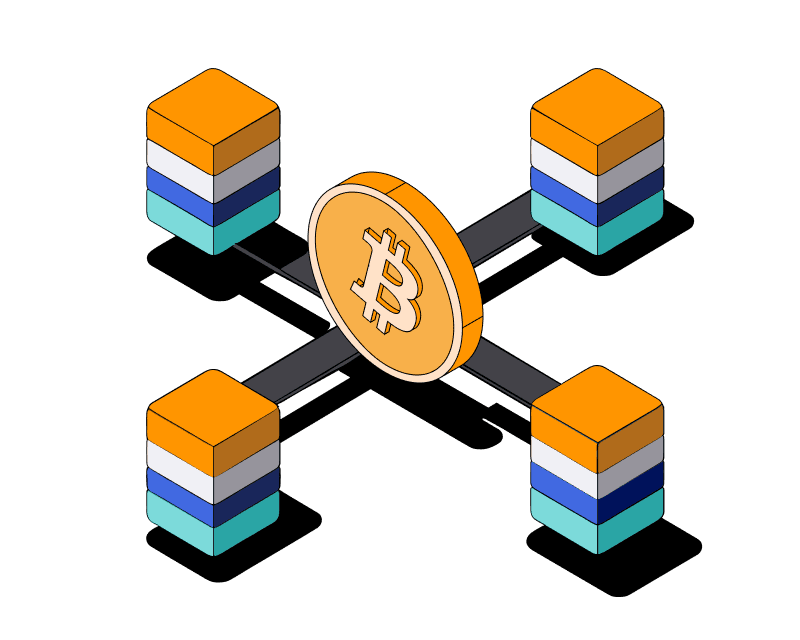
Think of a digital record of transactions, copied and shared across many computers. This record keeps growing as new “blocks” of transactions are added, forming a chain – hence “blockchain.” This setup makes it tough to tamper with and resistant to failure.
Key features:
- Decentralized: Unlike traditional databases stored on central servers, a blockchain is spread across a network of computers. This makes it resistant to single points of failure and censorship.
- Secure: Blockchain uses cryptography, complex mathematical techniques, to secure the information stored within it. Each block is linked to the previous one using unique codes, making it extremely difficult to tamper with the data.
- Transparent: Transactions are viewable (on public blockchains), although individual user identities are typically anonymized. This transparency promotes accountability and trust.
How Does Blockchain Work?
- Transaction Request: A transaction (like sending Bitcoin) is sent to the network.
- Verification: Computers (“nodes”) check the transaction details.
- Block Creation: Verified transactions are grouped into a “block” by special nodes called ‘miners.’
- Adding to the Chain: “Miners” (Proof-of-Work) or “validators” (Proof-of-Stake) solve complex mathematical problems to add their block to the blockchain. This process, known as ‘mining,’ requires significant computational power and energy.
- Confirmation and Immutability: Once a block is added to the chain, the transactions within it are considered confirmed. Since each block is cryptographically linked to the previous ones, altering past transactions becomes virtually impossible, ensuring data integrity.
Blockchain and Crypto
Blockchain is key for cryptocurrencies. It provides the secure and transparent system for:
- Tracking Ownership: Records who owns what.
- Transferring Value: Enables secure transfers between users without the need for intermediaries.
- Maintaining Integrity: Blockchain’s immutability prevents counterfeiting and double-spending of cryptocurrencies.
Blockchain Beyond Cryptocurrencies
Blockchain’s uses are growing:
- Supply Chain: Tracking products from origin to consumer, ensuring authenticity and transparency.
- Voting: Creating secure and tamper-proof digital voting platforms for transparent elections.
- Healthcare: Securely storing and sharing patient data while maintaining privacy.
- Digital Identity: Enables secure, self-sovereign digital identity management online.
- Real Estate: Simplifies real estate transactions with secure, transparent, and automated processes through smart contracts.
- Tokenization: Turning real-world assets (RWAs) into digital tokens.
- DeFi: Building a more open financial system.
- NFTs: Verifies ownership of unique digital and physical assets.
- The Metaverse: Building immersive digital worlds.
Types of Blockchains
- Public Blockchains: Open to everyone, allowing full transparency and decentralization. Examples include Bitcoin and Ethereum.
- Private Blockchains: Controlled by a single entity or group, often used for internal data management within organizations.
- Permissioned Blockchains: A hybrid of public and private blockchains, allowing restricted access while maintaining decentralization in certain aspects.
Blockchain Layers
Blockchain technology is structured in multiple layers, each playing a key role in functionality, security, and scalability within decentralized networks. These layers work together to facilitate data transfer, consensus mechanisms, smart contracts, and user applications.
Each blockchain layer contributes to a scalable and interconnected ecosystem:
- Layer 0 – Facilitates interoperability and communication between Layer 1 blockchains, forming the foundation for a connected network.
- Layer 1 – The base protocol (e.g., Bitcoin, Ethereum) that ensures security, consensus, and decentralization.
- Layer 2 – Enhances scalability and efficiency by enabling faster transactions and lower fees (e.g., Lightning Network, Polygon).
- Layer 3 – Provides user-friendly applications such as dApps, making blockchain more accessible for real-world use cases.
Examples of Blockchain Layers in Action
Bitcoin
- Layer 1: Bitcoin blockchain
- Layer 2: Lightning Network, Rootstock (RSK), Liquid Network, Stacks (STX), Build On Bitcoin (BOB)
Ethereum
- Layer 1: Ethereum mainnet
- Layer 2: Polygon, Arbitrum, Optimism, zkSync, StarkNet, Loopring, Immutable X, Metis, Base, Mode, Lisk, Linea, Fuel
- Layer 3: Degen, zkLink, Xai
Polkadot
- Layer 0: Polkadot
- Layer 1: Moonbeam, Astar
Cosmos
- Layer 0: Cosmos Hub
- Layer 1: Various interconnected blockchains, such as Celestia, Dymension, Injective
Blockchain Advantages
- Security: Tough to hack. Cryptographic security measures make blockchain highly resistant to fraud and data breaches.
- Transparency: Open and accountable. Publicly viewable transactions promote trust and accountability.
- Efficiency: Eliminating intermediaries speeds up transactions and reduces costs.
- Decentralization: No single point of control. Distributing control across a network enhances resilience and reduces censorship risks.
- Immutability: Ensures data permanence by preventing unauthorized changes.
- Traceability: Easy to track transactions.
Blockchain Disadvantages
- Scalability: Handling a large volume of transactions can be challenging for some blockchains.
- Regulation: The lack of clear regulatory frameworks in some jurisdictions poses challenges for blockchain adoption.
- Energy Use: The mining process for some blockchains, like Bitcoin, requires significant energy consumption.
- Complexity: Can be hard to understand.
The Future of Blockchain
Blockchain is always changing. Key areas of improvement include making it faster, letting different blockchains work together, and improving privacy. Blockchain is also being used to connect with real-world things and for new ways of making decisions. As blockchain gets better, it will change many industries. As the technology continues to evolve and mature, we can expect to see even more innovative applications emerge in the future.
Getting Started with Blockchain
- Learn: Explore our Learning Center.
- Get a Wallet: Create a crypto wallet.
- Experience blockchain in action: Learn about dApps, DeFi, and NFTs.
- Buy Crypto: Learn how to buy Bitcoin and other cryptocurrencies.
By learning about blockchain, you can understand the future of technology and finance.