Building a Layer 2 (L2) network or using L2 as appchains may seem like a promising solution, but for many developers, it presents significant challenges. These hurdles make it less appealing despite the perceived benefits.
Here are the key reasons why L2 as appchains is not an optimal choice for developers:
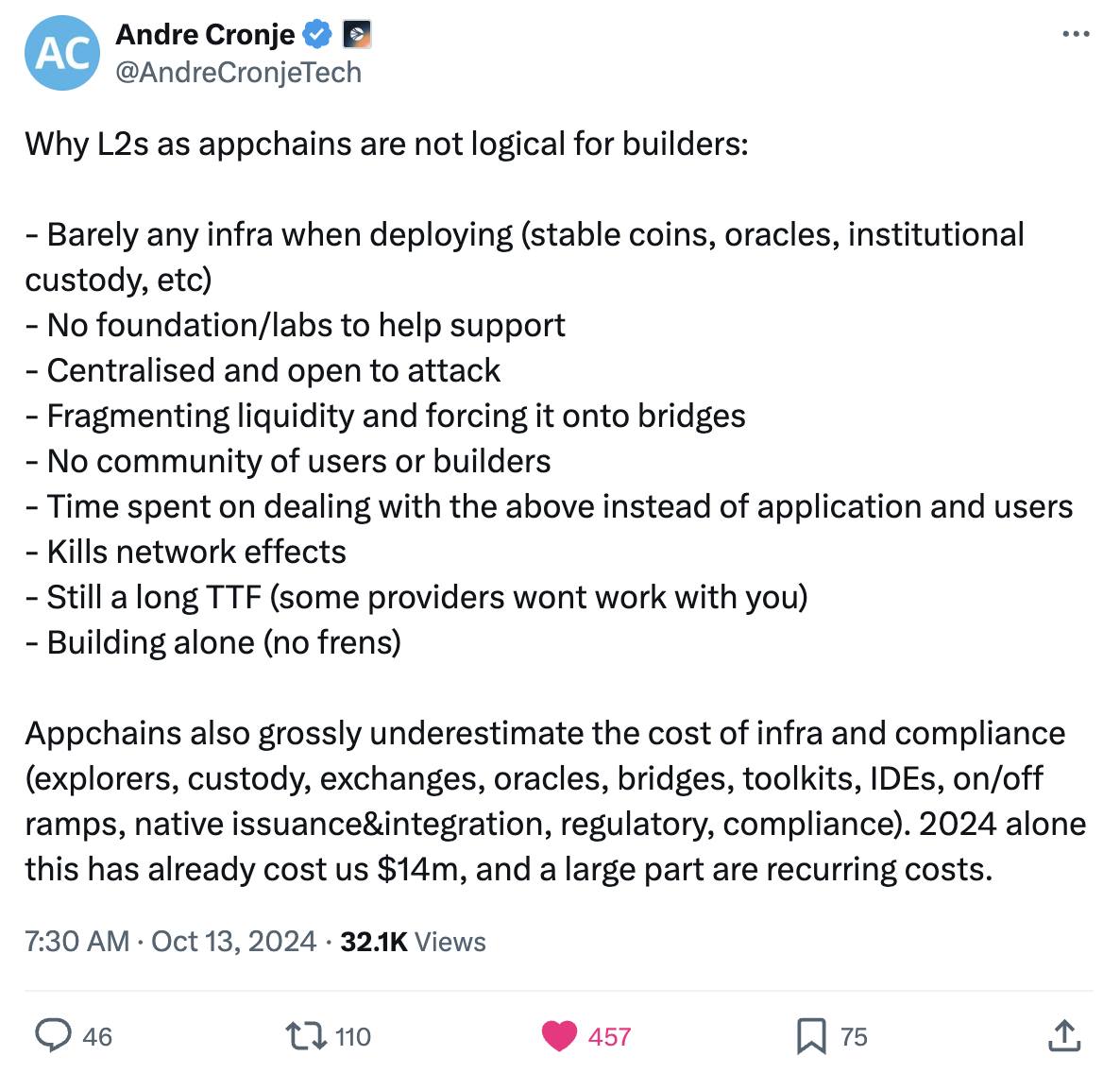
- Limited Infrastructure
L2 networks lack essential tools such as stablecoins and oracles that are crucial for decentralized applications (dApps) to function efficiently. - Lack of Institutional Support
Many projects building on L2 do not receive adequate support from institutions or venture capital, which complicates the development process and increases the financial burden on teams. - Centralization Risks
L2 networks are often more centralized than Layer 1 (L1) solutions, which makes them more vulnerable to attacks and reduces the overall security of the platform. - Fragmented Liquidity
Liquidity is often split across different L2 networks, making it difficult for users to interact with dApps without using bridges. These bridges introduce additional risks, such as potential hacks and security breaches. - Lack of User and Developer Community
Building on an L2 often means facing a lack of community adoption. Developers struggle to attract both users and contributors, leading to a slower rate of growth and innovation. - High Infrastructure and Compliance Costs
The cost of maintaining the infrastructure for an L2 solution is extremely high, including operational expenses and regulatory compliance. These costs can quickly spiral out of control, as seen with some projects.
Real-World Example: The Case of Sonic (Formerly Fantom)
One of the most eye-opening examples comes from Andre Cronje, the prominent figure behind the Fantom blockchain. He revealed that just in the year 2024, the cost of developing Sonic (formerly Fantom) skyrocketed to $14 million USD 💸. This highlights how building on L2 can be far more expensive than initially anticipated.
Why Appchains on L2 Might Not Be Worth It
The ambition to create appchains on L2 faces considerable obstacles. Developers must weigh the costs against the benefits and the overall sustainability of the network. While L2 solutions promise lower fees and faster transactions, the high infrastructure costs, lack of institutional support, and fragmented liquidity can make it a difficult and risky endeavor.
Conclusion
Building a Layer 2 solution may seem like a promising option at first glance, but the reality is that it comes with significant costs—both in terms of money and resources. Developers must navigate a complex ecosystem that lacks the full-fledged infrastructure and support that Layer 1 chains offer.
For those considering an L2 appchain, it’s crucial to evaluate whether the long-term benefits will outweigh the short-term challenges and financial investment.