
The launch of Bitcoin in 2009 sparked a financial revolution, introducing a decentralized digital currency free from government control. This article explores Bitcoin’s journey, its impact, the rise of alternative cryptocurrencies, the evolving regulatory landscape, and the transformative potential of decentralized finance (DeFi).
Explore Bitcoin and crypto with the Bitcoin.com Wallet app, a secure platform trusted by millions. Use the multichain Bitcoin.com Wallet app to safely and easily send, receive, buy, sell, trade, and manage Bitcoin (BTC), Bitcoin Cash (BCH), and popular cryptocurrencies.
The Genesis of Bitcoin: A Cypherpunk’s Dream
The story of Bitcoin begins with the vision of a decentralized digital currency, free from government and financial institution control. Amidst the 2008 financial crisis and growing distrust in centralized systems, a person or group using the pseudonym Satoshi Nakamoto published the Bitcoin whitepaper on October 31, 2008, titled “Bitcoin: A Peer-to-Peer Electronic Cash System.” This document laid the groundwork for a new financial era.
On January 3, 2009, the genesis block of the Bitcoin blockchain was mined, marking the birth of Bitcoin and a technological and financial revolution.
Bitcoin’s Core Principles: A Paradigm Shift
Bitcoin introduced core principles that set it apart from traditional currencies:
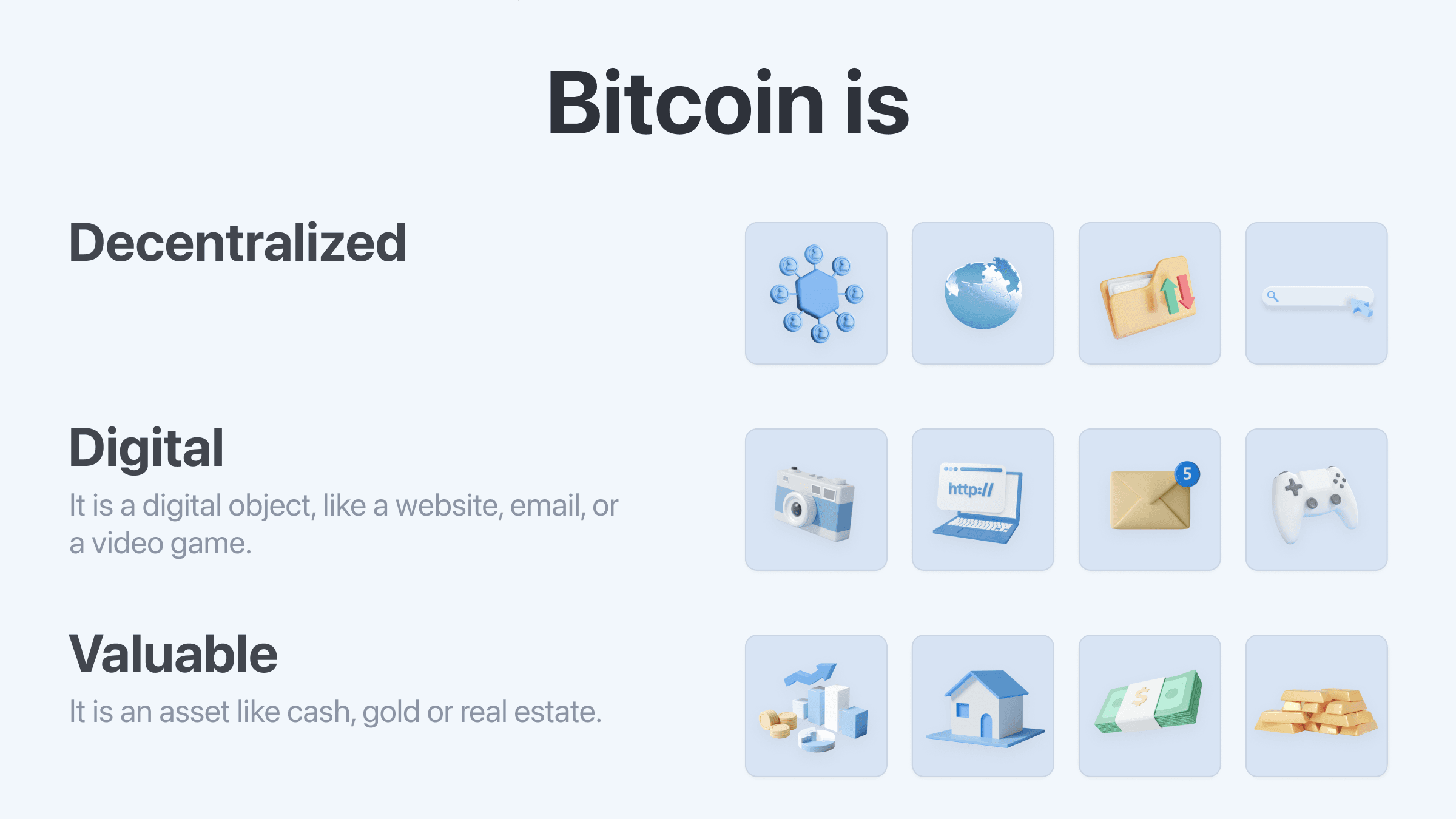
- Decentralization: Bitcoin operates on a distributed network, resistant to censorship and single points of failure.
- Transparency: All Bitcoin transactions are recorded on the public, immutable blockchain, promoting accountability and trust.
- Security: Cryptography secures Bitcoin transactions, making them virtually impossible to counterfeit.
- Scarcity: Bitcoin’s supply is capped at 21 million coins, making it deflationary.
These features created a new asset class, challenging the traditional financial system.
The Rise of Altcoins and the Scaling Debate
Bitcoin’s success led to the creation of altcoins, expanding the crypto landscape. Ethereum introduced smart contracts and decentralized applications (dApps). Other altcoins include Bitcoin Cash, prioritizing on-chain scaling.
Bitcoin’s growing adoption led to scalability challenges, sparking debate about increasing block size versus off-chain solutions like the Lightning Network. This debate resulted in the Bitcoin Cash hard fork in 2017.
The Regulatory Landscape and the Rise of DeFi
The rise of cryptocurrencies presented regulatory challenges. Governments are grappling with how to classify and regulate these assets. Decentralized finance (DeFi) emerged as a transformative application of blockchain, offering financial services without intermediaries.
Bitcoin Today and the Future of Digital Currencies
Bitcoin has evolved into a store of value, often compared to digital gold. Its scarcity, decentralization, and security make it a hedge against inflation. Innovations like Bitcoin Ordinals are also exploring new possibilities.
The future of Bitcoin and digital currencies is influenced by technological advancements, regulations, and user adoption. The rise of DeFi, central bank digital currencies (CBDCs), and blockchain innovation are transforming finance. Bitcoin’s impact is undeniable, and it continues to reshape the financial landscape.