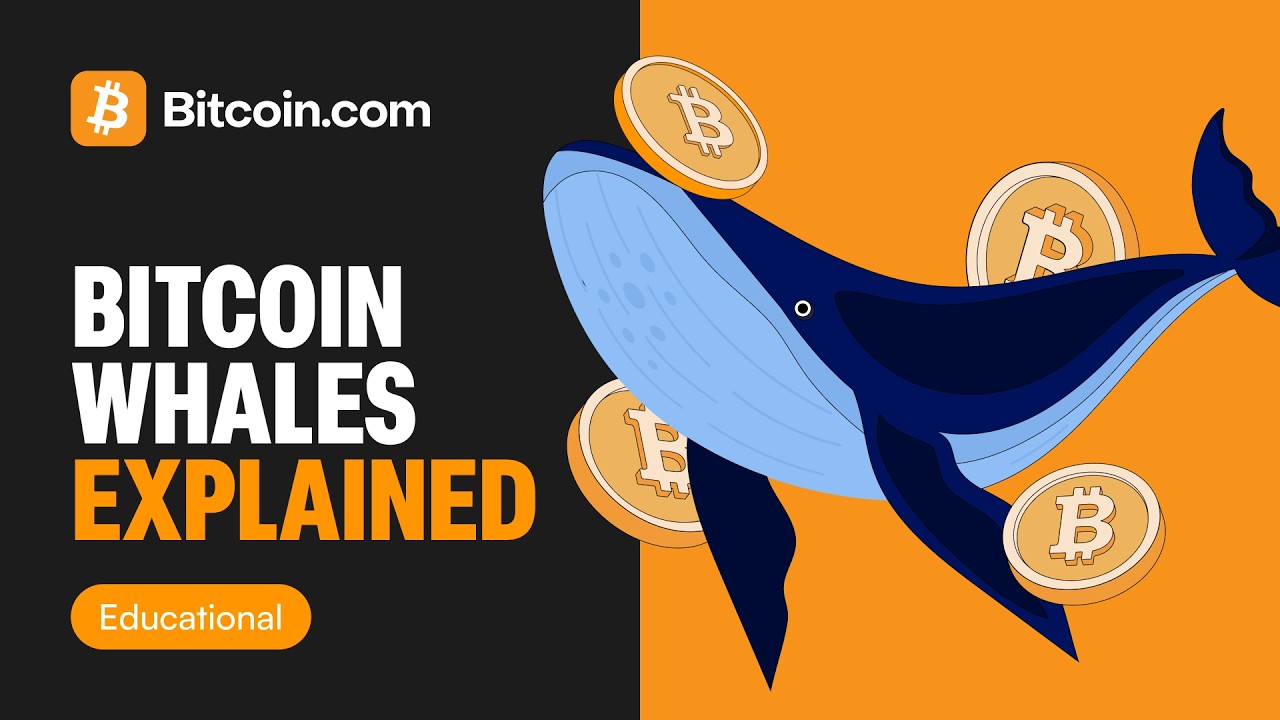
In the cryptocurrency world, a “whale” refers to an individual or entity that holds a significant amount of a particular cryptocurrency. In the case of Bitcoin, whales are those who hold large quantities of BTC, often enough to influence market prices. This article explores the concept of Bitcoin whales, their impact on the market, their typical trading strategies, and how their actions can affect the price of Bitcoin.
Manage your Bitcoin and other cryptocurrencies securely with the self-custody Bitcoin.com Wallet app.
Bitcoin Whales: Their Impact on the Market
Bitcoin whales, holding vast amounts of BTC, can significantly influence the market. This article explores their impact, trading strategies, and effect on Bitcoin’s price.
Defining a Bitcoin Whale
A Bitcoin whale is an individual or entity holding a substantial amount of Bitcoin. While there’s no strict definition, owning thousands of Bitcoins typically qualifies one as a whale. These large holdings give whales the potential to influence market prices through their trading activities.
Influence on Bitcoin’s Price
Whales’ large transactions can create significant price swings. Selling large amounts can cause a price drop, while buying can push it up. This influence is more pronounced in periods of lower trading volume, where whale activity has a greater relative impact.
Whale Trading Strategies
Whales often employ specific strategies:
- Market Making: Placing large buy and sell orders to profit from the spread.
- Arbitrage: Exploiting price differences between exchanges.
- Long-Term Holding: Believing in Bitcoin’s long-term potential.
- Swing Trading: Profiting from short-term price swings.
- Accumulation/Distribution: Gradually buying or selling large amounts to minimize market impact.
Tracking Whale Activity
Several methods exist for tracking whale activity:
- Blockchain Analysis: The blockchain provides full transparency, allowing anyone to examine large transactions and address balances. Understanding how Bitcoin transactions work is key to analyzing on-chain activity. Use blockchain explorers to track significant transactions-these may indicate whale activity or market movements. By leveraging blockchain analysis, you can gain valuable insights into market trends and potential price movements.
- Exchange Order Books: Observing large buy and sell orders on exchanges.
- Whale Alerts: Services that track and report large cryptocurrency transactions.
- On-Chain Analytics: Specialized firms analyze blockchain data to identify patterns and potential whale activity.
The Impact of Whales on Bitcoin’s Ecosystem
Whales can impact Bitcoin in several ways:
- Liquidity: Their trading provides liquidity, making it easier to buy and sell.
- Volatility: Their large trades can increase price volatility.
- Market Manipulation: Potential for manipulating prices for personal gain.
- Adoption: Institutional whales can signal mainstream acceptance.
- Decentralization Concerns: If a small group of whales controls a significant portion of Bitcoin, it could undermine decentralization.
Whales and Bitcoin’s Future
Whales’ role in Bitcoin’s future is uncertain. Factors include increasing regulation, the growth of decentralized exchanges (DEXs), and the maturation of the Bitcoin market. Whales often accumulate Bitcoin during market downturns and distribute during uptrends, influencing market cycles. Whales will likely continue to play a significant role in the Bitcoin market. Their actions can impact price, volatility, and liquidity. As the market matures and institutional adoption grows, the influence of whales might evolve.
Should You Worry About Whales?
While large investors (whales) can impact short-term price movements, Bitcoin’s decentralized nature and increasing market cap make it more resilient to manipulation over time. Instead of focusing on whale activity, it’s essential to build a solid investment strategy based on your financial goals and risk tolerance.
- Stay informed: Monitor on-chain data to understand potential whale movements.
- Manage risk: Avoid overinvesting and be prepared for market volatility.
- Think long-term: Focus on Bitcoin’s fundamental value rather than short-term price swings.
- Diversify your portfolio: Reduce risk by exploring different asset classes.
- Control your Bitcoin: Use a self-custody wallet like the Bitcoin.com Wallet app for greater security and ownership.
One strategy to mitigate volatility is dollar-cost averaging (DCA)-investing a fixed amount at regular intervals rather than trying to time the market.
Conclusion
Bitcoin whales, with their substantial holdings, play a significant role in the Bitcoin market. Understanding their influence, trading strategies, and potential impact on price is crucial for navigating the cryptocurrency landscape.