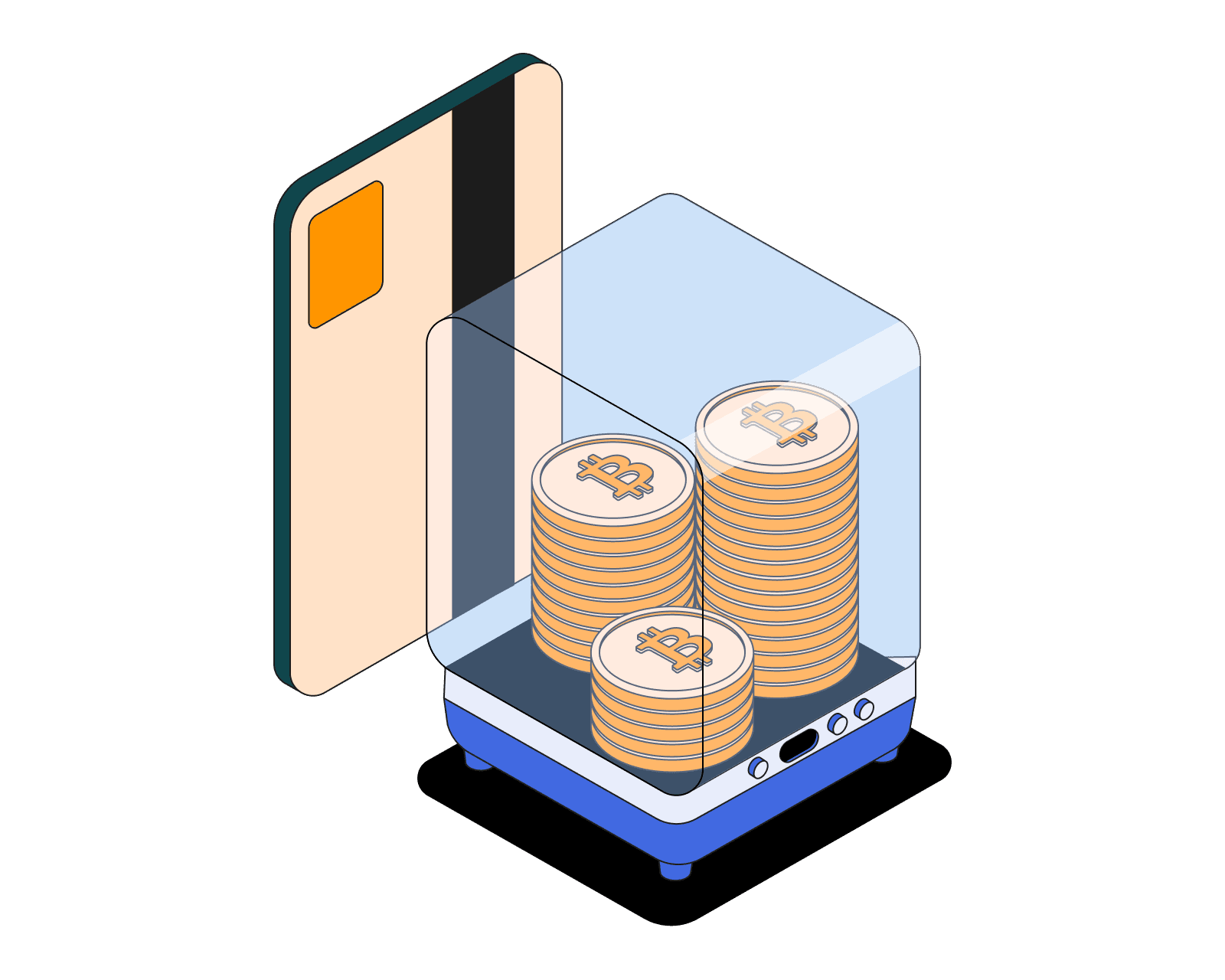
Crypto debit cards can be seen as a bridge from crypto to the traditional financial system. They make it possible to spend your cryptocurrencies anywhere credit cards are accepted.
Bitcoin.com’s V-Card is launching soon. Sign up to the waitlist here and find out how you can win a free V-Card.
Isn’t cryptocurrency supposed to be peer-to-peer cash? Why would I need a credit card?
While crypto enables people to transact peer-to-peer, this feature can only be taken advantage of within the network itself. If your local furniture store doesn’t accept cryptocurrency such as Bitcoin, you’ll have to pay via another method! Further, many of the biggest and most widely used cryptocurrencies aren’t particularly useful as a medium of exchange for small-value items like your morning coffee or daily groceries. Why?
- Transaction fees on some networks are often significantly higher than with status quo payment networks like Visa and Mastercard.
- Transaction times for some networks are significantly longer than with status quo payment networks. Depending on the fees paid and the current level of network congestion, it may take anywhere from a few seconds to an hour for a transaction to confirm ‘on chain’ – and only when a transaction is confirmed on chain, meaning it’s included in at least one block (and usually more than one block) on the network, can final settlement be considered to have occurred.
For these reasons, crypto’s use as a medium of exchange (on many chains) is currently restricted to higher value items where transaction times and costs are less consequential – like buying a car, boat, or house.
Note that so-called ‘layer two’ solutions like the Bitcoin Lightning Network or Ethereum’s Arbitrum may solve the above-described challenges by enabling ‘off chain’ transactions. This is similar to how the Visa/Mastercard network functions in that millions of small transactions can go through quickly, while final settlement occurs in large batches at a later stage. Unfortunately, these layer-two solutions are even less widely deployed than their main networks, meaning the places you can use them to actually buy things are few.
Also note that some base-layer networks do feature sufficiently low transaction fees and fast settlement times for their cryptocurrencies to be leveraged as a payment method at point of sale. Bitcoin Cash is an example of network that has been used in this regard, and has gained adoption in some regions. However, the scale of adoption pales in comparison to credit cards. Again, unless your merchant is willing to accept cryptocurrency for payment, you can’t use it at point of sale.
Therefore, for the time being at least, crypto debit cards can help make crypto useful as a medium of exchange while cryptocurrency networks develop in capacity and adoption.
How do crypto debit cards work?
Cryptocurrency debit cards are like prepaid credit cards. You can use them to make payments in person or online exactly like you would with any other credit card. You either enter your card details or swipe your card to make a payment, and merchants receive cash in their local currency. Many crypto debit cards also allow you to take out cash from ATMs.
The two methods for funding crypto debit cards are:
Top-up method – Convert your crypto to cash in lump sums before making purchases. Auto-conversion method – Link your crypto wallet, so each transaction automatically sells the required amount of crypto.
Are you a SOL holder?
What are the fees for crypto debit cards?
Depending on the provider, your crypto debit card may or may not have an annual fee. You may also be charged a small fee each time you convert your crypto to cash.
Want to offset fees?
Looking for even more benefits?
What’s the difference between a virtual and physical crypto debit card?
With virtual crypto debit cards, you’re restricted to making purchases online. Physical cryptocurrency debit cards can be used both online and in person at any merchant that accepts the credit card type (eg. Visa or Mastercard).
How can I get a crypto debit card?
Since crypto debit cards are offered by registered businesses, you’ll need to provide identity documents in order to be approved. This isn’t a credit check, but rather a requirement for compliance with anti-money laundering regulations. Each cryptocurrency debit card provider can only offer its card in the specific regions it has obtained the required license.
Are crypto debit cards safe?
Yes, cryptocurrency debit cards are generally safe to use. They come with security features like PIN codes and two-factor authentication to protect your funds.
Can I use a cryptocurrency debit card internationally?
Most crypto debit cards can be used internationally wherever the card network (Visa or Mastercard) is accepted.
How long does it take to receive a crypto debit card?
The delivery time varies by provider, but it typically takes 1-2 weeks for a physical card to arrive.
Crypto debit cards are just one of many options available to spend your digital assets. Explore different types of crypto cards:
- Crypto credit cards – Earn rewards while spending.
- Prepaid crypto cards – Spend without linking a bank account.
- Crypto gift cards – Convert crypto into a convenient gift.
- Web3 crypto cards – Spend digital assets in the decentralized economy.