
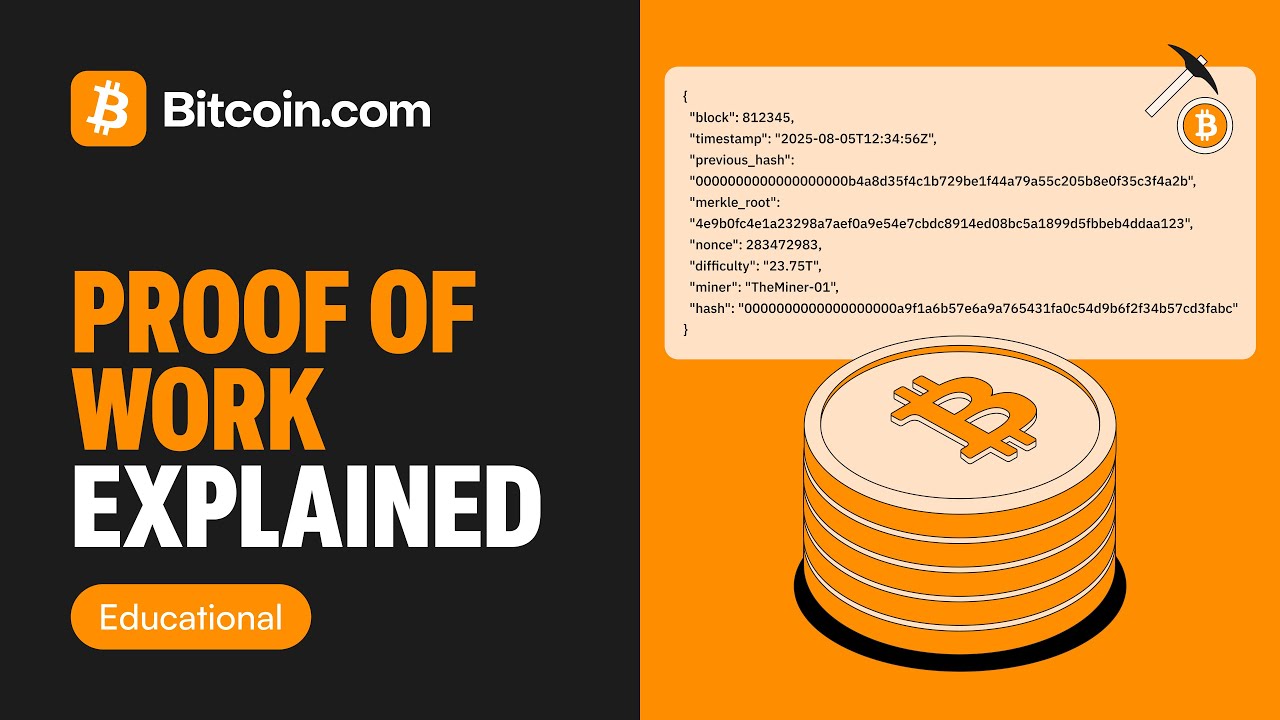
Proof of Work (PoW) is a consensus mechanism used by blockchain networks to achieve distributed consensus. It is the original consensus mechanism, first used by Bitcoin in 2009. In PoW, network participants, called miners, compete to solve a computationally intensive puzzle. The first miner to solve the puzzle gets to add a new block of transactions to the blockchain and is rewarded with newly minted cryptocurrency.
Use the multichain Bitcoin.com Wallet app, trusted by millions to safely and easily buy, sell, trade, and manage Bitcoin and the most popular cryptocurrencies.
How does Proof of Work (PoW) work?
The process of PoW can be broken down into the following steps:
- Transaction Broadcasting: When a user starts a transaction on a PoW blockchain, the transaction is sent to the network of nodes.
- Transaction Pooling: Nodes gather these transactions into a pool, often called the ‘mempool’ (memory pool).
- Block Creation: Miners choose transactions from the mempool and group them into a ‘block’. They then add a header to the block, which includes a timestamp, a hash of the previous block, and a nonce.
- Nonce Iteration and Hashing: The nonce is a random number that miners constantly change and combine with the block header data to create a hash. The goal is to find a nonce that, when hashed with the block header, makes a hash that meets the network’s difficulty target.
- Difficulty Target: The difficulty target is a way to measure how hard it is to find a valid hash. It is changed periodically to make sure that blocks are mined at a relatively consistent rate, typically every 10 minutes for Bitcoin.
- Proof-of-Work Solution: When a miner finds a nonce that makes a hash meeting the difficulty target, they have solved the PoW puzzle.
- Block Broadcasting: The miner sends the solved block to the network.
- Block Validation and Addition: Other nodes check the block’s validity, making sure that all transactions are allowed and that the PoW solution is correct. If valid, the block is added to the blockchain.
- Reward Distribution: The miner who successfully mined the block gets a reward in the form of newly made cryptocurrency and transaction fees from the transactions included in the block.
Why is Proof of Work Important?
PoW is critical for keeping a PoW-based blockchain networks safe and trustworthy. It does this through:
- Decentralization: By spreading the mining process across a network of miners, PoW stops any single person or group from controlling the blockchain.
- Security: The computing power needed for mining makes it very hard and expensive for bad actors to change the blockchain or double-spend coins.
- Trustlessness: PoW means you don’t need to trust a central authority because the system is based on math proofs and work that can be checked.
Advantages of Proof of Work (PoW)
Proof of Work (PoW) has been the foundation of blockchain security for over a decade, especially for Bitcoin. Its strength and resistance to attacks have made it a trusted way to reach consensus, even though it uses a lot of energy. Here are some of the main good things about PoW:
- Security: PoW’s strength is in the computing work needed to mine blocks. This makes it very hard and expensive for attackers to mess with the blockchain or spend coins twice. To change past transactions, an attacker would need to control most of the network’s hashing power (a 51% attack), which is too expensive and almost impossible for established blockchains like Bitcoin.
- Decentralization: PoW helps keep things decentralized by letting anyone with enough computing power take part in mining. This open participation helps stop any single person or group from controlling the network.
- Transparency: The PoW process is open and can be checked. Anyone can check the work done by miners and if the transactions on the blockchain are valid.
- Fairness: The chance of a miner finding a valid block depends on how much hashing power they have. This means that miners who put in more resources have a higher chance of getting rewards, making a fair and competitive system.
Disadvantages of Proof of Work (PoW)
While PoW has been shown to be a strong way to reach consensus, it also has some downsides that have led people to look for other ways to do it. Here are some of the main downsides of PoW:
- Energy Consumption: PoW uses a lot of energy because it needs miners to use a lot of computing power, which means using a lot of electricity. This has made people worried about how PoW blockchains affect the environment, especially as the network gets bigger and more miners join.
- Scalability: PoW blockchains can only handle a limited number of transactions per second. This can cause network slowdowns and higher transaction fees when there is a lot of demand.
- Centralization Risks: While PoW is supposed to keep things decentralized, in reality, mining can become centralized as big mining pools with a lot of resources start to control the network. This concentration of hashing power could weaken how decentralized the blockchain is.
- Hardware Costs: PoW mining needs special hardware, like ASICs (Application-Specific Integrated Circuits), which can be expensive to buy and keep running. This high barrier to entry can limit who can participate in mining and could lead to more centralization.
Proof of Work vs. Proof of Stake
Proof of Stake (PoS) is a different way to reach consensus that attempts to address some of the problems associated with PoW. In PoS, validators are chosen to suggest new blocks based on how much cryptocurrency they own and are willing to ‘stake’ as collateral. It uses dramatically less energy than PoW.