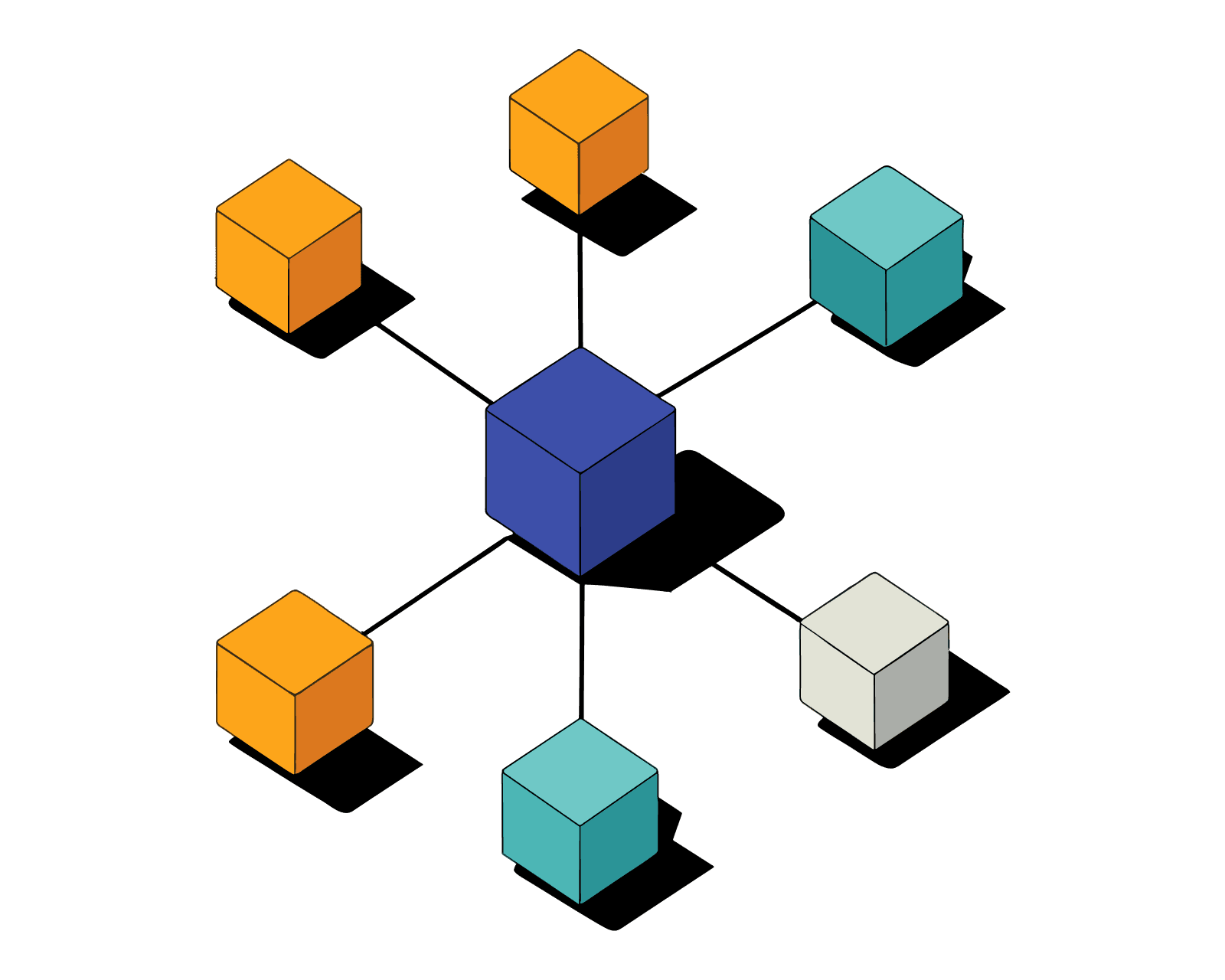
Cross-chain interoperability is the ability to transfer data and assets between different blockchain networks. It is a key concept in the blockchain space, as it allows for the creation of more complex and interconnected decentralized applications (dApps).
Use the multichain Bitcoin.com Wallet app, trusted by millions to safely and easily buy, sell, trade, and manage Bitcoin and the most popular cryptocurrencies.
Why is cross-chain interoperability important?
The cryptocurrency and blockchain industry is a fragmented landscape. There are dozens of active blockchains, each with its own set of rules, features, and communities. This fragmentation can limit the growth and adoption of blockchain technology, as it creates barriers to entry for users and developers.
The crypto industry is composed of many different blockchains. Bitcoin was the first, but now there are dozens of active blockchains, each with its own unique features and advantages. This has led to a fragmented ecosystem, where users often have to choose between different blockchains based on their specific needs.
Cross-chain interoperability aims to solve this problem by allowing different blockchains to communicate and interact with each other. This would enable a more seamless and interconnected crypto ecosystem, where users could easily transfer assets and data between different blockchains.
What are the benefits of cross-chain interoperability?
Cross-chain interoperability offers many benefits, including:
- Increased Liquidity and Efficiency: Allowing assets and data to flow freely between blockchains can enhance liquidity in markets and make transactions more efficient. For example, a user could easily transfer assets from a blockchain with high transaction fees to a blockchain with lower fees or trade assets across different blockchains without relying on centralized exchanges (CEXs).
- Enhanced Innovation and Collaboration: Interoperability can foster innovation by allowing developers to build applications that leverage the strengths of multiple blockchains. For example, a decentralized application (dApp) could use one blockchain for its security and another for its scalability or combine features from different blockchains to create new and unique functionalities.
- Improved User Experience: Cross-chain interoperability can simplify the user experience by making it easier to manage assets across different blockchains. For example, a user could use a single wallet to access and manage assets on multiple blockchains or seamlessly transfer assets between different dApps without navigating complex bridging processes.
- Enhanced Functionality: Cross-chain interoperability can enable the creation of more complex and sophisticated dApps. For example, a dApp could be built that uses the security of Bitcoin and the smart contract functionality of Ethereum.
- Reduced Risk: Cross-chain interoperability can reduce the risk of relying on a single blockchain. For example, if one blockchain experiences a technical issue, users could easily move their assets to another blockchain.
What are the challenges of cross-chain interoperability?
Achieving seamless cross-chain interoperability is a complex technical challenge. Different blockchains often have different architectures, consensus mechanisms, and security models, making it difficult to establish secure and reliable communication between them.
Some of the key challenges include:
- Security: Ensuring the security of cross-chain transactions is paramount. Any vulnerabilities in the bridging mechanisms or the underlying blockchains could be exploited by attackers, leading to the loss of funds or data.
- Scalability: As the number of blockchains and the volume of cross-chain transactions increase, scalability becomes a critical concern. Interoperability solutions need to handle a high volume of transactions without compromising speed or efficiency.
- Complexity: Developing and implementing cross-chain interoperability solutions can be technically complex, requiring expertise in multiple blockchain technologies and consensus mechanisms.
- Standardization: The lack of standardization in the blockchain industry makes it difficult to create interoperability solutions that work seamlessly across different platforms.
What are the approaches to cross-chain interoperability?
There are several approaches to achieving cross-chain interoperability, each with its own set of trade-offs:
- Bridges: Bridges are specialized protocols that connect two or more blockchains, allowing for the transfer of assets and data between them. Bridges typically involve locking up assets on one blockchain and minting equivalent tokens on another blockchain. These tokens can then be redeemed for the original assets when they are transferred back to the original blockchain.
- Sidechains: Sidechains are independent blockchains that are pegged to a main blockchain, allowing for the transfer of assets between the two chains. Sidechains can have their own rules and features, but they rely on the security of the main blockchain for finality.
- Relays: Relays are protocols that allow one blockchain to verify the state of another blockchain, enabling cross-chain communication and data sharing. Relays typically involve a group of validators or notaries that attest to the validity of information on the source blockchain.
- Hash-Time Locked Contracts (HTLCs): HTLCs are a type of smart contract that allows for the conditional transfer of assets between two parties on different blockchains. HTLCs use a time-lock mechanism to ensure that both parties fulfill their obligations or the transaction is reversed.
What are some examples of cross-chain interoperability projects?
- Cosmos: Cosmos is a network of interconnected blockchains that aims to create an “internet of blockchains.” Cosmos uses a protocol called the Inter-Blockchain Communication (IBC) protocol to enable communication and asset transfers between different blockchains.
- Polkadot: Polkadot is a multi-chain network that allows for the creation of parachains, which are specialized blockchains that connect to the main Polkadot relay chain. Polkadot uses a shared security model, where the validators on the relay chain also secure the parachains.
- Chainlink: Chainlink is a decentralized oracle network that provides real-world data to smart contracts on various blockchains. Chainlink enables cross-chain interoperability by allowing smart contracts on one blockchain to access data from other blockchains.
- WBTC and WETH: Wrapped Bitcoin (WBTC), Threshold Bitcoin (tBTC) and Wrapped Ether (WETH) are examples of tokens that represent Bitcoin and Ether on the Ethereum blockchain. These wrapped tokens enable Bitcoin and Ether to be used within the Ethereum and other DeFi ecosystems, effectively bridging blockchains.
What is the future of cross-chain interoperability?
Cross-chain interoperability is a crucial step towards a more interconnected and interoperable blockchain ecosystem. As the technology matures and new solutions emerge, we can expect to see greater adoption of cross-chain interoperability, leading to a more seamless and efficient flow of assets, data, and value between different blockchains.
The future of cross-chain interoperability is likely to involve:
- Increased Standardization: The development of common standards and protocols for cross-chain communication will make it easier to create interoperable solutions that work across different platforms.
- Improved Security: Advancements in cryptography and security protocols will enhance the security of cross-chain transactions, reducing the risk of attacks and exploits.
- Enhanced Scalability: New scaling solutions will be integrated into cross-chain interoperability solutions to handle a higher volume of transactions.
- Greater Adoption: As the benefits of cross-chain interoperability become more apparent, we can expect to see wider adoption by both users and developers, leading to a more interconnected and vibrant blockchain ecosystem.
Cross-chain interoperability is a key area of development in the blockchain space. As the crypto ecosystem continues to grow and mature, we can expect to see more innovative and sophisticated cross-chain interoperability solutions emerge.
The widespread adoption of cross-chain interoperability has the potential to transform the crypto landscape, enabling a more interconnected, efficient, and user-friendly ecosystem. It could also unlock new use cases for blockchain technology, such as decentralized finance (DeFi), supply chain management, and digital identity.