Bitcoin Slams into Geopolitical Headwinds
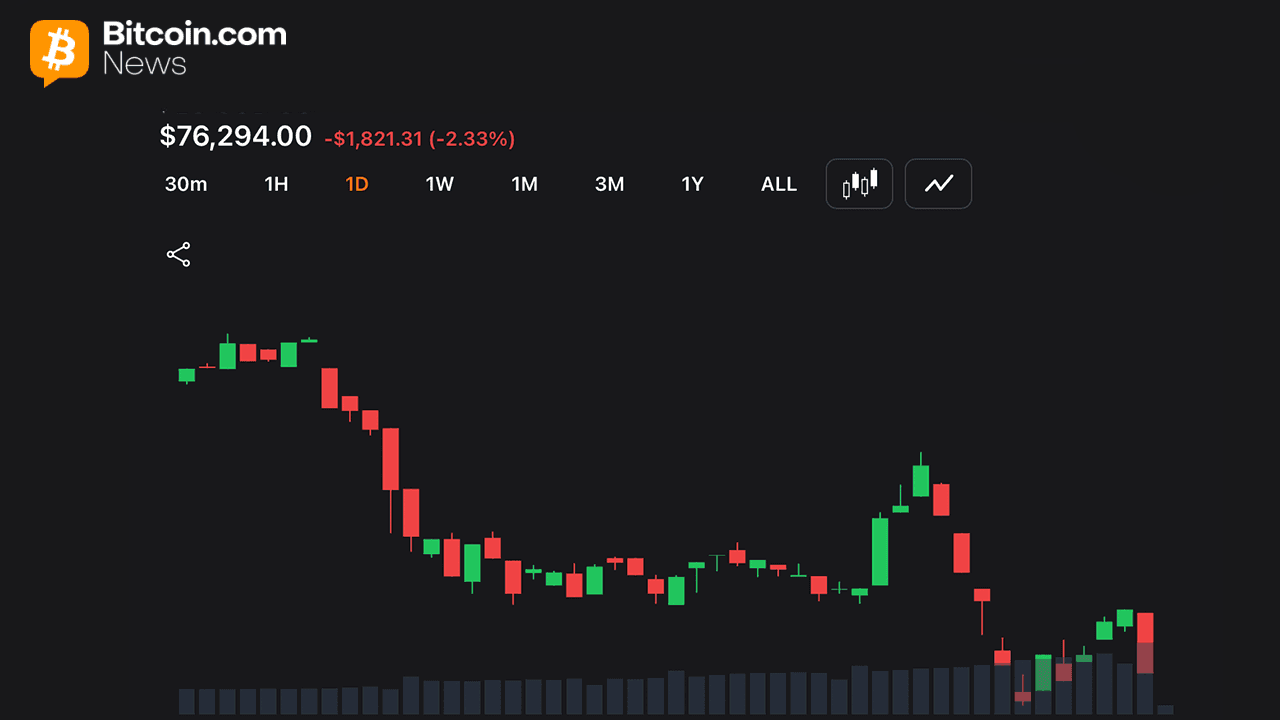
Bitcoin slid to $76,000 Monday morning, continuing a trend that began shortly after President Donald Trump hinted to reporters on May 15 that the U.S. and Israel may resume combat operations against Iran. Market data shows that bitcoin, which traded well above $78,000 just before Sunday evening, initially slipped below $77,000 just after 9 p.m. EST.
The top cryptocurrency remained largely under that threshold until 9:40 a.m., when a relief rally saw it not only reclaim $77,000 but surge well past $77,600. However, shortly afterward, a fresh wave of selling saw it completely reverse earlier gains and plummet to $76,000. The reversal caused bitcoin’s total market capitalization, which stood at just under $1.6 trillion on May 15, to decline to $1.53 trillion.
By shedding more than $1,000 of its value, bitcoin’s nearly 2% drop triggered the liquidation of approximately $223 million in long positions over a 24-hour window. In contrast, only $27 million in short bets was liquidated during the same period. Overall, the crypto economy saw $722 million in long positions liquidated versus nearly $94 million in shorts.
Reports of an imminent return to full‑scale combat persisted on May 16, extending the sense of volatility that dominated the weekend. One report even suggested operations could resume before the end of the week. The speculation gained traction as Pakistani officials offered no meaningful diplomatic updates and oil prices snapped back to levels last seen during active fighting, reinforcing the perception that de‑escalation efforts had stalled.
In Washington, there were indications that the Trump administration is actively reviewing military contingencies, while President Donald Trump’s social‑media posts signaled a growing impatience with Tehran. Adding to the unease, Iran appeared to harden its position in the Strait of Hormuz after unveiling what state‑aligned media outlets described as a bitcoin‑powered maritime insurance platform, Hormuz Safe.
The platform reportedly issues fast, cryptographically verifiable insurance policies for maritime cargo passing through the Persian Gulf, the Strait of Hormuz and surrounding waterways. While this would be consistent with Iran’s growing desire to gain recognition over the strait, there has been no official confirmation by Iran’s leadership. However, if true, the move would give hawks in Washington another reason to justify resuming the bombing campaign.
Meanwhile, bitcoin’s sell-off during geopolitical stress has again highlighted how the cryptocurrency is failing to catch its safe-haven bid. Part of the reason for this, according to Diego Martin, CEO of Yellow Capital, is that traders are treating it as part of the liquidity stack.
“When a geopolitical shock hits and you’re suddenly dealing with oil, yields and dollar pressure all at once, desks first look at collateral pressure, margin usage and where they can reduce exposure quickly,” Martin said.
According to the CEO, bitcoin is usually where that adjustment appears first because it has deep liquidity, trades 24/7, and sits within funding, collateral, and cross-venue strategies. However, the sell-off, Martin argues, is less about a change in bitcoin’s long-term viability and more about market mechanics.
On bitcoin’s next move, Martin suggests it may depend more on liquidity conditions than crypto-native news.
“The market already knows most of the major crypto narratives,” he said. “What it does not know is whether macro conditions will allow traders to keep risk on the book. If oil cools, yields ease and dollar liquidity improves, BTC can recover even without a major crypto-specific catalyst.”
Yet if the dollar stays strong, yields remain elevated, and leverage keeps getting cleaned out, positive crypto headlines may not be enough. In this scenario, “ bitcoin is trading more like part of the global liquidity cycle than a standalone crypto story,” Martin said.