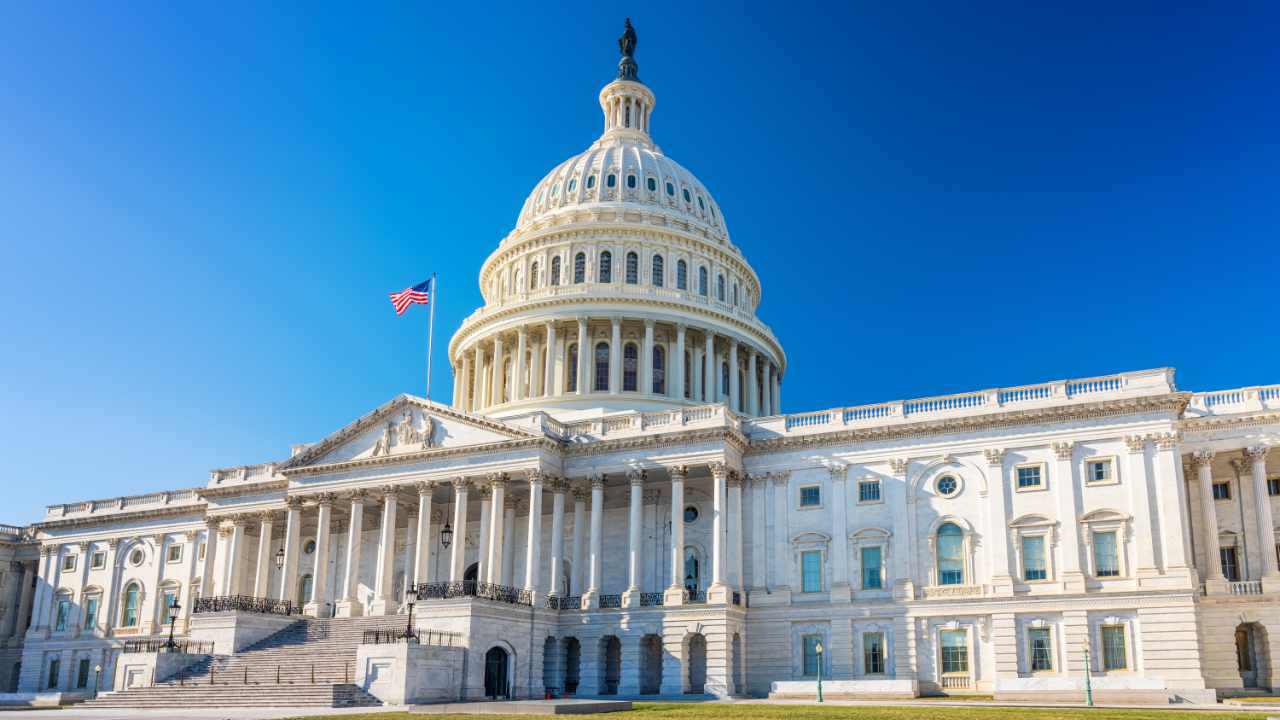

Grayscale Frames CLARITY Act as a Crypto Rulebook
Crypto asset manager Grayscale Investments examined the CLARITY Act’s place in Washington’s digital asset policy debate as lawmakers consider how crypto markets should be supervised. Zach Pandl, Grayscale Head of Research, outlined the bill’s role in shaping digital asset regulation on May 7.
Rather than treating the legislation as a narrow policy update, Pandl described CLARITY as a broad market structure bill. He wrote that it would clarify which federal regulator oversees which activities. The proposal would create a framework separating investment contracts from digital commodities. Under that approach, the Securities and Exchange Commission (SEC) would regulate investment contracts, while the Commodity Futures Trading Commission (CFTC) would oversee digital commodities. The Grayscale head of research stated:
“The CLARITY Act matters because for much of the past decade, digital asset regulation has been shaped primarily through enforcement rather than formal rulemaking.”
That enforcement-led approach has shaped Grayscale’s view of the bill’s importance. Pandl wrote that tens of billions of dollars in regulatory fines have been paid. He also said many potential participants have avoided crypto due to fears of regulatory backlash, even as the market expanded into a multi-trillion-dollar ecosystem.
Grayscale Sees Broad Impact Across Market Participants
Developers, investors, exchanges, brokers, custodians, and asset issuers would all be affected, according to Grayscale. Developers would receive clearer guidance for structuring and launching projects. Investors would face less legal uncertainty around ownership and project outlook. Trading venues, brokers, and custodians would gain clearer registration paths.
Asset issuers would also face more defined requirements for token distribution and ongoing compliance. Regulators, in Grayscale’s view, would operate within a clearer framework instead of relying on fragmented enforcement decisions. Pandl presented that structure as central to reducing uncertainty across digital asset markets.
Public pressure has also entered the Senate debate. Stand With Crypto delivered a petition with more than 28,000 signatures to Washington on April 30, urging the Senate Banking Committee to mark up the CLARITY Act. A survey released on May 7 found 52% of voters supported the bill after reviewing a neutral summary, while 70% said the United States should already have passed clear crypto legislation. Committee timing sharpened after the Senate Banking Committee scheduled a May 14 executive session to consider H.R.3633, the Digital Asset Market Clarity Act of 2025.
Pandl wrote:
“The CLARITY Act can catalyze the next phase of innovation and capital formation in digital assets by replacing uncertainty with structure, providing developers, business, and investors with a long-awaited asset and regulatory legal framework.”
Passage remains uncertain, despite renewed movement in Washington. Pandl cited Polymarket odds giving the CLARITY Act a 67% chance of passing in 2026. The bill still must advance through the Senate Banking Committee, pass the full Senate, and win approval from both chambers. Grayscale said meaningful progress before the July recess would be important to maintain momentum.