Iowa Adds Penalties and Oversight for Crypto Kiosks
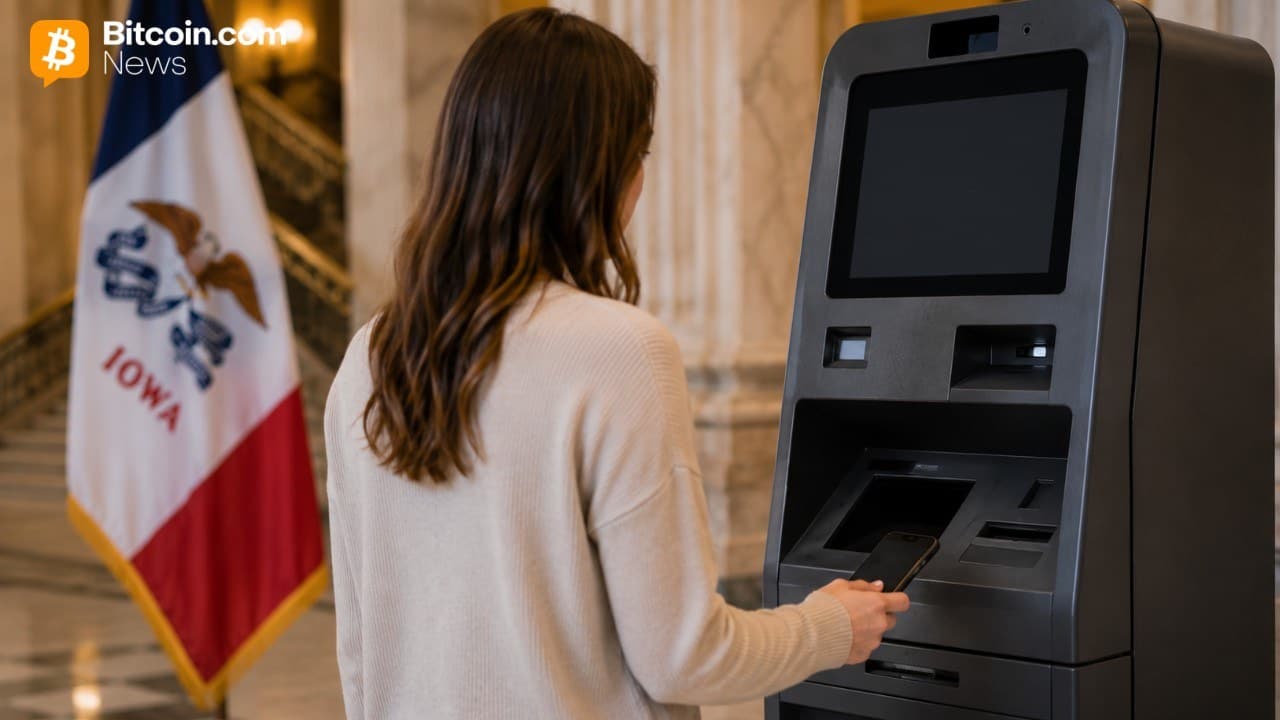
Iowa Attorney General Brenna Bird announced May 6, 2026, that Governor Kim Reynolds signed SF2296 into law, requiring crypto ATM operators across Iowa to obtain money transmission licenses. The measure places digital financial kiosks under Iowa’s financial regulatory framework while giving state authorities broader powers to pursue violations tied to consumer fraud.
Under the legislation, operators must hold a license before owning, operating, marketing, or facilitating kiosks in Iowa. The bill also defines covered digital financial assets, updates fee disclosure rules, requires location reporting, and classifies violations as unlawful practices under Iowa consumer protection statutes. Attorney General Bird said:
“Finally, we continue to fight to protect Iowans from the scammers who prey on them through crypto ATMs.”
Location reporting is now part of the oversight structure. Kiosk businesses must provide the Iowa Division of Banking with each site they own, operate, or manage. Any change must be reported within 30 calendar days, and the division must publish each list online.
The 2026 licensing measure follows SF449, which Governor Reynolds signed May 19, 2025, and which took effect July 1, 2025. That earlier law targeted crypto ATM scams through transaction limits, refund requirements, fee caps, fraud warnings, customer support rules, and detailed receipt requirements.
Crypto ATM Operators Face Licensing Rules
Enforcement authority rests with the Iowa Attorney General when there is reasonable belief a violation occurred. The office may seek injunctions, compel compliance, and pursue civil penalties of up to $10,000 per violation involving digital financial asset kiosks.
Fee provisions also changed under the new rules. Businesses must disclose the dollar amount of all charges collected in a digital financial asset transaction. The statute also replaces certain exchange-price references with the prevailing market value of the asset at the transaction time. Bird stated:
“Thank you to the legislature for passing these bills with huge bipartisan support and to Governor Reynolds for signing them into law.”
Under SF449, kiosk users cannot transfer or receive more than $1,000 per calendar day through a machine. New consumers are also limited to $10,000 in aggregate transactions during their first 30 days with a specific operator. The law requires operators to issue refunds when users are fraudulently induced into transactions, if victims report the fraud within 90 days and provide required documentation.
Violations are now treated as unlawful practices under Iowa consumer protection provisions. The measure also permits penalties of up to $100,000 for violating injunctions tied to digital financial asset kiosk enforcement actions. The law took effect upon enactment and applies to civil actions commenced on or after that date.
The legislation arrives as multiple states increase scrutiny of crypto ATM activity tied to fraud complaints and financial exploitation cases. During the 2025 House debate, Representative Shannon Lundgren said an Iowa Attorney General investigation found Iowans had lost about $20 million to crypto ATM scams over the prior three years. Iowa’s updated framework increases state supervision of kiosk businesses while applying licensing and reporting standards similar to other money transmission services.