
The Ethereum Foundation Ventures Into AI With New Team
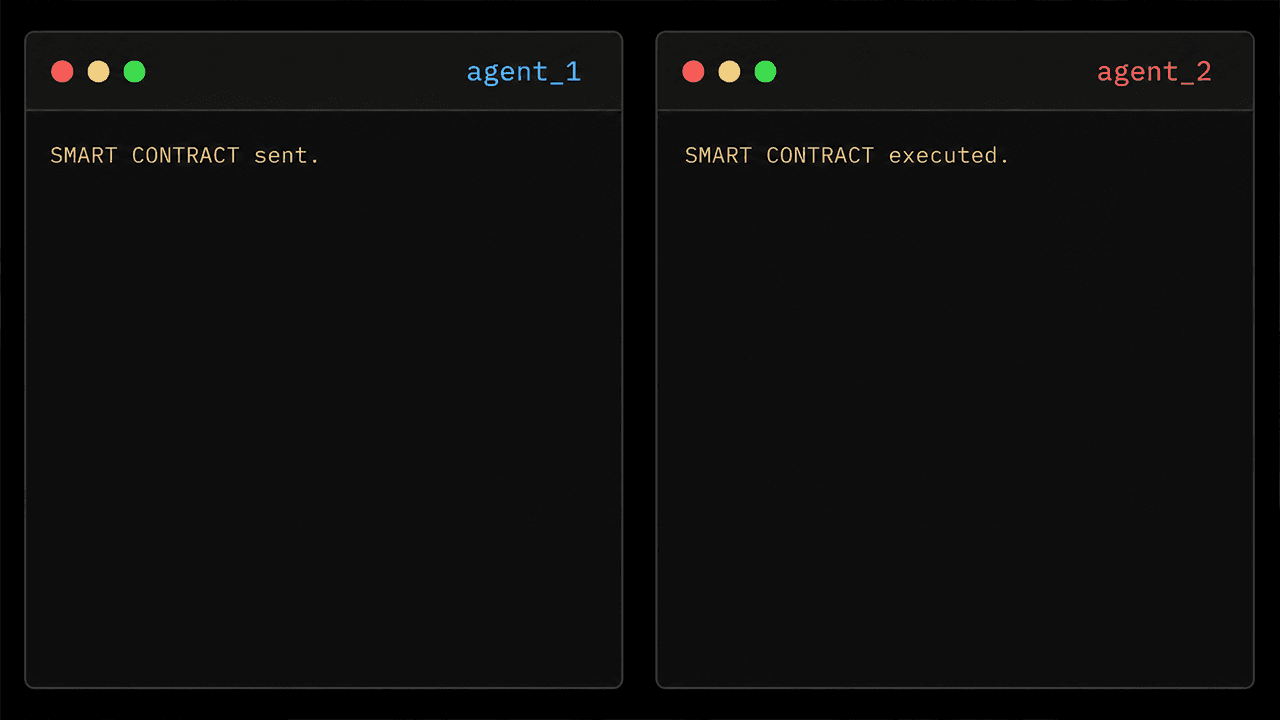
The Ethereum Foundation has recently launched a decentralized artificial intelligence (AI) team led by Davide Crapis to position the Ethereum blockchain as a foundational settlement and coordination layer for autonomous AI agents. The move reflects Ethereum’s ambition to play a central role in shaping the future of AI—one that is open, transparent, and resistant to monopolization.
As part of its mandate, the team will develop a fully decentralized AI stack to ensure that the evolution of AI technologies does not remain under the control of a few dominant entities. By integrating AI with Ethereum’s decentralized architecture, the team aims to unlock new possibilities for autonomous systems, including on-chain decision-making and trustless coordination between intelligent agents. The launch is widely viewed as a significant step toward democratizing AI development and embedding it within the ethos of Web3.
Ethereum’s entry into the AI space is expected to have broad implications for the crypto industry, particularly for AI-focused chains. Gil Rosen, co-founder of the Blockchain Builders Fund, described the development as both welcome and noteworthy.
“The unveiling of the AI team shifts Ethereum from being a relatively neutral settlement layer for Layer 2s and less performance-critical Layer 1 applications to an opinionated Layer 1 targeting specific sectors with infrastructure to support them,” Rosen said.
The decentralized AI team is also expected to impact AI-focused Layer 2s, signaling the emergence of base-layer functionality tailored to their needs.
Across the blockchain ecosystem, numerous projects are racing to build decentralized and censorship-resistant AI infrastructure—laying the foundation for a transparent AI economy free from centralized control. These efforts aim to ensure that the future of artificial intelligence is governed by permissionless innovation rather than gatekeeping by a handful of powerful entities.
While Ethereum faces technical limitations that may hinder its competitiveness against newer protocols, Rosen believes its widespread adoption and interoperability make it well-suited to serve as a global verifiability and settlement layer.
To date, the most successful AI blockchain projects have focused on Web2 use cases, while agentic infrastructure chains like Virtuals and Sahara are said to have struggled to gain traction. Rosen attributes their limited impact to the relatively small market size of Web3 AI compared to Web2 AI. Ethereum, however, is seen as having the potential to succeed.
“Ethereum’s greatest value proposition here from a go-to-market perspective is to start as a verifiability layer for truth, which Vitalik [Buterin] has long promoted through Ethereum’s attestation capabilities,” Rosen told Bitcoin.com News.
Technical Challenges and Future Potential
Experts, meanwhile, contend that if Ethereum succeeds in becoming the blockchain verifiability and settlement layer for Web2, the implications could be far-reaching. As Ethereum scales its base chain performance, it could potentially compete as an AI stack for the “long tail of open-source and interoperable models.” This can be key for nation-states wary of over-reliance on tech giants like OpenAI, Google, and Anthropic. Under such a scenario, Ethereum could serve as an AI infrastructure stack in a market as large as its current total valuation.
“AI agents could be an unfathomable source of demand,” Rosen added.
Still, the decentralized AI team will face technical challenges—two of which were identified by Carlo Fragni, a solution architect at Cartesi: training models and executing them for inference or classification. He emphasized the importance of determinism.
“If you don’t square determinism, you don’t have reproducible models or inference/classification, making consensus difficult,” Fragni said.
In written responses to Bitcoin.com News, Fragni explained that training AI models requires large datasets and intensive computation, making decentralized storage and execution difficult. Large language models (LLMs), in particular, exceed the capabilities of Ethereum and current zero-knowledge (ZK) solutions, Fragni added. He also noted that rebuilding existing AI libraries from scratch is resource-intensive and slow, making it essential to leverage existing frameworks.
Some experts speculate that if Ethereum succeeds in becoming the settlement and coordination layer for the AI economy, the value of ETH could soar. Rosen believes such a transformation could ultimately position ETH as a preferred settlement currency.
“If Ethereum becomes the layer for a trusted, near real-time digitized world where agents can coordinate and transact, then the demand will exceed even the scenario where every human uses ETH for all their transactions,” Rosen concluded.