
Understanding Ethereum’s Foundation
Ethereum, proposed in 2013 by programmer Vitalik Buterin and launched in 2015, builds on Satoshi Nakamoto’s blockchain technology but expands its capabilities beyond peer-to-peer payments. Unlike Bitcoin with its native asset BTC, which primarily functions as a digital currency, Ethereum operates as a global, open-source platform for decentralized applications (dapps) and smart contracts.

Its native cryptocurrency, ethereum ( ETH), serves as both a medium of exchange and fuel for executing operations on the network. Ether is often likened to fuel rather than categorized purely as an investment vehicle, with some referring to it as “digital oil.” Ethereum’s blockchain records transactions and stores data, but its programmability allows developers to create self-executing agreements and complex applications without intermediaries like banks or tech companies.
Smart Contracts and Decentralized Applications
At Ethereum’s core are smart contracts—self-executing code that automates agreements when predefined conditions are met. For example, a smart contract could release payment to a freelancer automatically once a project is completed, eliminating the need for a third-party escrow service. These contracts power decentralized applications ( dapps), which range from financial tools to games and social platforms.

Popular Ethereum-based dapps include Uniswap, a decentralized exchange ( DEX), and Eigenlayer, a restaking protocol. The Ethereum Virtual Machine ( EVM), a decentralized computing engine, ensures these applications run securely and consistently across all network nodes, regardless of location or hardware.
From Proof-of-Work to Proof-of- Stake
On Sept. 15, 2022, Ethereum underwent a major upgrade called Ethereum 2.0, transitioning from a proof-of-work ( PoW) to a proof-of-stake ( PoS) consensus mechanism. Previously, miners competed to validate transactions using energy-intensive mining machines. Under PoS, validators are chosen to create new blocks based on the amount of ETH they stake, or lock up, as collateral, reducing energy consumption by over 99%.

The shift also improved scalability and security. Users can participate in staking by locking ETH to become validators or joining staking pools with smaller amounts, or leveraging restaking or liquid staking applications, earning rewards for securing the network.
Gas Fees and Scaling Solutions
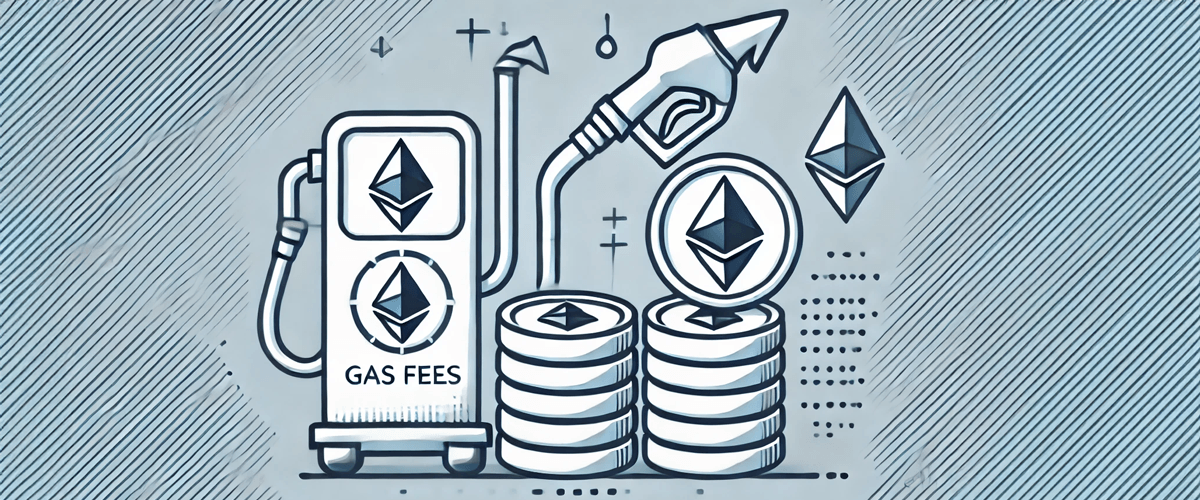
Every transaction or smart contract execution on Ethereum requires gas fees, paid in ETH to compensate validators for processing tasks. Gas costs fluctuate based on network congestion; during peak times, fees can surge, making simple transactions expensive. To address this, a swathe of developers created layer two (L2) scaling solutions like optimistic rollups and zk-rollups, which bundle transactions off-chain before settling them on the main blockchain.
Projects like Optimism and Arbitrum leverage these technologies to reduce costs and increase speed, paving the way for broader adoption. Ethereum’s long-term roadmap also includes danksharding, an approach to scaling that utilizes distributed data sampling across blobs, simplifying implementation and improving scalability.
Ethereum’s Impact on Decentralized Finance and NFTs
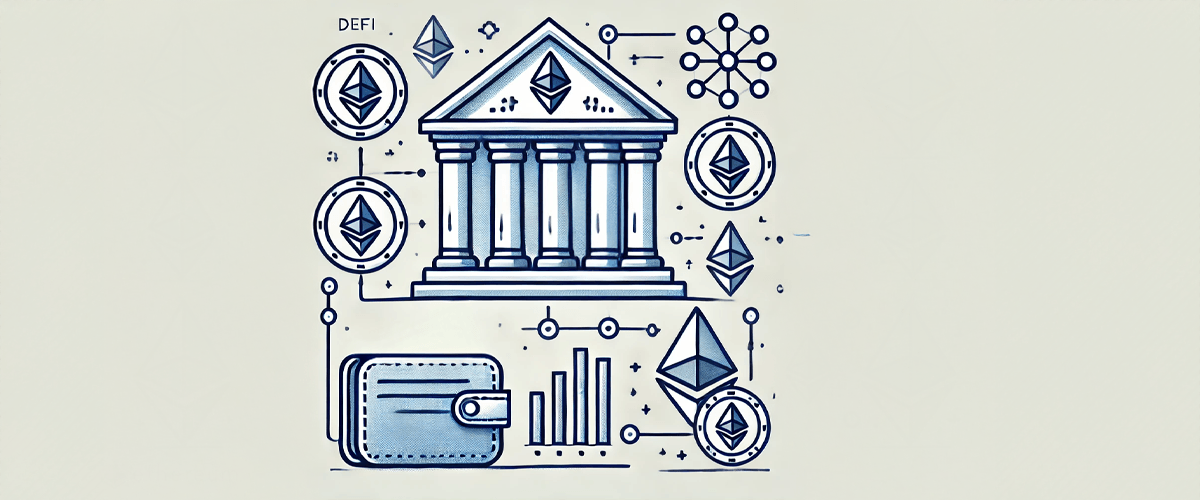
Over the last few years, Ethereum has been the backbone of decentralized finance (DeFi), a movement that replaces traditional financial intermediaries with blockchain-based protocols. DeFi platforms enable lending, borrowing, and trading without banks, offering users higher yields and greater transparency. For instance, Aave allows users to earn interest on crypto deposits, while Compound lets borrowers secure loans using digital assets as collateral.
Ethereum also helped pioneer the non-fungible token (NFT) trade, unique digital certificates of ownership for art, music, and things like virtual real estate. Platforms like Opensea and Magic Eden rely on Ethereum to verify authenticity and enable peer-to-peer sales, creating a multi-billion-dollar market.
Getting Started With Ethereum
Newcomers can begin exploring Ethereum and ether by setting up a digital wallet to store ETH and interact with dapps. Once the new wallet is funded, users can explore DeFi platforms, trade NFTs, or stake ETH through validator services, learning DeFi and Web3 along the way. However, caution is essential—phishing scams, smart contract vulnerabilities, and market volatility can pose risks. It is always recommended to start with small investments, double-check token contracts and connections, and research projects thoroughly.