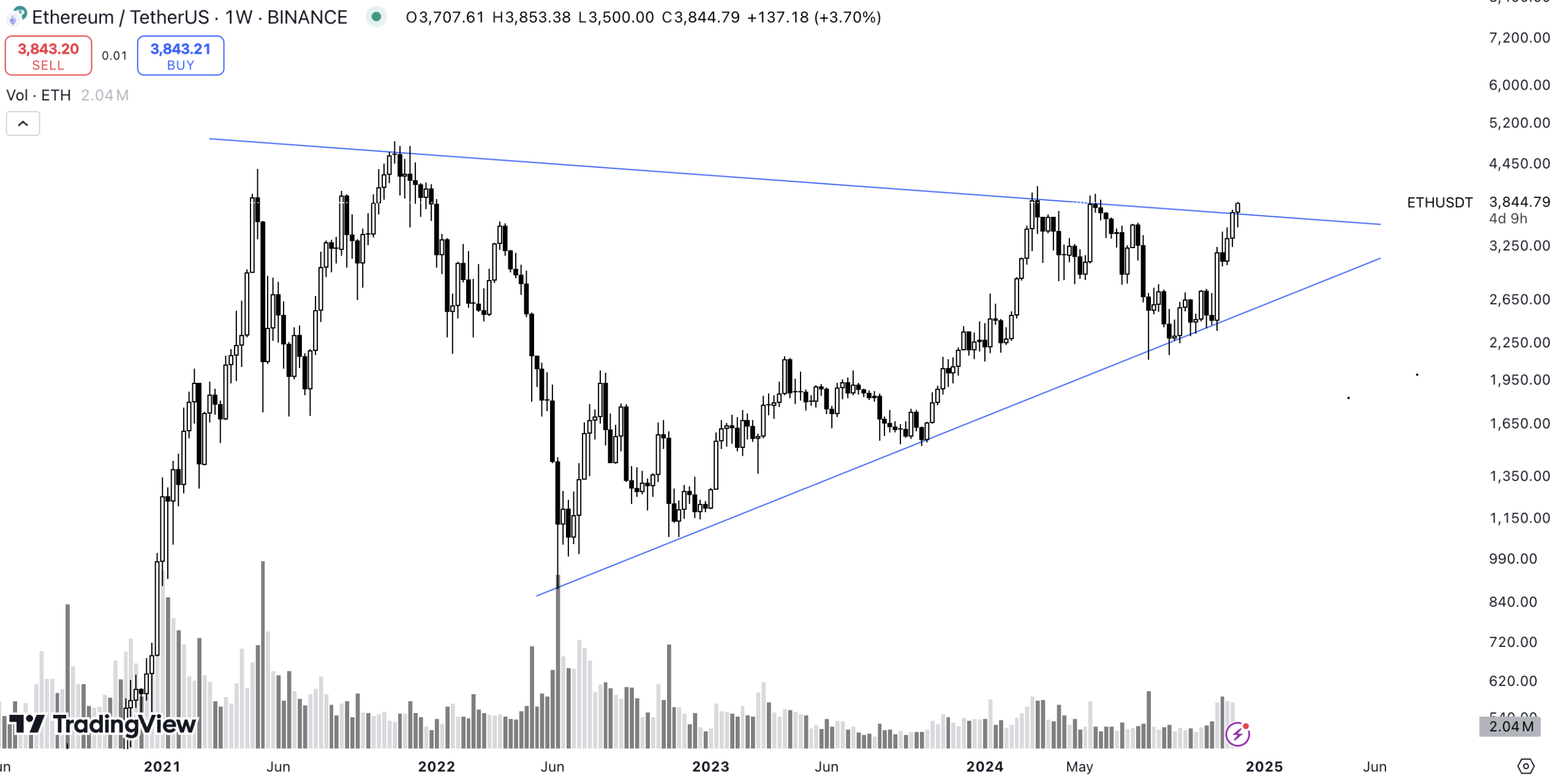
Overview: The Ripple Effect of Ethereum Price Movements
When Ethereum (ETH) experiences a significant price increase, it triggers a cascading effect across its ecosystem, benefiting low-cap projects and Layer 2 solutions. Low-cap tokens tend to exhibit higher volatility, providing opportunities for substantial gains. Below is a detailed analysis of potential beneficiaries and the phases of capital movement in the Ethereum ecosystem.
1. Low-Cap Ethereum Projects to Watch
Low-cap tokens within the Ethereum ecosystem can see exponential growth during an ETH price rally due to increased demand and speculative interest. Here are some key projects:
1.1. Loopring (LRC)
- Category: Layer 2 Scaling Solution
- Key Features: Loopring offers faster transactions and lower fees on Ethereum.
- Growth Potential: With ETH’s price rise, demand for Layer 2 scalability increases, making LRC a strong candidate for growth.
1.2. Ren (REN)
- Category: Cross-Chain Asset Protocol
- Key Features: Facilitates seamless asset transfers across blockchains.
- Growth Potential: An ETH price rally boosts the demand for cross-chain liquidity, potentially increasing usage of RenVM.
1.3. OMG Network (OMG)
- Category: Scaling Network
- Key Features: Offers faster and cheaper transactions on Ethereum.
- Growth Potential: Positioned as a cost-effective alternative, OMG can attract attention during high-fee periods on Ethereum.
1.4. 0x Protocol (ZRX)
- Category: Decentralized Exchange Protocol
- Key Features: Enables decentralized asset exchanges on Ethereum.
- Growth Potential: Higher ETH prices drive trading volumes on DEXs, leading to increased utility for ZRX.
1.5. Kyber Network Crystal (KNC)
- Category: Liquidity Protocol
- Key Features: Provides liquidity for DeFi applications on Ethereum.
- Growth Potential: Rising demand for DeFi liquidity boosts KNC usage.
2. Capital Flow in Ethereum’s Ecosystem
2.1. Initial Flow into Layer 2 Solutions
As Ethereum’s price rises, the network often experiences congestion and higher transaction fees. Investors and developers shift to Layer 2 solutions, driving demand for their tokens.
- Key Players:
- Arbitrum (ARB): The largest Layer 2 by adoption and activity.
- Optimism (OP): Competes directly with Arbitrum, focusing on transactional efficiency.
- zkSync and StarkNet: Advanced solutions leveraging ZK-rollup technology for scalability.
- Market Impact:
- Tokens like ARB, OP, and ZKS often witness significant price increases.
- DeFi and NFT projects on these Layer 2 networks see higher activity and capital inflows.
2.2. Flow into DeFi Protocols
DeFi protocols on Ethereum and its Layer 2 solutions attract capital in various phases:
- Phase 1:
- Stablecoins: Investors seek stability, increasing demand for USDC, DAI, etc.
- DEX Tokens: Platforms like Uniswap (UNI) and SushiSwap (SUSHI) benefit from higher trading volumes.
- Phase 2:
- Lending/Borrowing: Protocols like Aave (AAVE) and Compound (COMP) experience growth as investors look to leverage their holdings.
- Yield Farming: Platforms such as Curve (CRV) and Balancer (BAL) attract capital searching for higher returns.
3. Transition Between Layer 2 and DeFi
As Layer 2 adoption surges:
- Ethereum Mainnet funds flow into Layer 2 DeFi projects.
- Arbitrum: Key beneficiaries include GMX for derivatives trading.
- Optimism: Velodrome and Lyra attract liquidity.
- DeFi on Mainnet: Initially captures the bulk of inflows before Layer 2 projects take over due to lower transaction costs.
4. Investment Strategies for Ethereum’s Price Surge
4.1. During an ETH Price Rally
- Layer 2 Tokens (ARB, OP, ZKS):
- Capitalize on the infrastructural demand.
- DEX Tokens (UNI, SUSHI):
- Benefit from increased trading activity.
- Lending/Yield Farming (AAVE, CRV):
- Harness the demand for leveraged positions and high-yield opportunities.
4.2. When ETH Consolidates
- Shift to Altcoins: Focus on smaller-cap DeFi projects with high growth potential.
- Diversification: Allocate funds across Ethereum Mainnet and Layer 2 platforms to mitigate risks.
5. Risks and Considerations
- Market Sentiment: Rapid shifts in investor behavior can lead to volatile price swings.
- Liquidity Risks: Low-cap projects often have limited liquidity, amplifying price movements.
- Regulatory Concerns: DeFi and Layer 2 adoption remain subject to evolving global regulations.
Ethereum’s price movement is a catalyst for broader ecosystem activity, with Layer 2 solutions and DeFi protocols standing to benefit the most. By understanding the phases of capital flow and identifying key low-cap projects, investors can strategically position themselves to capitalize on Ethereum’s bullish momentum.
Disclaimer
This article is for informational purposes only and does not constitute financial or investment advice. Always conduct thorough research before making investment decisions.