
Energy Sector Leads S&P 500 as Geopolitics Rattle Wall Street
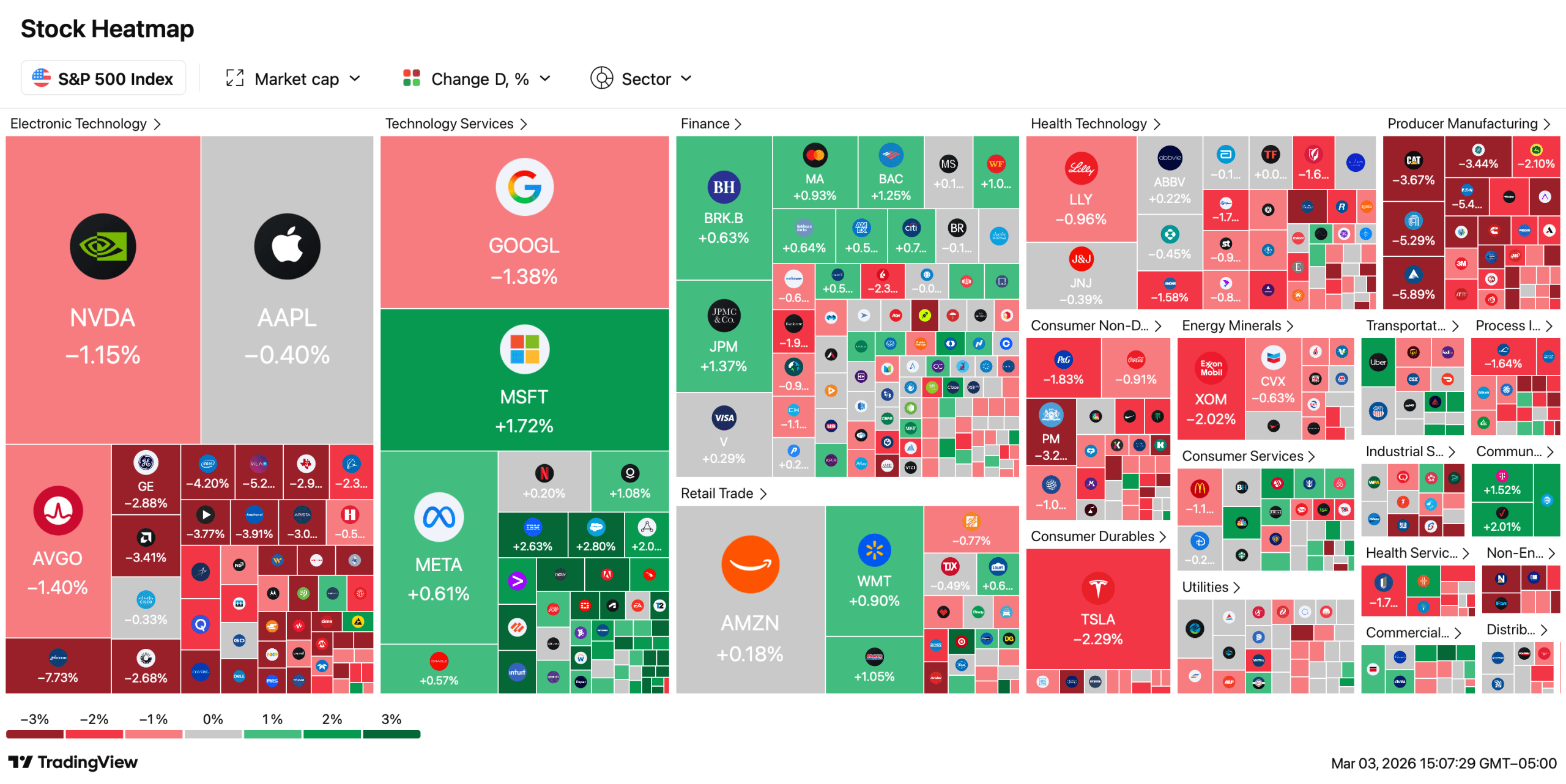
At press time, roughly an hour before the closing bell, the Dow Jones Industrial Average is down 371 points, or 0.8%, at 48,500.83 after tumbling as much as 1,200 points earlier in the session. The S&P 500 fell 0.9% to 6,830.86, while the Nasdaq Composite dropped 0.9% to 22,561.36, trimming steeper losses from the morning rout.
At one point, the Nasdaq had slid 2.7%, reflecting how quickly traders shed risk when geopolitical headlines start flashing. Markets opened sharply lower following reports of continued U.S.-Israel military activity targeting Iranian infrastructure and threats to shipping routes in the Strait of Hormuz.
Roughly 20% of the world’s oil supply passes through the narrow corridor, and traders wasted no time pricing in potential disruptions. Brent crude jumped more than 6% to trade above $82 per barrel, while U.S. benchmark West Texas Intermediate climbed toward the mid-$70s.
Energy stocks led the S&P 500 higher, buoyed by rising crude prices and improved revenue expectations. Similar to yesterday’s tape, defense contractors and select industrial names also advanced, reflecting expectations of higher military spending. Utilities and other traditionally defensive sectors showed relative stability as investors sought shelter.
Technology shares were mixed; some large-cap names clawed back losses by the close, but the broader sector remained weighed down by rising Treasury yields. The 10-year Treasury yield hovered around 4%, signaling that bond investors see oil-driven inflation as a complicating factor for policymakers. The Cboe Volatility Index, Wall Street’s fear gauge, rose roughly 12% to its highest level in three months.
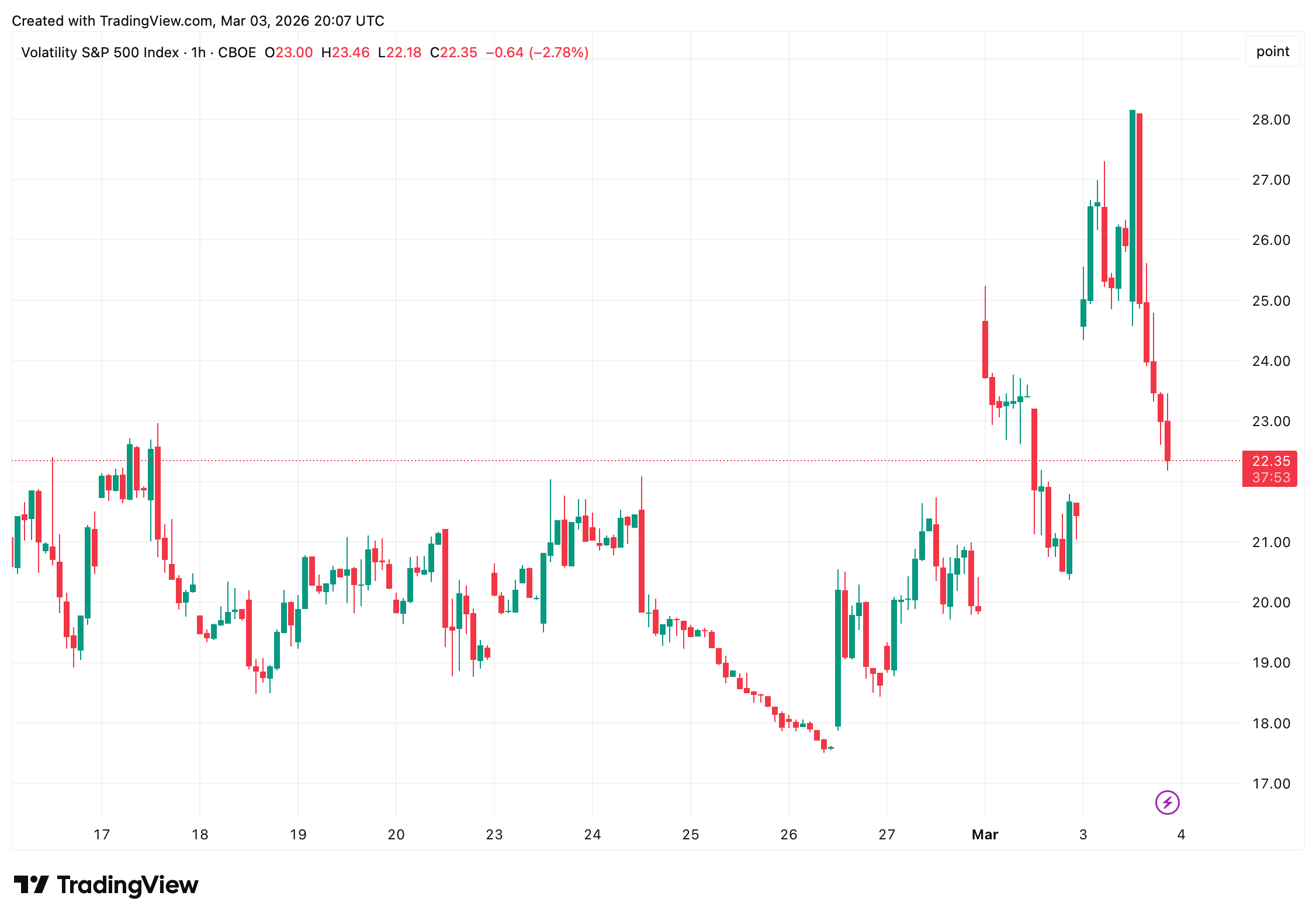
Elevated, yes. Disorderly, not quite. Trading volume was heavier than average, indicating broad participation in the day’s risk-off mood. There were no major U.S. economic reports released Tuesday, leaving geopolitics firmly in the driver’s seat. Attention now turns to Thursday’s initial jobless claims and productivity data, which could influence expectations around Federal Reserve policy. A strong labor market could reinforce the case for holding rates steady longer, while softer data may revive hopes for cuts.
So far, investors appear to be treating the Iran conflict as potentially contained. While oil markets reacted swiftly, equity markets stabilized as the session progressed, suggesting traders are not yet pricing in a prolonged supply shock. Should disruptions extend beyond a few weeks, however, higher energy costs could ripple through transportation, manufacturing and consumer prices.
Year to date, the S&P 500 remains solidly higher despite this week’s pullback, reflecting underlying strength in corporate earnings and technology-driven growth themes like artificial intelligence (AI). Still, geopolitical flare-ups have a way of testing even the most confident rallies.
For the rest of the week, volatility is likely to remain elevated. Investors will monitor developments in the Middle East, weekly oil inventory data, and upcoming labor figures for clues about both inflation and Federal Reserve policy. If tensions ease and crude prices stabilize, equities could regain their footing. If not, Wall Street may need to buckle up for a choppier ride.
FAQ 🔎
- Why did the U.S. stock market fall on Feb. 17, 2026?
Stocks declined as escalating Iran tensions pushed oil prices higher and revived inflation concerns. - How did the Dow, S&P 500, and Nasdaq perform on Tuesday?
The Dow fell 0.8%, the S&P 500 dropped 0.9% and the Nasdaq declined 0.9%. - Which sectors led and lagged the market?
Energy and defense stocks led gains, while airlines and consumer discretionary shares lagged. - What should investors watch for next?
Upcoming U.S. labor data and developments in the Middle East are likely to drive near-term market direction.