
Market Snapshot and Crypto Resilience Amid Macro Stress
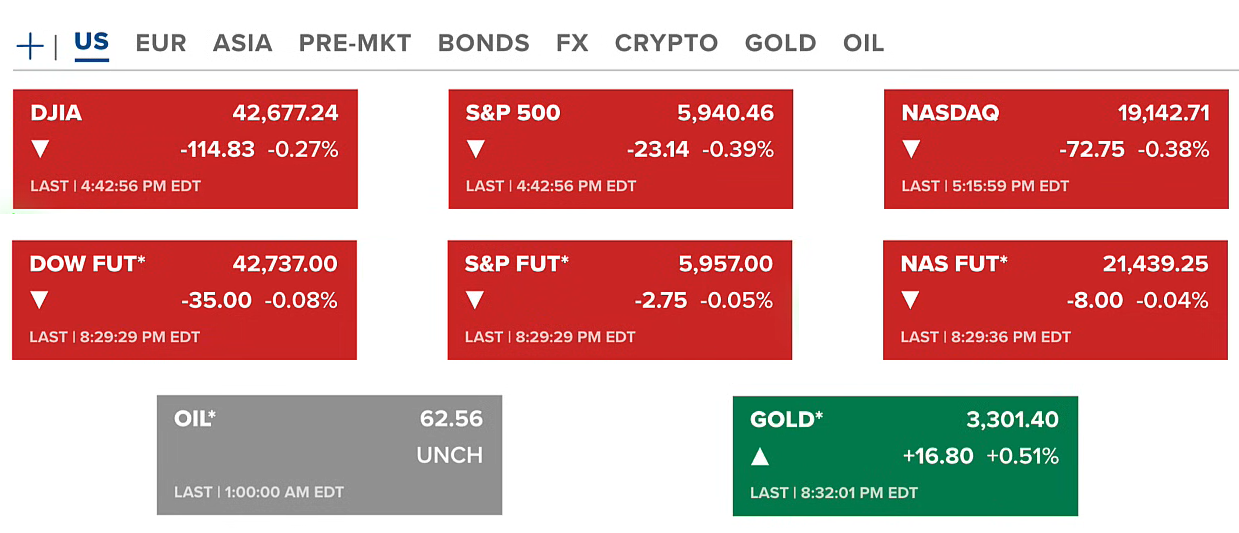
On May 20th, U.S. equity markets closed slightly lower across all three major indexes, each dropping around 0.3%. Futures contracts mirrored the same mild retreat. Crude oil hovered around $62.50 per barrel, amid volatility driven by renewed tensions in the Gulf region, while gold surged to $3,301/oz as global risk appetite wavered.
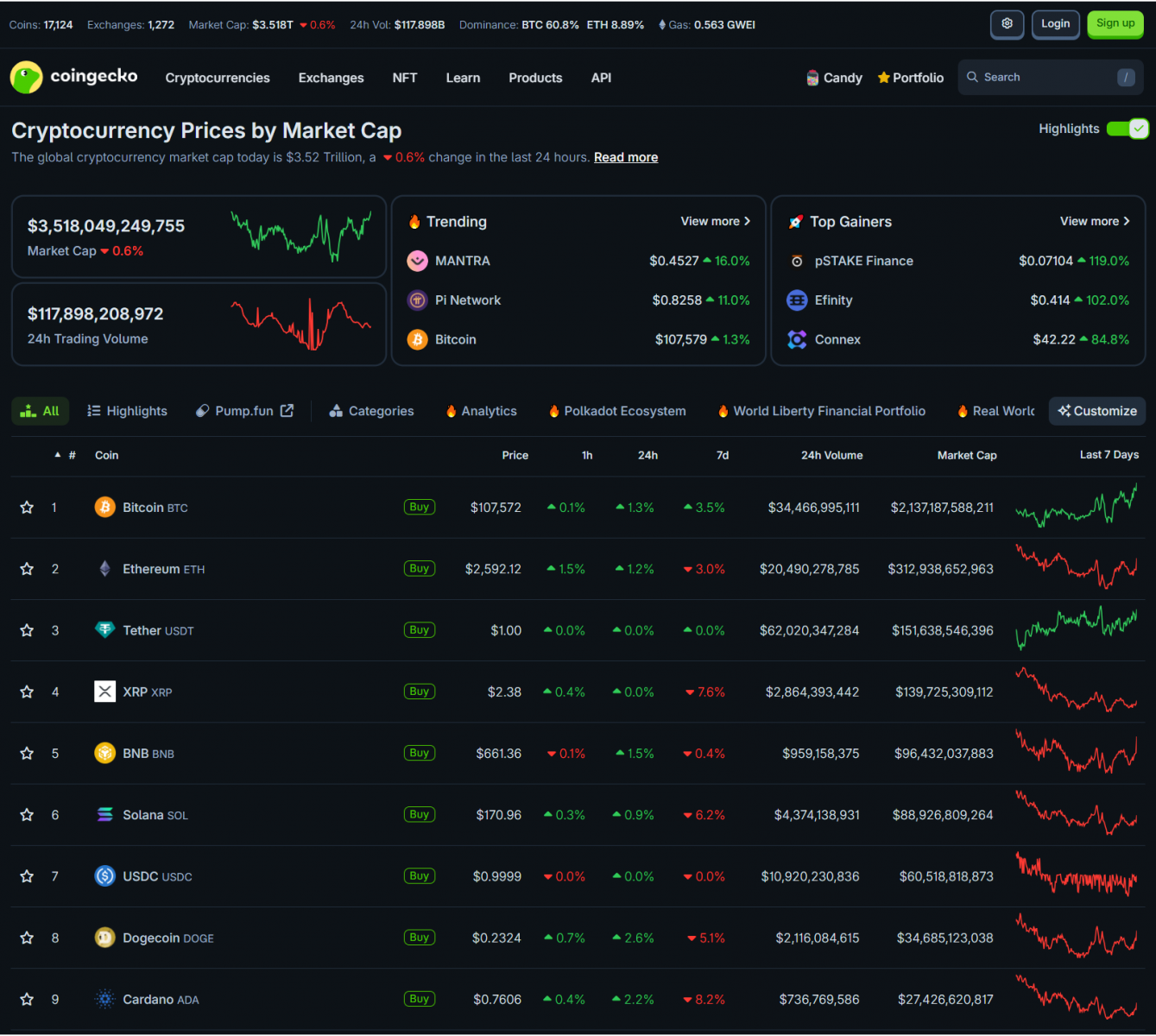
Bitcoin, on the other hand, briefly touched $107,000 before closing its daily candle at a historic high of $106,800. With most top altcoins also in green, the total crypto market cap climbed to $3.518 trillion. At this level, 99.6% of BTC holders are in profit, a signal of strong conviction and potentially bullish momentum as market participants await a breakout past prior all-time highs.
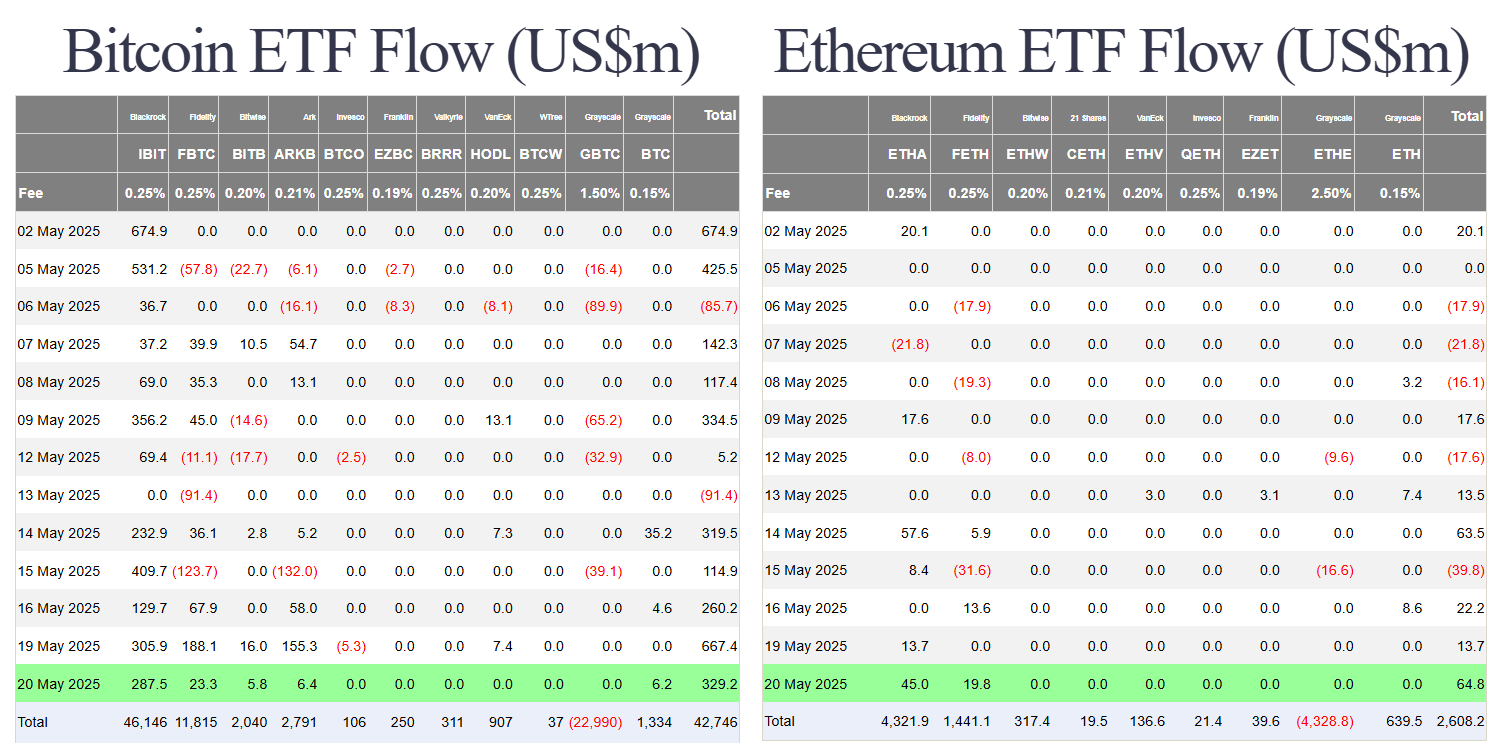
U.S. Bitcoin spot ETFs recorded another strong inflow of $329.2 million, with the majority coming from BlackRock’s IBIT. ETH ETFs followed with $64.8 million, reinforcing the persistent institutional demand for crypto assets even amid uncertain macroeconomic backdrops.
Japanese Bond Market Implosion Signals Deeper Global Risk
The crisis unfolding in Japan’s long-duration bond market is rapidly shifting from a domestic issue to a global concern. A 1% spike in 40-year JGB yields since April, now sitting at 3.56%, has triggered significant mark-to-market losses across portfolios. With the Bank of Japan aggressively trimming its QE program—shedding ¥25 trillion ($172 billion) in bond holdings in 2024 alone—investors are reeling from both tightening liquidity and deteriorating confidence.
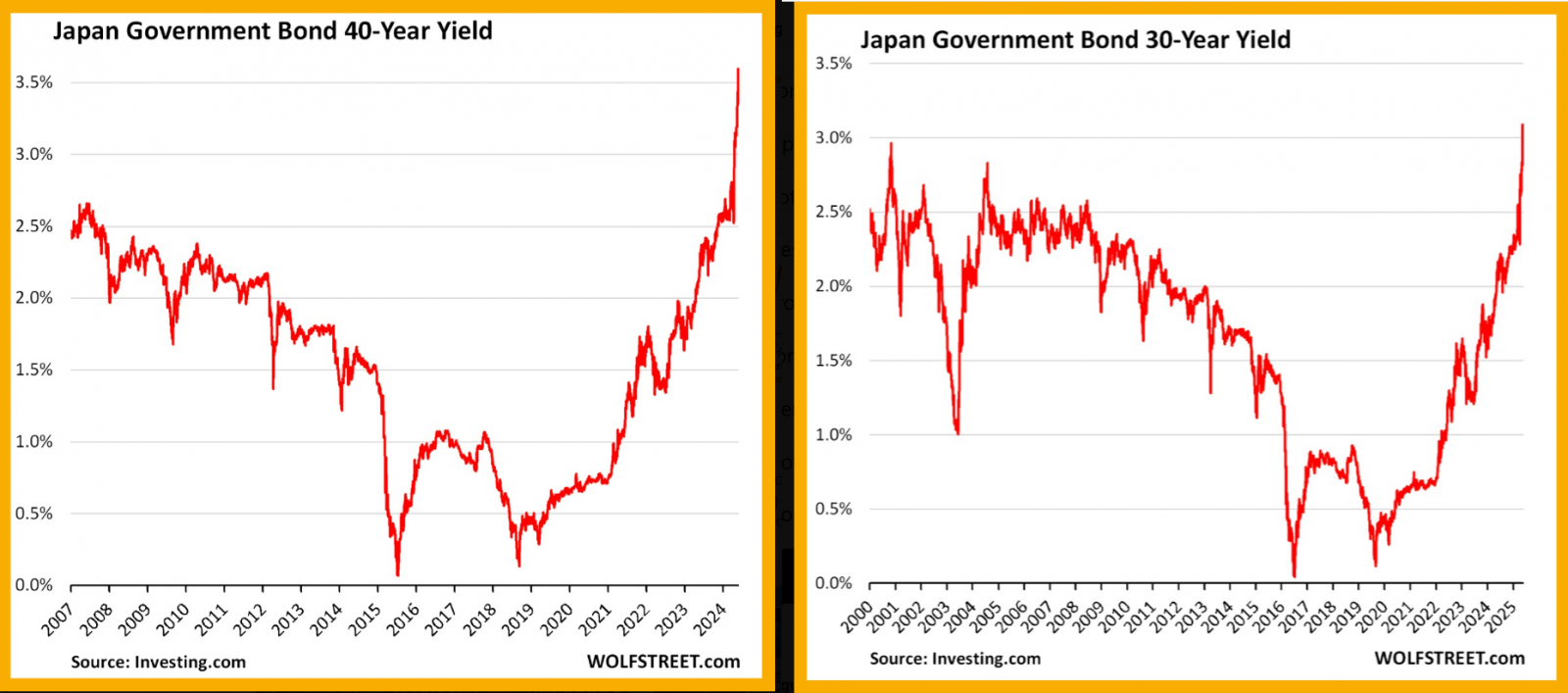
The inflation rate in Japan now exceeds that of the U.S. at 3.6%, creating a toxic environment where nominal yields are climbing, but real yields remain negative. Domestic capital, once drawn to foreign bonds like U.S. Treasuries, is now showing signs of repatriation. Japan, with over $1.13 trillion in U.S. Treasury holdings, is a pivotal player in global fixed-income markets. Any sustained shift away from U.S. debt could elevate yields globally—raising borrowing costs at a time when the U.S. is already ramping up debt issuance.
Carry trades that relied on cheap yen funding are now in jeopardy. As Japanese yields rise, investors are incentivized to park funds domestically, draining global liquidity. In this context, the Japanese bond collapse is not just a national crisis—it’s a systemic risk to global financial stability.
Global Central Banks Shift Toward Rate Cuts
In a coordinated signal of policy softening, both the People’s Bank of China and the Reserve Bank of Australia cut their benchmark lending rates. China dropped its 1-year LPR to 3.0% and 5-year LPR to 3.5%, the first reduction since October. Meanwhile, Australia eased its target rate to 3.85%, down from 4.10%. These rate cuts underscore the fragility of global growth and hint at an emerging consensus: monetary easing may soon be the only path forward.
U.S. Capital Inflows Continue While Fiscal Risks Intensify
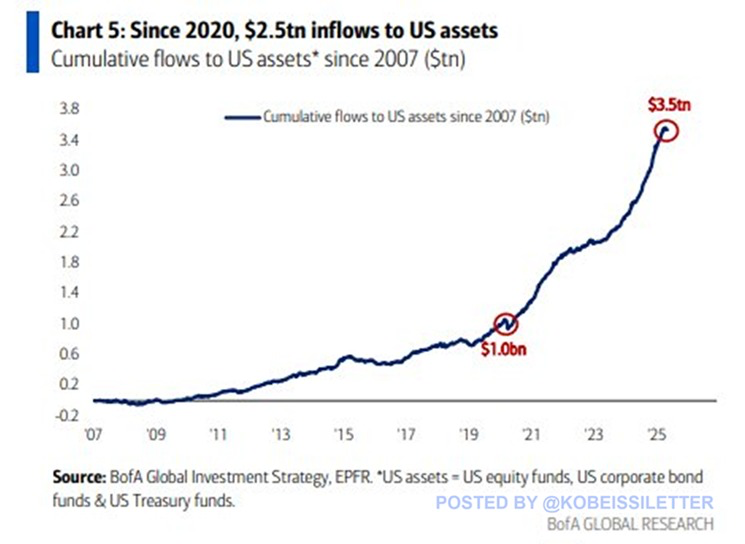
Despite bearish economic signals, U.S. assets continue attracting vast inflows. Since 2007, over $3.5 trillion has been allocated to U.S. equities, corporate bonds, and Treasuries. Even during the bear market of 2022, inflows remained resilient. However, a large portion of this capital originates from stimulus measures that disproportionately favored corporate balance sheets and high-net-worth individuals—further inflating asset prices and exacerbating inequality.
Michael Saylor sharply criticized this phenomenon, describing real estate as a “piggy bank for the rich.” Instead of serving housing needs, properties are hoarded as inflation hedges. His perspective positions Bitcoin as a democratic alternative—one that cannot be manipulated by central banks or withheld from public utility.
Bitcoin’s Appeal Amid Fiat Instability
Bitcoin’s narrative as a hedge against fiscal and monetary instability is gaining traction. With global central banks struggling to balance inflation and economic slowdown, BTC’s capped supply and decentralization stand in stark contrast to the unlimited issuance of fiat currencies. In Japan, where debt-to-GDP levels exceed even Greece, and the BoJ is pulling back on bond purchases, investors are increasingly drawn to crypto as a defensive asset.
The U.S. Senate Advances the GENIUS Act for Stablecoin Regulation
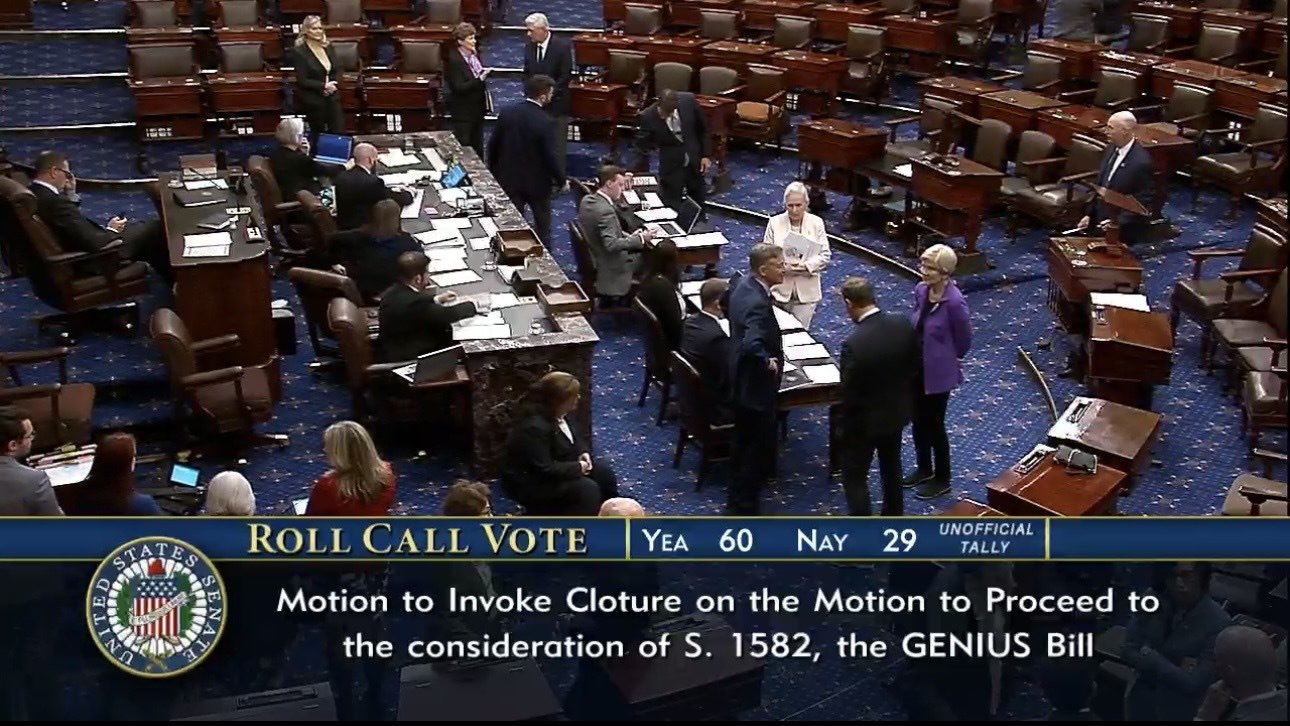
The GENIUS Act—America’s most significant stablecoin legislation to date—passed its second cloture vote in the Senate with 60 votes in favor. This pivotal development paves the way for full Senate debate, potential amendments, and eventual ratification. The bill mandates 100% collateralization of stablecoins using cash or short-term Treasuries, which may dramatically increase demand for U.S. government debt.
Senator Tim Scott praised the bipartisan support for the GENIUS Act, calling it a long-overdue move toward financial modernization. Senator Bill Hagerty echoed the sentiment, stressing that dollar-backed stablecoins would help maintain USD dominance in global finance. With Citi projecting stablecoin issuers could become the largest holders of Treasuries by 2030, the convergence of digital and traditional finance is accelerating.
Institutional and Public Sector Adoption of Bitcoin Surges
MicroStrategy continues to lead corporate Bitcoin adoption, with over 14 U.S. states—led by California and Florida—investing in MSTR shares through public pension funds. Meanwhile, K33 Research reports 97 public companies now hold BTC in 2025, up from just 36 in 2022. The U.S. leads this trend, followed by Canada and Hong Kong.

Distribution data confirms that private individuals still control the lion’s share of BTC supply (68.2%), with ETFs, corporates, and governments collectively holding less than 15%. This concentration reinforces BTC’s grassroots ownership model while signaling future supply constraints as institutional appetite grows.
Stablecoin Legislation Could Drive Massive Treasury Demand
If the GENIUS Act is passed and fully implemented, stablecoin issuers will be mandated to back every token with real cash or short-duration Treasuries. This could transform them into one of the largest Treasury purchasers, providing critical liquidity to a U.S. government facing ballooning deficits. Citi analysts believe this structural demand could stabilize funding markets and embed stablecoins more deeply into the traditional financial system.
Other Headlines and Notable Moves
- France’s Blockchain Group raised €8.6M to buy BTC.
- London-listed Smarter Web Company expanded its BTC holdings to 35.62 BTC.
- KULR Technology now holds over 800 BTC, worth approximately $78M.
- Indonesia’s DigiAsia surged 90% after unveiling a $100M BTC acquisition plan.
- Texas passed the second reading of its State Strategic Bitcoin Reserve Bill.
- The U.S. Senate unexpectedly passed Trump’s “No Tax on Tips” Act.
Final Thoughts – BTC’s Role in a Financially Fractured World
The convergence of macroeconomic instability—from Japan’s collapsing bond market to U.S. fiscal overspending—highlights systemic vulnerabilities across traditional finance. In this context, Bitcoin’s consistent upward trajectory and expanding institutional footprint appear far less speculative and far more logical. The GENIUS Act signals a regulatory pivot, not toward restriction but toward integration—offering crypto a formal seat at the financial table. With central banks easing, inflation pressures lingering, and fiat trust eroding, BTC’s role as a global reserve asset may just be entering its next major phase.
Disclaimer: This content is for informational purposes only and does not constitute financial advice. Always conduct your own research before making investment decisions.