
Bitcoin on Ice: The Fascinating Tale of Long-Unmoved Coins
Not long ago, a bitcoin whale made waves by shifting funds from eight separate wallets—each holding a hefty 10,000 BTC—for the first time in more than 14 years. Bitcoin.com News has been tracking these long-idle coins for years. Commonly called “sleeping,” “dormant,” or “inactive” bitcoins, they’re simply units of bitcoin that haven’t budged from their blockchain addresses in ages, often sitting untouched for years on end.
Think of sleeping bitcoins like an old piggy bank tucked away on a shelf—packed with coins, but untouched for years. Since bitcoin lives on a public ledger called the blockchain, where every transaction is visible, coins that sit idle in a wallet without moving are known as “sleeping.” These bitcoins are unique because they carry pieces of Bitcoin’s early story and the people behind it.
At that time, they could be owned by individuals who mined or scooped them up back when bitcoin was practically worthless. The people or groups behind these coins are either holding tight, hoping they’ll be worth even more down the line—or they’ve lost access to their wallets entirely, which could mean that BTC is out of reach for good.
A Closer Look at a Dormant Bitcoin Transfer—and What’s Driving These Bold Moves
Here’s a solid example of a freshly awakened bitcoin from 2011, following this week’s eye-popping 80,000 BTC move. At block height 904354, someone transferred 0.01011541 BTC that had been untouched since Oct. 30, 2011. While that tiny transaction looked like a mere $1,100 transfer, the same wallet actually moved 13.559 BTC—worth $1.479 million that day.
Moving sleeping bitcoins—those that have sat untouched in blockchain wallets for years—can happen for all sorts of reasons, from personal and financial to technical or strategic. One of the biggest motivators? Cashing in. A lot of these idle coins were snagged by early adopters or miners back when bitcoin was dirt cheap—sometimes under a buck, or even just pennies. Concerns over security or tech issues can also spark the movement of sleeping bitcoins.
Wallets from the early days—think 2009 to 2013—often used old-school software, storage setups, or cryptographic methods that might now be at risk from hacks or hardware breakdowns. In some situations, bitcoins are transferred as part of estate planning or inheritance arrangements. At other times, shifting sleeping coins may serve as a market signal or strategic play—especially when the moves come from heavyweight holders, often called “ whales.”
Millions of Coins Are Still Frozen in Time
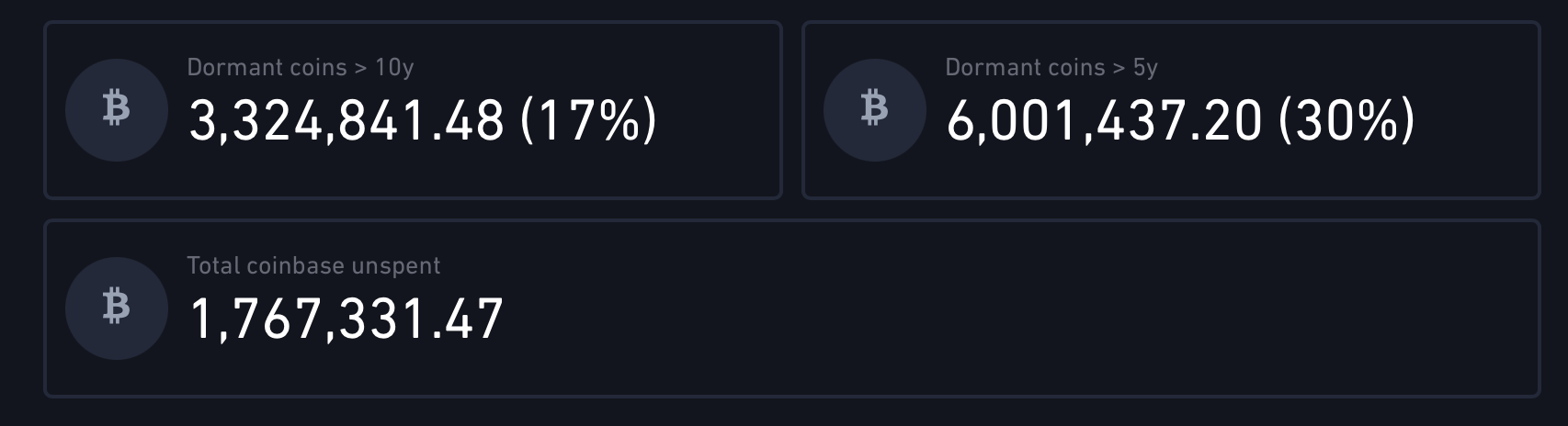
People keep tabs on sleeping bitcoins with tools that track blockchain activity in real time. For example, 17% of all BTC—around 3.32 million coins—haven’t moved in over a decade. Meanwhile, coins untouched for more than five years make up 30% of the supply, or just over 6 million BTC. There are also unspent coinbase rewards—these are unspent transaction outputs ( UTXOs) from mined blocks where the miner never moved the bitcoin they earned.
Data reveals that 1.76 million bitcoin from unspent coinbase rewards remain untouched since the day they were mined—and it’s estimated that about 1.2 million of those coins came from blocks mined by Satoshi Nakamoto. As sleeping bitcoins awaken, each movement whispers hints of forgotten keys, newly found fortunes, or calculated decisions. Whether treasure or ghost, these silent coins continue to haunt the market—echoes of bitcoin’s past still waiting to be claimed.