
Stablecoins: Bridging Crypto and Fiat for Price Stability
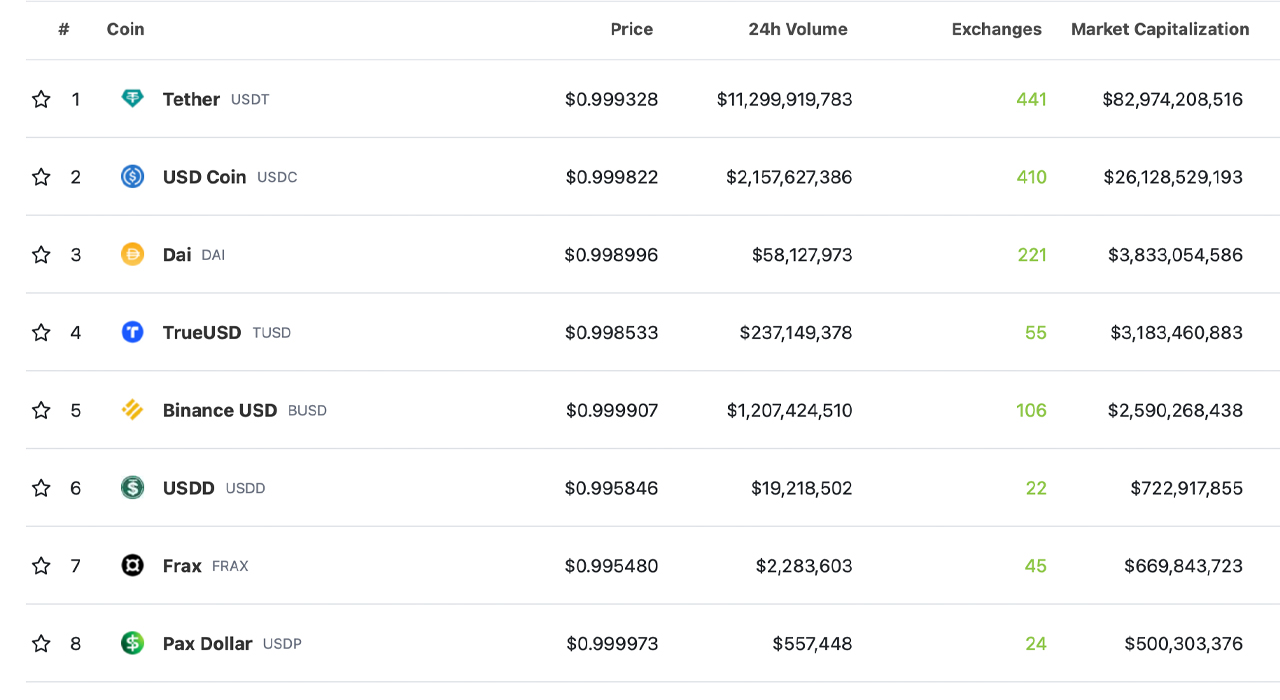
Today, the bustling stablecoin ecosystem boasts an impressive total value of $123 billion, encompassing numerous projects. Having been a prominent presence in the financial landscape for nearly a decade, stablecoins have firmly established themselves as pillars in the crypto universe.
Leading the market in terms of capitalization are renowned stablecoins such as tether ( USDT), usd coin (USDC), dai (DAI), trueusd (TUSD), and binance usd (BUSD). Stablecoins aim to achieve price stability by pegging their market value to external references, such as fiat currency or commodities. These digital assets blend elements of cryptocurrencies with traditional payment and value storage methods, offering a form of price reliability.
In contrast to decentralized cryptocurrencies like BTC or ETH, the majority of stablecoins are typically centralized, under the control of central issuers. These central entities possess the authority to freeze tokens pegged to fiat currencies and take control of the funds. Conversely, decentralized digital currencies like BTC or ETH are immune to such intervention, providing them with a distinct advantage in terms of trustlessness and fostering innovation.
The 4 Types of Stablecoin Token Assets
There are four primary types of stablecoins: fiat-collateralized, crypto-collateralized, commodity-collateralized, and algorithmic stablecoins.
Fiat-backed stablecoins are linked to government-issued currencies like the US dollar, British pound, and the eurozone’s euro. For every stablecoin in circulation, there must be an equivalent dollar held in reserve, maintaining a 1:1 ratio. Tether’s USDT is the most popular fiat-backed stablecoin, both in terms of activity and market capitalization.

Crypto-collateralized stablecoins utilize other cryptocurrencies as reserves instead of fiat. Makerdao’s DAI stablecoin accepts ether as collateral. Holders deposit ether into smart contracts to support the minting of DAI tokens. Tron’s USDD operates similarly, leveraging TRON ( TRX) for USDD backing.
Commodity-backed stablecoins tie their value to real-world assets such as precious metals. Tether Gold uses gold bars stored in vaults to back its XAUT token. This gold collateral provides XAUT with intrinsic value beyond the realm of cryptocurrencies. Other precious metals and commodity-backed stablecoins follow similar pegging methodologies.
Algorithmic stablecoins, on the other hand, lack collateral. They rely on smart contracts and supply adjustments to maintain a consistent price. When demand increases, additional coins are issued, and when demand decreases, coins are repurchased and removed from circulation. Terra’s stablecoin UST was initially an algorithmic stablecoin, but it lost its entire value when the Terra blockchain ecosystem collapsed.
The History of Stablecoins
Stablecoins first emerged around 2014, driven by crypto enthusiasts’ desire to mitigate volatility. Bitshares, founded by Dan Larimer, introduced BITUSD, one of the earliest stablecoins, pegged to the US dollar. In the same year, Tether introduced USDT, also tied to the dollar. Today, there are over 200 stablecoins in existence, reflecting the demand for stability within the crypto space. In November 2018, BITUSD lost its peg with the U.S. dollar and has not regained it since. Tether has remained a leader since its inception and boasts the largest market valuation, standing at $82 billion.
The Benefits and Risks of Stablecoins
Serving as a bridge between fiat currencies and digital assets, stablecoins enhance the utility of blockchain for payments, lending, and trading. They provide the price stability necessary for cryptocurrencies to function as everyday money, ensuring that the transferred value remains constant without price fluctuations. Their emergence represents a significant milestone in blockchain’s gradual journey towards mainstream adoption.
In conclusion, stablecoins have emerged as a crucial component of the cryptocurrency ecosystem, offering benefits such as price stability and reliability in an otherwise volatile market. With a total value exceeding $123 billion and a variety of types to choose from, stablecoins have proven their worth in facilitating payments, lending, and trading.
However, it’s essential to acknowledge that not all stablecoins have succeeded; some have experienced failures, underscoring the risks associated with this space. Nonetheless, as the crypto landscape continues to evolve, stablecoins remain a pivotal bridge between traditional finance and digital assets, shaping the path toward wider adoption and financial innovation.
What do you think about stablecoins? Share your thoughts and opinions about this subject in the comments section below.