Overview of NEAR Protocol
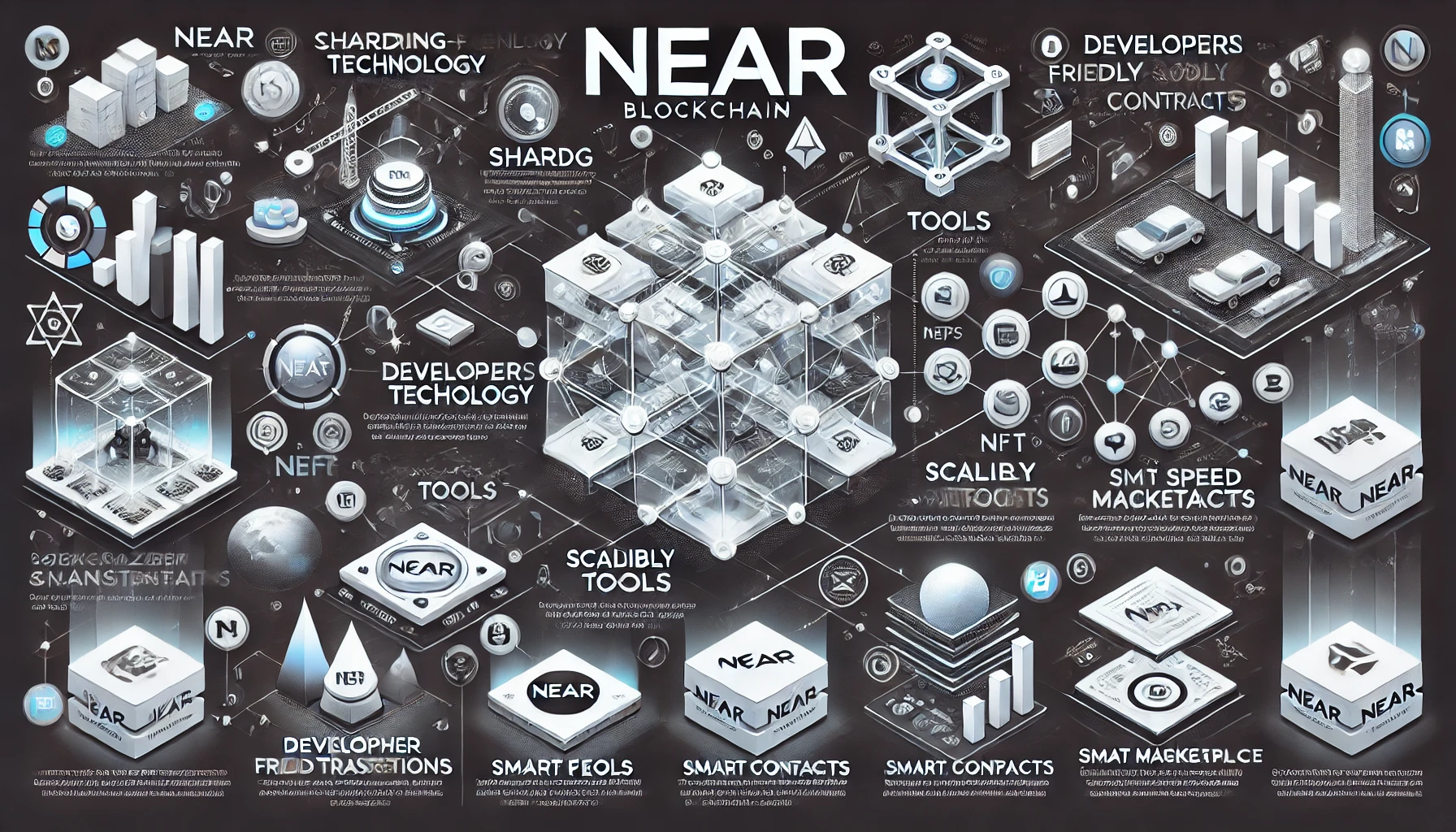
NEAR Protocol is a Layer-1 blockchain designed to offer scalability, simplicity, and a developer-friendly environment. Its ecosystem is rapidly expanding with a robust lineup of projects across DeFi, NFTs, gaming, and more. With significant backing from top-tier investors and a strategic roadmap, NEAR has emerged as a powerful contender in the blockchain landscape.
Key Backers and Investments
NEAR has attracted substantial support from leading venture capital firms, highlighting its potential for long-term growth.
- Top Investors:
- a16z, Coinbase Ventures, Pantera Capital, Three Arrows Capital, Dragonfly Capital, Jump Capital, Alameda Research, Zee Prime, and Amber Group.
- NEAR raised $150 million in January 2022 from prominent investors such as Three Arrows Capital, Jump Crypto, and Alameda Research.
- Ecosystem Metrics (2023):
- Projects: 750+
- DAOs: 125+
- Treasury: $900M (as of Q2 2023), including $349M in fiat reserves and 315M NEAR tokens.
NEAR Ecosystem Milestones
- 2018: Formation of NEAR Protocol.
- 2020: Mainnet Phase 2 launch with community governance.
- 2021: Introduction of Rainbow Bridge and Nightshade Sharding for improved scalability.
- 2023: Launch of the Blockchain Operating System (BOS) and NEAR Horizon for project support.
Key Projects in the NEAR Ecosystem
1. Ref Finance
Ref Finance is the cornerstone of NEAR’s DeFi ecosystem, offering AMM functionality, token swaps, and liquidity provision. With consistent upgrades, it plays a critical role in supporting the growth of decentralized finance on NEAR.
2. Aurora
Aurora serves as NEAR’s Ethereum Virtual Machine (EVM), allowing developers to seamlessly migrate Ethereum dApps to NEAR. This bridge enhances NEAR’s compatibility with Ethereum-based ecosystems.
3. Paras :
Paras is a leading NFT marketplace specializing in digital art and collectibles. With a focus on creating a vibrant creator economy, it has emerged as a top choice for NFT enthusiasts on NEAR.
4. Octopus Network
A multi-chain network designed for launching application-specific blockchains, Octopus enhances interoperability and scalability across NEAR and other ecosystems.
5. Mintbase
Mintbase empowers creators to mint and trade NFTs easily. By simplifying NFT creation, Mintbase supports NEAR’s efforts to democratize blockchain technology.
6. Proximity Labs
A research and development hub that supports DeFi projects with funding, technical assistance, and advisory services.
7. TenK DAO
This DAO supports artists by enabling generative art projects while integrating royalties and sales mechanisms.
DeFi on NEAR Protocol
NEAR Protocol’s DeFi landscape is expanding, with critical components like AMM DEXs, lending platforms, and stablecoins forming the ecosystem’s backbone.
Key Metrics (2023):
- TVL: $750M+
- Aurora TVL: $700M (January 2022).
AMM DEX
- Trisolaris: The leading DEX on Aurora with over 70% of Aurora’s TVL.
- Ref Finance: NEAR-native AMM driving liquidity and token swaps.
Lending and Borrowing
- Burrow Cash (Near-native): A lending protocol expected to launch soon.
- Aurigami (Aurora-native): A promising lending platform on Aurora.
NFTs and Gaming
NEAR has a thriving NFT ecosystem and is making strides in blockchain-based gaming.
NFT Marketplaces
- Paras and Mintbase: Leading platforms for NFT creation and trading, with a focus on digital art and collectibles.
Gaming Projects
- Human Guild: Supports gaming projects on NEAR, offering grants and developer assistance.
- NEAR Horizon: Provides mentorship and funding for gaming developers.
Future Outlook and Investment Opportunities
NEAR’s Growth Potential
NEAR is poised to solidify its position as a leading blockchain platform through:
- Sharding Advancements: Enhanced scalability via Nightshade Sharding.
- DeFi Development: Continued growth of DeFi primitives such as lending and yield farming.
- EVM Compatibility: Attracting Ethereum-based projects via Aurora.
- NFT and Gaming Innovations: Interactive NFTs and blockchain-based gaming.
Investment Opportunities
- NEAR Token: Hold NEAR for potential long-term growth driven by ecosystem development.
- Ecosystem Projects: Explore tokens from leading projects like Ref Finance and Trisolaris.
- IDO Participation: Invest in early-stage projects launching on NEAR.
- Yield Farming: Leverage high APY opportunities across NEAR and Aurora DEXs.
Challenges and Considerations
While NEAR shows immense potential, challenges remain:
- Adoption: Attracting more developers and builders to expand the ecosystem.
- Interoperability: Ensuring seamless interaction with other blockchain ecosystems.
- User Base: Increasing active users through innovative dApps and incentives.
Here’s a detailed comparison of NEAR Protocol with other leading Layer 1 blockchains to provide a comprehensive perspective on their strengths, weaknesses, and future potential.
1. NEAR vs. Ethereum
Feature
NEAR Protocol
Ethereum
Consensus Mechanism
Nightshade Sharding (Proof-of-Stake)
Proof-of-Stake (since Ethereum 2.0)
Scalability
Sharding for parallel processing
Limited scalability; moving towards sharding in Ethereum 2.0
Transaction Speed
1-2 seconds per transaction
~15 seconds per transaction (post-merge)
Transaction Cost
~$0.01 per transaction
~$0.50 to $2 (depending on network load)
EVM Compatibility
Fully compatible via Aurora
Native EVM
TVL (2024)
~$750M
~$30B
Developer Incentives
NEAR Grants, NEAR Horizon
Ethereum Foundation funding, ecosystem-specific grants
Ecosystem Size
~750+ projects
~4,000+ projects
Strengths
High scalability, low fees, developer-friendly tools
Robust ecosystem, highest developer activity, and network effects
Challenges
Smaller ecosystem, lower user adoption
High fees during peak demand, scalability limitations pre-sharding
Verdict:
NEAR excels in scalability and cost-efficiency, while Ethereum dominates in developer activity and ecosystem size. NEAR’s Aurora provides a robust bridge to Ethereum’s ecosystem, making NEAR a complementary solution rather than a direct competitor.
2. NEAR vs. Solana
Feature
NEAR Protocol
Solana
Consensus Mechanism
Nightshade Sharding (Proof-of-Stake)
Proof-of-History + Proof-of-Stake
Scalability
Advanced sharding mechanisms
High throughput (~65,000 TPS)
Transaction Speed
1-2 seconds per transaction
~400ms per transaction
Transaction Cost
~$0.01 per transaction
~$0.00025 per transaction
EVM Compatibility
Fully compatible via Aurora
No native EVM compatibility (requires bridges)
TVL (2024)
~$750M
~$1.5B
Ecosystem Size
~750+ projects
~1,200+ projects
Decentralization
Highly decentralized
Concerns over centralization and validator reliability
Strengths
Robust sharding, cost-effective, EVM-compatible
High speed, low costs, active NFT and DeFi ecosystem
Challenges
Smaller ecosystem, newer in DeFi
Frequent network outages, concerns over decentralization
Verdict:
Solana leads in speed and cost efficiency, making it ideal for high-frequency applications like NFTs and gaming. However, NEAR’s focus on decentralization and interoperability (via Aurora) provides it with a more sustainable long-term edge.
3. NEAR vs. Avalanche
Feature
NEAR Protocol
Avalanche
Consensus Mechanism
Nightshade Sharding (Proof-of-Stake)
Avalanche Consensus (Proof-of-Stake)
Scalability
High scalability with sharding
Subnets enable high scalability
Transaction Speed
1-2 seconds per transaction
~1-2 seconds per transaction
Transaction Cost
~$0.01 per transaction
~$0.10-$0.30 per transaction
EVM Compatibility
Fully compatible via Aurora
Fully EVM-compatible (C-Chain)
TVL (2024)
~$750M
~$3B
Ecosystem Size
~750+ projects
~1,000+ projects
Strengths
Sharding for scalability, robust EVM support
Subnet flexibility, strong DeFi presence
Challenges
Less adoption in DeFi
High reliance on Subnets for scalability
Verdict:
Both NEAR and Avalanche offer excellent scalability and low fees, with Avalanche benefiting from its strong presence in DeFi. NEAR’s Aurora gives it an edge in Ethereum compatibility, while Avalanche excels with its Subnet architecture.
4. NEAR vs. Binance Smart Chain (BSC)
Feature
NEAR Protocol
Binance Smart Chain
Consensus Mechanism
Nightshade Sharding (Proof-of-Stake)
Proof-of-Staked Authority (PoSA)
Transaction Speed
1-2 seconds per transaction
~3 seconds per transaction
Transaction Cost
~$0.01 per transaction
~$0.05 per transaction
EVM Compatibility
Fully compatible via Aurora
Fully EVM-compatible
Ecosystem Size
~750+ projects
~2,000+ projects
Centralization
Decentralized
Highly centralized (21 validators controlled by Binance)
TVL (2024)
~$750M
~$5B
Strengths
Decentralization, developer-friendly tools
Large user base, low fees, Binance support
Challenges
Smaller user base, fewer projects
Centralization concerns
Verdict:
BSC thrives on Binance’s brand strength and a massive user base. However, NEAR offers better decentralization and scalability solutions, making it a strong competitor for developers seeking autonomy.
TDL;DR
- Scalability and Cost Efficiency: NEAR offers competitive scalability and low transaction fees, making it a viable alternative to Ethereum.
- Developer Ecosystem: With tools like NEAR Horizon and EVM compatibility via Aurora, NEAR provides a developer-friendly environment.
- DeFi and NFTs: NEAR lags behind ecosystems like Ethereum and Solana but is rapidly catching up with initiatives like Ref Finance, Trisolaris, and Paras.
- Decentralization: NEAR’s Nightshade Sharding ensures better decentralization compared to centralized platforms like BSC.
- Future Potential: As sharding evolves and NEAR’s ecosystem matures, it could position itself as a leader in the blockchain space, particularly for scalable DeFi and dApps.
NEAR Protocol’s strengths in scalability, developer support, and cost-efficiency make it a formidable contender among Layer-1 blockchains, with significant room for growth in DeFi, NFTs, and gaming.
Conclusion
The NEAR Protocol ecosystem represents a blend of innovation, scalability, and robust community support. With a strategic roadmap, significant investor backing, and a growing array of projects, NEAR is well-positioned to drive the future of decentralized applications and blockchain technology.
Disclaimer:
This content is for informational purposes only and does not constitute financial or investment advice. Readers are encouraged to conduct their own research before making investment decisions.