Manage your TRX and other cryptocurrencies securely with the self-custody Bitcoin.com Wallet app.
TRON (TRX) is a blockchain platform designed for decentralized applications, smart contracts, and digital assets. The network enables fast, low-cost transactions and supports a growing ecosystem of DeFi platforms, NFTs, stablecoin transfers, and Web3 applications. This guide explains how the TRON blockchain works, how TRX is used, and why the network has become a major part of the decentralized web.
TRON Blockchain (TRX): Overview
TRON is a blockchain platform designed to run decentralized applications (dApps), smart contracts, and digital assets. Its native cryptocurrency, TRX, is used for transactions, staking, and governance. The network uses a Delegated Proof-of-Stake consensus system that enables fast, low-cost transactions and supports a large ecosystem of DeFi platforms, NFTs, and gaming applications.
Governed by TRON DAO, the network aims to create an open infrastructure for decentralized internet services where developers can build applications without relying on centralized intermediaries. Over time, TRON has become one of the most widely used blockchains for stablecoin transfers and decentralized applications.
Quick Facts About TRON
- Launch year: 2017
- Founder: Justin Sun
- Native token: TRX
- Consensus mechanism: Delegated Proof-of-Stake (DPoS)
- Validators: 27 Super Representatives
- Primary use cases: dApps, DeFi, stablecoin transfers, gaming, and digital content platforms
History and Evolution of TRON
TRON was founded in 2017 by Justin Sun. The project initially launched as an ERC-20 token on Ethereum before migrating to its own independent blockchain in June 2018.
Since then, the ecosystem has expanded through several key milestones:
- 2018: TRON acquired BitTorrent, one of the world’s largest peer-to-peer file sharing networks, bringing millions of users into its broader ecosystem.
- 2019: The network introduced the TRC-20 token standard, similar to Ethereum’s ERC-20, allowing developers to issue tokens and build decentralized financial applications.
- 2020: The ecosystem expanded into Decentralized Finance (DeFi) through platforms such as JustLend and JustSwap.
- 2021: TRON transitioned into a DAO, shifting governance decisions to token holders and the community.
- 2023-2025: TRON became one of the leading blockchains for stablecoin settlement, particularly for USDT transfers, due to its fast transactions and low fees.
Today, TRON supports thousands of decentralized applications across finance, gaming, digital collectibles, and social platforms.
How TRON Works
Delegated Proof-of-Stake (DPoS)
TRON uses a Delegated Proof-of-Stake consensus mechanism. In this system, TRX holders vote for 27 Super Representatives, who validate transactions and produce blocks on the network.
This model allows TRON to process transactions significantly faster than many earlier blockchains. The network can reach transaction speeds of around 2,000 transactions per second (TPS) while maintaining relatively low costs.
Smart Contracts & dApps
TRON supports smart contracts that allow developers to build decentralized applications. These programs execute automatically when predefined conditions are met.
Because TRON is compatible with Solidity, many developers familiar with Ethereum tools can easily build or migrate applications to the network.
Thousands of dApps now operate on TRON, covering sectors such as decentralized finance, blockchain gaming, NFT marketplaces, and digital media platforms.
Resource Management: Bandwidth & Energy
Instead of relying entirely on transaction fees, TRON uses a resource system that includes Bandwidth and Energy.
- Bandwidth is used for simple transactions.
- Energy is required for smart contract execution.
Users can obtain these resources by staking TRX or by purchasing bandwidth and energy through the network, which helps reduce transaction costs for active participants. Some third-party services also provide Energy delegation tools that allow users to access these resources on demand, such as TronZap, an Energy delegation service for non-custodial wallets and a member of the TRON Builders League (TBL).
Users who want to estimate the amount of TRX required to generate a specific amount of Energy or Bandwidth can consult the TRON resource calculator, which provides real-time estimates based on current network conditions.
TRX: The Native Token of the TRON Network
TRX is the native cryptocurrency of the TRON blockchain and plays several roles within the ecosystem.
- Transaction Fees: TRX is used to pay for transactions on the network.
- Smart Contract Execution: TRX helps power decentralized applications and the execution of smart contracts.
- Staking and Governance: Token holders can stake TRX to vote for Super Representatives and participate in network governance.
- dApp Interactions: TRX is used within many decentralized applications (dApps), including games, financial platforms, and content services.
- Network Resources: Staked TRX can generate bandwidth and energy required for operating applications on the blockchain.
Readers interested in monitoring broader network activity – such as changes in TRX supply, staking participation, and token burns – can explore the public analytics available on the TRONSCAN charts dashboard.
Use Cases for TRON
Decentralized Entertainment & Content Sharing
TRON was originally designed to support decentralized digital content distribution. Projects such as BitTorrent File System (BTFS) allow users to store and distribute data across decentralized networks.
Decentralized Finance (DeFi)
The TRON ecosystem hosts a growing DeFi sector. Examples include:
- JustLend – lending and borrowing platform
- JustStable – decentralized stablecoin system
- JustSwap – decentralized exchange (DEX) for TRC-20 tokens
Stablecoin Transfers
TRON has become a major settlement layer for stablecoins such as USDT. The network processes billions of dollars in stablecoin transactions due to its low fees and high throughput.
TRON also supports its own algorithmic stablecoin, USDD.
NFTs and Blockchain Gaming
The network supports digital collectibles through its TRC-721 token standard. These tokens enable ownership of unique digital assets such as art, gaming items, and collectibles.
Web3 and Metaverse Platforms
TRON infrastructure is also used for decentralized social networks, digital economies, and metaverse platforms.
TRON vs Ethereum
TRON and Ethereum both support decentralized applications and smart contracts, but they differ in several areas.
FeatureTRONEthereumConsensusDelegated Proof-of-Stake (DPoS)Proof-of-Stake (PoS)Validators27 Super RepresentativesThousands of validatorsTransaction SpeedUp to ~2,000 TPSTypically 15–30 TPS on mainnetTransaction FeesVery lowVariable depending on network demandMain Use CasesStablecoin transfers, gaming, high-volume dAppsDeFi, smart contracts, large developer ecosystemLaunch Year20172015Native TokenTRXETHFeatureConsensusTRONDelegated Proof-of-Stake (DPoS)EthereumProof-of-Stake (PoS)FeatureValidatorsTRON27 Super RepresentativesEthereumThousands of validatorsFeatureTransaction SpeedTRONUp to ~2,000 TPSEthereumTypically 15–30 TPS on mainnetFeatureTransaction FeesTRONVery lowEthereumVariable depending on network demandFeatureMain Use CasesTRONStablecoin transfers, gaming, high-volume dAppsEthereumDeFi, smart contracts, large developer ecosystemFeatureLaunch YearTRON2017Ethereum2015FeatureNative TokenTRONTRXEthereumETH
While Ethereum remains the largest smart contract platform, TRON has built strong adoption in areas such as stablecoin payments and high-volume applications.
Strengths and Weaknesses of TRON
Strengths:
- High Transaction Throughput: TRON can process thousands of transactions per second using its DPoS architecture.
- Low Transaction Costs: The network is known for relatively low fees compared to many other blockchains.
- Large Stablecoin Ecosystem: TRON has become one of the largest networks for USDT transfers globally.
- Growing Developer Ecosystem: Thousands of decentralized applications operate on the network.
Weaknesses:
- Centralization Concerns: Because only 27 Super Representatives validate blocks, some critics argue the network is more centralized than other blockchains.
- Competition: TRON competes with major smart contract platforms such as Ethereum, Solana, and Avalanche.
- Regulatory Scrutiny: As with many blockchain projects, regulatory developments may influence future adoption.
How to Buy and Store TRX
TRX is widely available on centralized exchanges (CEXs) and decentralized exchanges (DEXs).
Users can store TRX in several types of wallets:
- Self-custody wallets such as the Bitcoin.com Wallet
- Hardware wallets for long-term storage
- dApp compatible wallets used to interact with TRON applications
The Future of TRON
TRON continues to expand as infrastructure for decentralized applications, financial platforms, and digital content networks.
Its long-term growth will depend on several factors:
- continued adoption of stablecoins and payment systems
- expansion of DeFi and Web3 applications
- improvements in scalability and developer tools
- evolving global regulatory frameworks
As blockchain technology develops, TRON is likely to remain a significant participant in the broader decentralized economy.
Conclusion
TRON is a blockchain platform focused on high-speed, low-cost transactions and support for decentralized applications. Through its Delegated Proof-of-Stake model and governance via TRON DAO, the network enables developers to build applications ranging from DeFi platforms and gaming ecosystems to digital content distribution systems.
Its growing role in stablecoin transfers, particularly for USDT, has made TRON one of the most widely used blockchains in terms of transaction volume. While the project continues to face competition from other smart contract platforms, its strong ecosystem, low fees, and scalable infrastructure position it as an important part of the evolving Web3 landscape.
Interview with Tron Founder Justin Sun
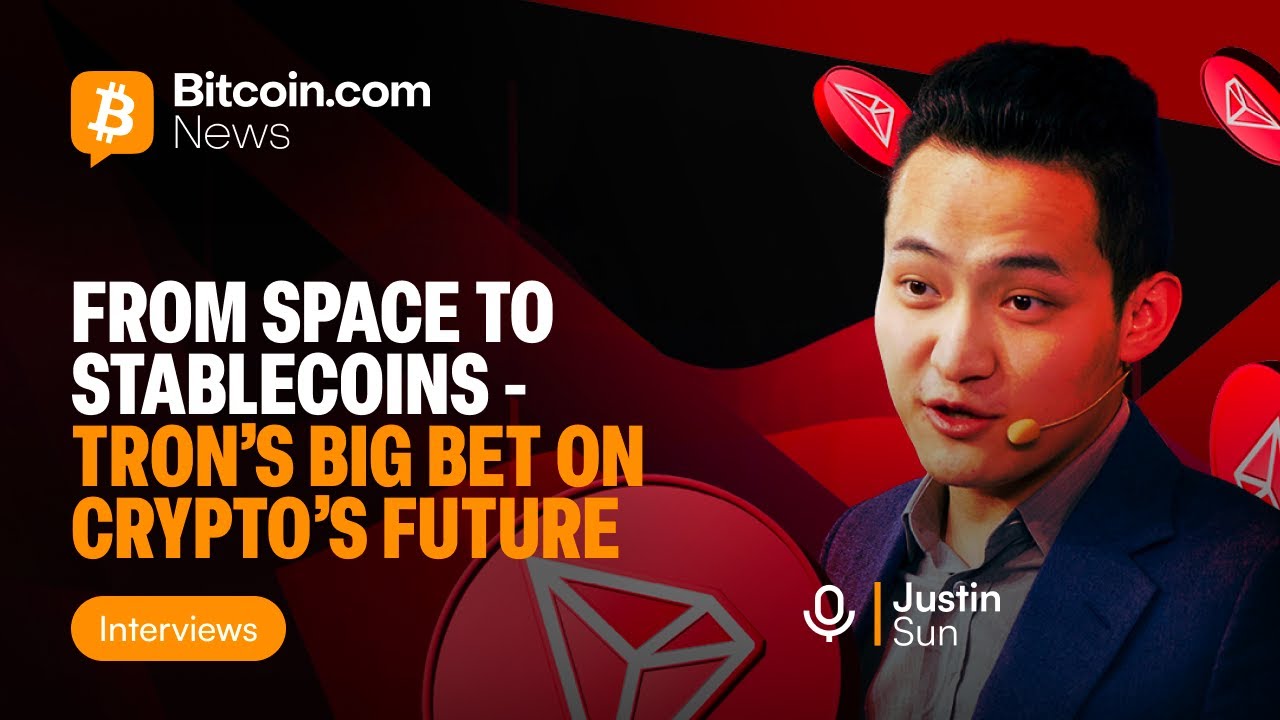
Bitcoin.com recently spoke with Justin Sun, founder of TRON DAO and advisor to BitTorrent and HTX, about TRON’s role in the global crypto ecosystem and the network’s growth as a settlement layer for stablecoins.
In the interview, Sun discusses why TRON has become a major network for stablecoin transactions, his views on institutional crypto adoption, and broader trends shaping the digital asset market, including perpetual futures trading and global competition between Asia and the United States. The conversation also touches on Sun’s personal outlook on technology, innovation, and long-term visions for the future of digital assets.