
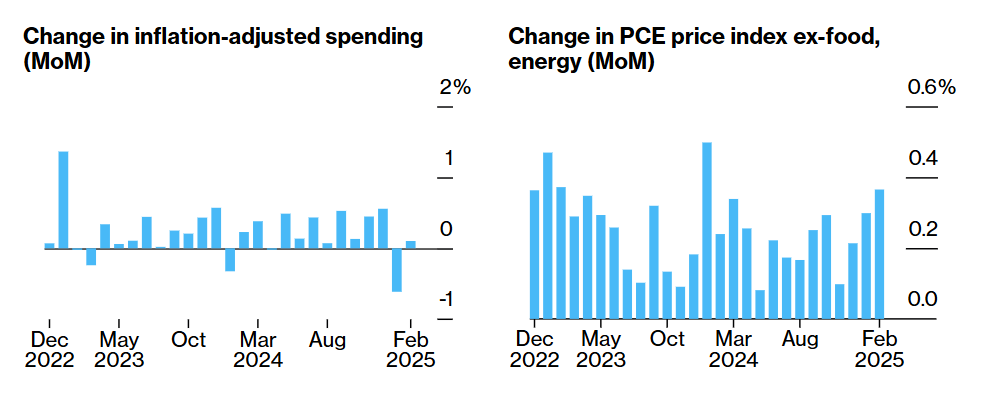
The U.S. stock market closed in the red last Friday, with many attributing the decline to inflation fears following higher-than-expected PCE data. However, a closer analysis suggests that the real driver of market anxiety may not be inflation, but the growing uncertainty surrounding tariffs under Trump’s administration.
Market Overview
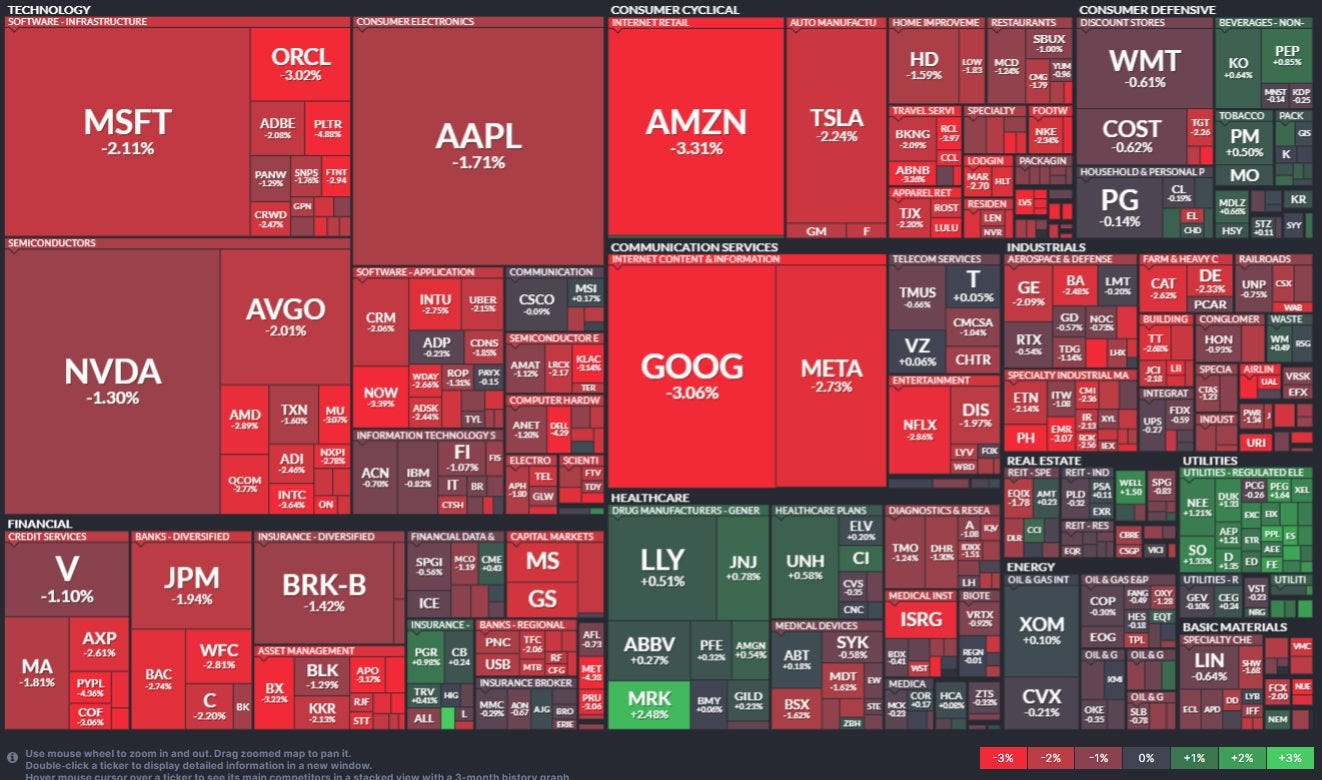
On March 29, the U.S. stock market tumbled, with:
- Dow Jones dropping sharply
- S&P 500 seeing further losses
- Nasdaq extending its decline
At the same time, gold reached a new all-time high, signaling that investors are shifting toward safe-haven assets due to rising uncertainty. Gold ETFs saw significant inflows, reinforcing the idea that market participants are more worried about unpredictability than inflation itself.
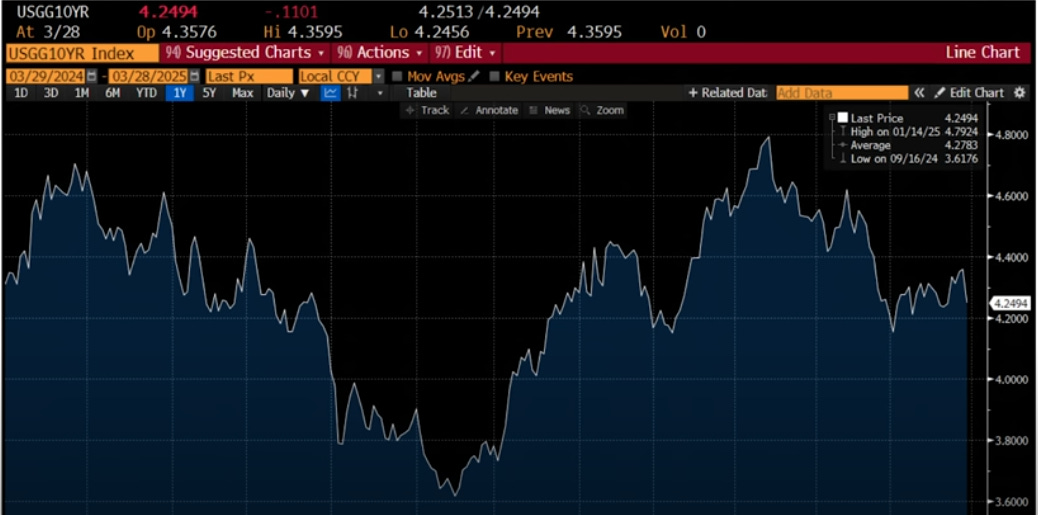
Treasury bond yields remained stable, contradicting the narrative that inflation fears are driving the market. If inflation were truly the primary concern, we would expect bond yields to surge as investors demand higher returns for holding U.S. debt. Instead, the real market anxiety stems from uncertainty over Trump’s aggressive trade policies.
Consumer Confidence Plunges Amid Policy Uncertainty
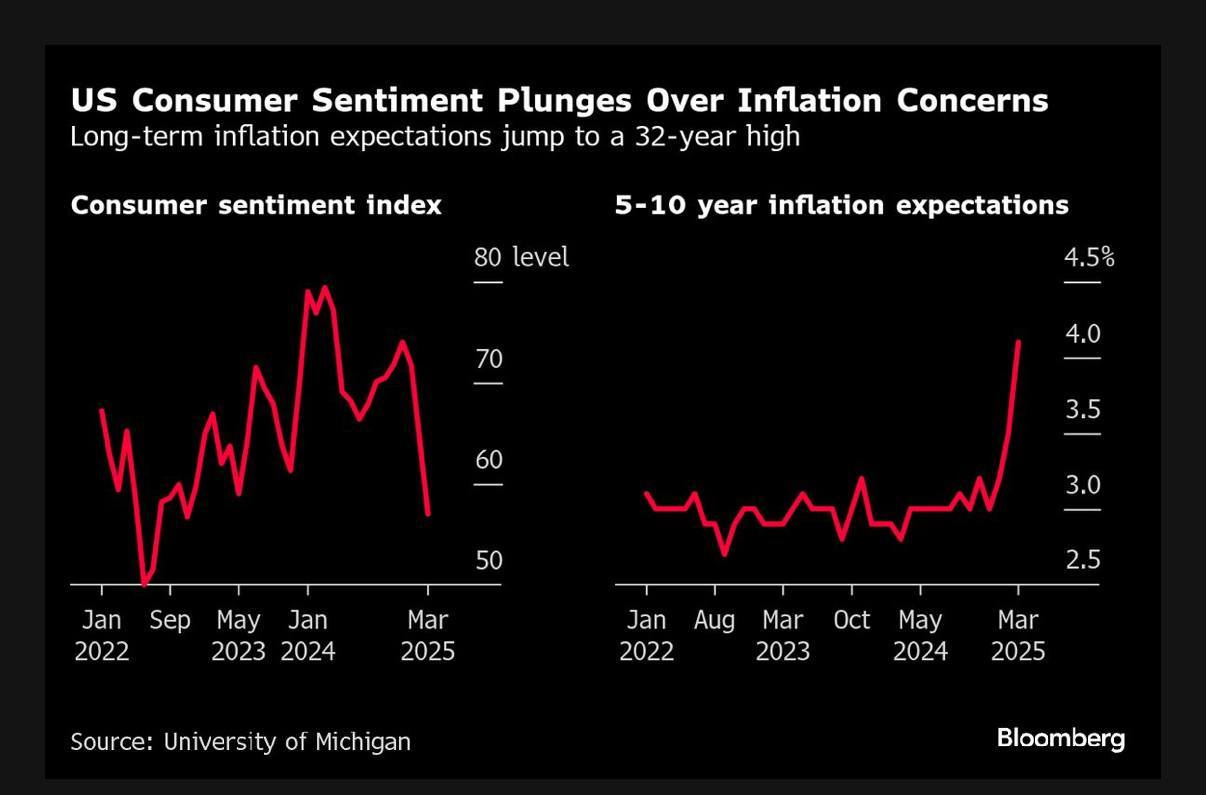
Recent data highlights a sharp drop in U.S. consumer sentiment, with long-term inflation expectations spiking to a 32-year high. However, historical trends suggest that consumer expectations often flip quickly, meaning this sentiment shift could be short-lived.
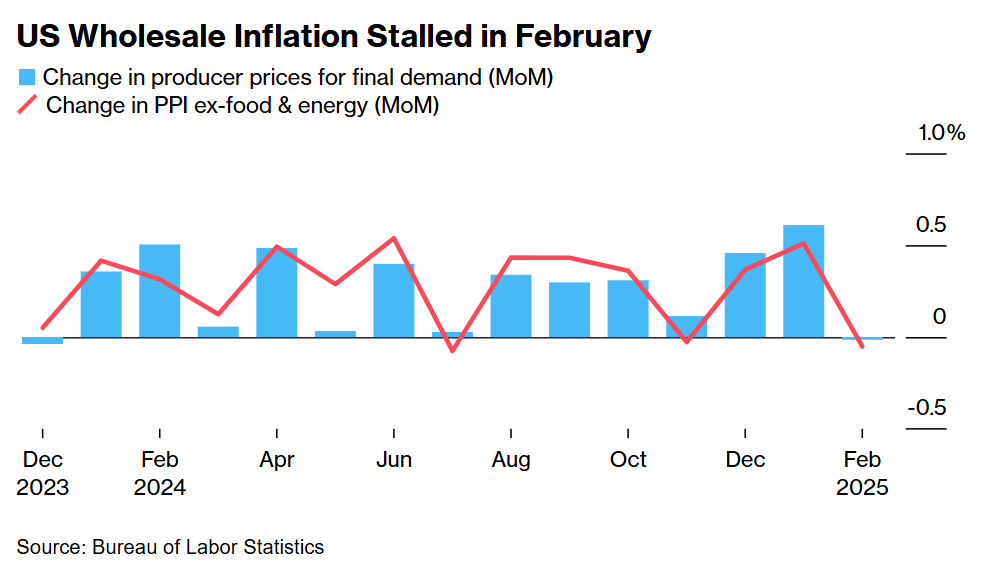
While inflation remains a concern, the real source of volatility is the service sector, which has been driving price increases. More importantly, the impact of tariffs has yet to fully materialize.
Trump’s “Liberation Day” and the Escalation of Trade Tariffs
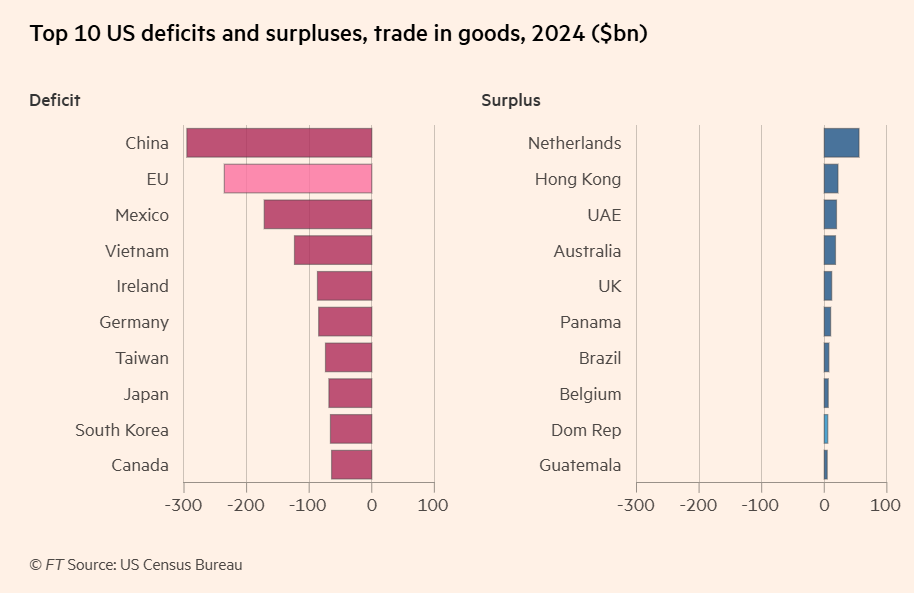
April 2 has been dubbed “Liberation Day” by President Trump, marking a potential turning point in U.S. trade policy. Trump has announced that on this date, he plans to escalate his tariff policies dramatically, potentially targeting key U.S. trading partners with sweeping new duties.
Trump’s administration has signaled that the new tariffs will be structured on a country-by-country basis, ensuring that any nation imposing higher duties on U.S. goods will face reciprocal tariffs. This moves beyond traditional trade disputes and into retaliation against non-tariff barriers, such as regulatory restrictions, subsidies, and value-added taxes (VATs).
For example, the Trump administration has repeatedly criticized the European Union’s VAT system, calling it a discriminatory trade policy against U.S. companies. Digital service taxes are also in Trump’s crosshairs, as the administration believes they unfairly target American tech giants like Google, Apple, and Amazon.
Tariff War: How Nations May Retaliate
Countries facing new U.S. tariffs are likely to respond with their own countermeasures, leading to a tit-for-tat trade war.
European automakers are already voicing strong opposition, with German and French officials warning that retaliatory measures are inevitable. Luxury car brands Ferrari, Porsche, and Mercedes-Benz could see billions in revenue losses, and some manufacturers have already announced price hikes to offset the expected tariffs.
Despite speculation that Tesla will benefit from these new policies, CEO Elon Musk has pointed out that even Tesla relies on imported components, meaning the company will not be entirely shielded from the impact of new tariffs. Still, Tesla’s stock saw a small 1% gain following the announcement, as investors anticipated greater demand for U.S.-made electric vehicles.
Gold Surges as Institutional Investors Seek Safety
With markets increasingly uncertain about trade policy, inflation, and the Fed’s next moves, institutional investors are rotating into gold.
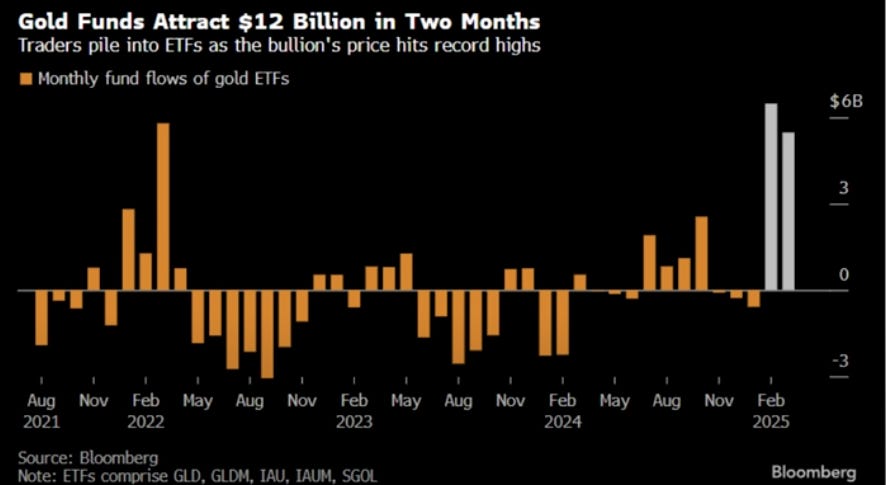
Recent ETF data shows that major funds are increasing their gold allocations, even as stock markets struggle. Retail traders, who were heavily buying stocks in previous weeks, have started shifting to safer assets, reinforcing the shift toward risk aversion.
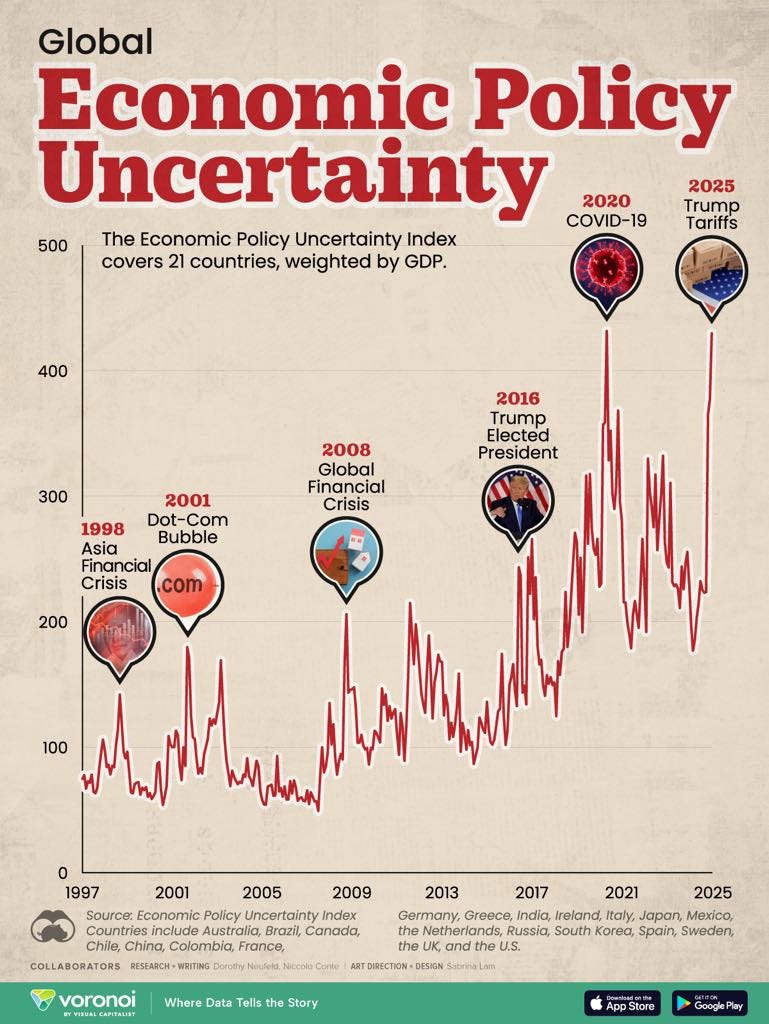
The policy uncertainty index has now surpassed levels seen during COVID-19, indicating that investors see Trump’s trade policies as a significant destabilizing force.
What’s Next for Markets?
Institutional investors appear to be rebalancing portfolios, increasing positions in bonds and dividend-paying stocks, while reducing exposure to high-risk equities.
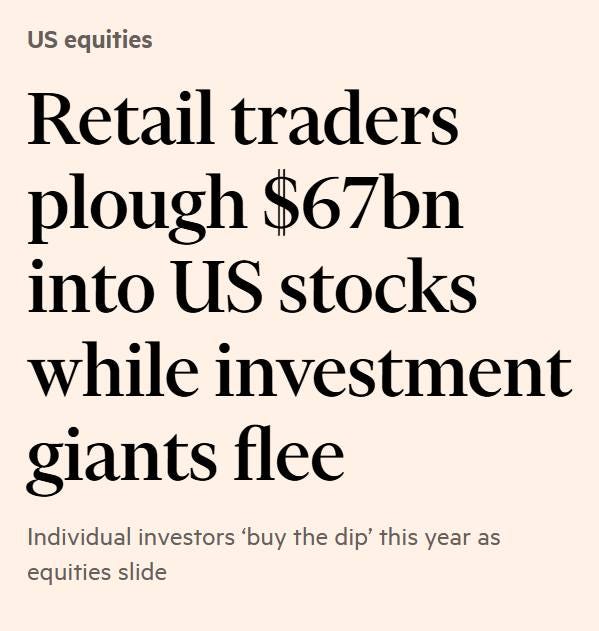
Retail traders, who had previously been aggressively buying stocks, are now selling as uncertainty looms over Trump’s upcoming policy announcements. Hedge funds and major investment firms, meanwhile, are waiting for clarity before making major moves.
While Trump’s trade policies have the potential to spark further volatility, there is also a possibility that the tariff measures will be more measured than expected, given the fragile state of the global economy. Markets will be closely watching April 2 for further announcements.
Other Notable Market Stories
- Musk’s xAI Eyes Acquisition of X
- Elon Musk is reportedly exploring a merger between xAI and X (formerly Twitter), further integrating AI into the platform’s future.
- HSBC Fires Employees on Bonus Day
- HSBC sparked controversy by terminating investment bankers on the day bonuses were scheduled, denying them their payouts.
- Will the World Continue Buying U.S. Treasuries?
- As global debt levels surge, concerns grow over whether foreign governments will maintain their demand for U.S. bonds.
- Europe’s Strategy Against Russia’s Economy
- EU policymakers are exploring new economic measures to weaken Russia’s financial position.
- China’s Next Economic Moves
- Amid slowing growth, there is speculation about whether China will take more aggressive steps to stimulate its economy.
Market Volatility Reflects Policy Uncertainty, Not Just Inflation
The recent selloff in stocks and crypto is not solely due to inflation concerns, but rather the uncertainty surrounding Trump’s aggressive trade policies. Investors are bracing for potential tariff escalations on April 2, with some fearing a prolonged trade war.
While equity markets are struggling, gold is surging, reflecting growing risk aversion among institutional investors. However, if tariffs turn out to be less severe than expected, a relief rally in stocks could follow.