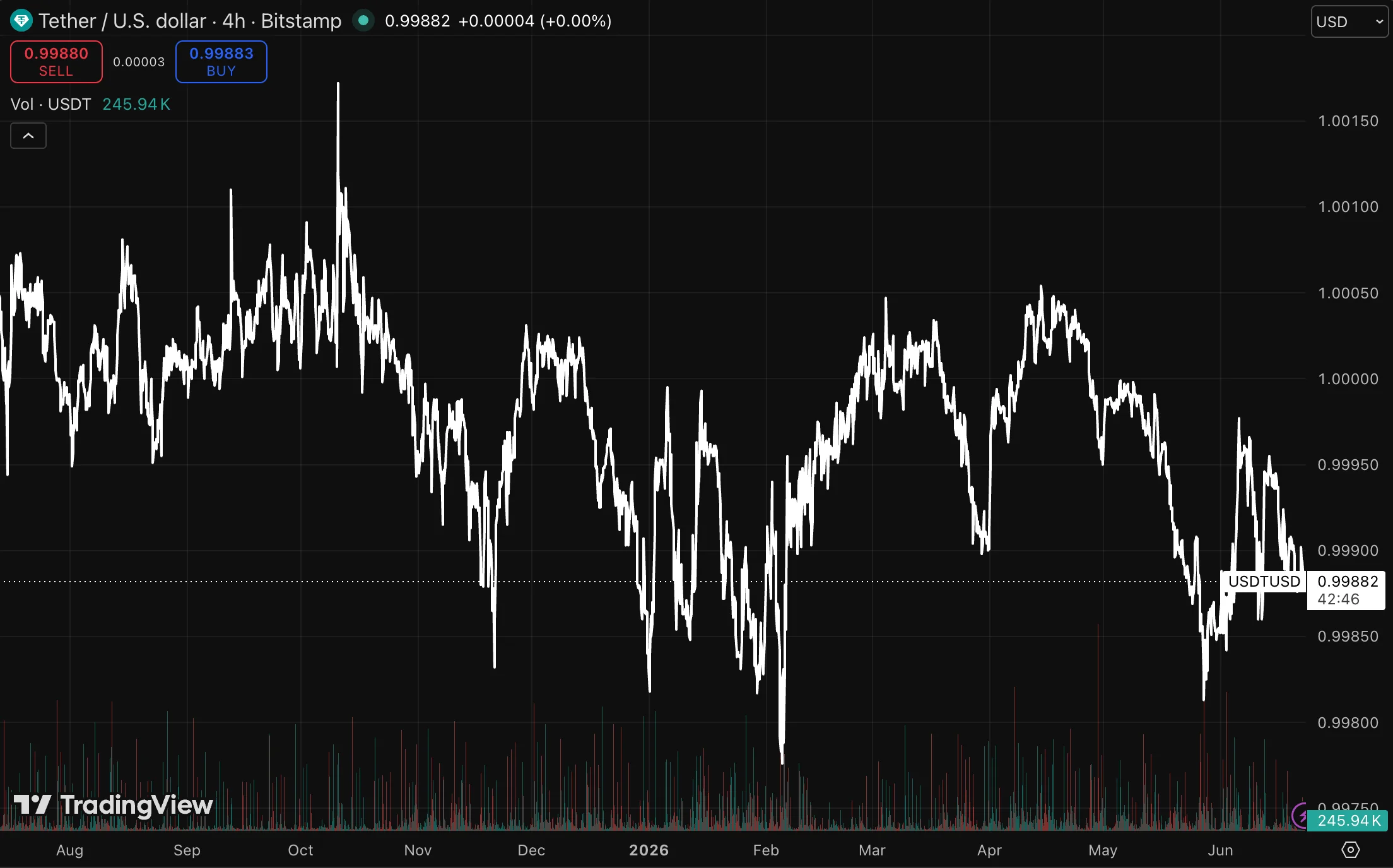
A market maker is a company, trading firm, or individual that keeps a market liquid by continuously quoting prices to buy and sell an asset. They post two prices at once: a bid (what they’ll pay to buy) and an ask (what they’ll sell for). The gap between them is the bid-ask spread.
Markets rarely produce a perfect buyer and seller at the same moment, the same size, and the same price. Market makers fill that gap. They reduce friction, making it easier to buy Bitcoin, sell a stock, trade an ETF, or swap one crypto asset for another.
None of this is charity. Market makers earn money from spreads, exchange incentives, and careful risk management, and in return they accept inventory risk: the danger that an asset they’re holding moves against them before they can offload it.
It is a fiercely competitive business. Ken Griffin’s Citadel Securities, the world’s largest market maker, estimates its systems sit behind roughly a quarter of all U.S. stock trades, and Griffin describes the firm’s whole ethos as a drive to “outthink, out-hustle, and outwork the competition.” Pennies per trade, multiplied across billions of trades, is a war fought in microseconds.
In crypto, market makers help centralized exchanges maintain deeper order books, tighter spreads, and smoother execution. In DeFi the model changes shape entirely: liquidity comes from automated market maker pools, where users deposit assets into smart contracts instead of a professional firm quoting bids and asks.
Key Takeaways
- A market maker is a participant that continuously quotes prices to buy and sell an asset, helping other traders enter and exit positions more easily.
- Market makers provide liquidity by posting bids and asks, but they do it for profit, usually through spreads, exchange incentives, and risk-managed trading.
- The bid-ask spread is the basic cost of immediacy: tighter spreads usually mean a more liquid market, while wider spreads make trading more expensive.
- Market makers take inventory risk because they may be left holding assets that move against them before they can offset or sell the position.
- In crypto, market makers help centralized exchanges maintain deeper order books, tighter spreads, and smoother execution across pairs like BTC/USDT or ETH/USDT.
- A market maker is not the same as a broker, a whale, or a DeFi liquidity provider, though all can be connected to market liquidity in different ways.
- DeFi changes the model through automated market makers, where users supply liquidity to smart-contract pools instead of a firm quoting bids and asks.
- Market makers are useful but not risk-free for traders: liquidity can disappear during stress, spreads can widen sharply, and thin markets can still produce heavy slippage.
Market Maker Meaning: Simple Definition
A market maker is a participant that quotes prices to both buy and sell an asset, continuously. Want to sell? They may buy from you. Want to buy? They may sell to you. Trading can happen even when there’s no obvious counterparty waiting on the other side.
TermSimple meaningMarket makerParticipant that quotes buy and sell pricesBid pricePrice the market maker is willing to buy atAsk pricePrice the market maker is willing to sell atBid-ask spreadDifference between bid and askLiquidityHow easily an asset can be bought or soldOrder bookList of buy and sell orders on an exchangeTermMarket makerSimple meaningParticipant that quotes buy and sell pricesTermBid priceSimple meaningPrice the market maker is willing to buy atTermAsk priceSimple meaningPrice the market maker is willing to sell atTermBid-ask spreadSimple meaningDifference between bid and askTermLiquiditySimple meaningHow easily an asset can be bought or soldTermOrder bookSimple meaningList of buy and sell orders on an exchange
Their core job is supplying liquidity. A liquid market has many buyers and sellers, tight spreads, and enough depth for trades to fill without moving the price much. An illiquid market has fewer orders, wider spreads, and more slippage.
Market makers operate across stocks, bonds, options, foreign exchange, ETFs, and crypto. The mechanics vary by market, but the function stays constant: quote prices, absorb order flow, manage inventory, and update quotes as conditions change.
How Market Makers Work
Market makers place buy and sell quotes simultaneously. Imagine Bitcoin trading around $100,000. A market maker might quote:
QuoteMeaningBid: $99,995The market maker may buy BTC at $99,995Ask: $100,005The market maker may sell BTC at $100,005Spread: $10The difference between bid and askQuoteBid: $99,995MeaningThe market maker may buy BTC at $99,995QuoteAsk: $100,005MeaningThe market maker may sell BTC at $100,005QuoteSpread: $10MeaningThe difference between bid and ask
A seller accepts the bid; the market maker buys. A buyer lifts the ask; the market maker sells. If both happen, the market maker captures the spread.
That sounds simple. It isn’t, because prices move constantly and orders arrive unevenly. Buy too much of an asset before the price falls, and you’re sitting on an inventory loss. Sell too much right before it rises, and you’ve given away upside. The spread is compensation for carrying that risk.
StepWhat happens1Market maker quotes a bid and ask price2Seller can trade against the bid3Buyer can trade against the ask4Market maker may earn the spread5Market maker updates quotes as prices move6Market maker manages inventory and riskStep1What happensMarket maker quotes a bid and ask priceStep2What happensSeller can trade against the bidStep3What happensBuyer can trade against the askStep4What happensMarket maker may earn the spreadStep5What happensMarket maker updates quotes as prices moveStep6What happensMarket maker manages inventory and risk
A good market maker reacts fast. A quote that made sense two seconds ago can become a punishing trade after a major order, a news event, or a liquidation cascade, which is why market making is as much a risk-management business as a liquidity service.
Bid price and ask price
The bid price is the highest price a buyer is currently willing to pay. The ask price is the lowest price a seller is currently willing to accept. Place a market sell order and you hit the bid; place a market buy order and you lift the ask. Either way, the spread is baked into your cost every time you trade.
The bid-ask spread
A tight spread means the market is liquid and competitive. A wide spread means trading is more expensive, less liquid, or more uncertain. Think of it as the market’s friction meter: tight spread, smooth road; wide spread, buckle up. The financial historian Peter Bernstein put the deeper point well: the entire structure of a marketplace rests on the assumption that “the other side of the trade will always be there,” and without it, he noted, even the gutsiest market maker would refuse to stay in business.
 Market conditionMarket maker behaviorThe spreadImpact on a retail traderCalm / sidewaysHigh confidence, high-volume quotingVery tightCheap and easy to enter or exitNews event / data releasePulling quotes briefly to avoid being picked offWidensSudden slippage; market orders turn dangerousFlash crash / high volatilityCutting size, widening quotes to manage riskExtremely wideVery expensive to trade; high risk of a terrible fillMarket conditionCalm / sidewaysMarket maker behaviorHigh confidence, high-volume quotingThe spreadVery tightImpact on a retail traderCheap and easy to enter or exitMarket conditionNews event / data releaseMarket maker behaviorPulling quotes briefly to avoid being picked offThe spreadWidensImpact on a retail traderSudden slippage; market orders turn dangerousMarket conditionFlash crash / high volatilityMarket maker behaviorCutting size, widening quotes to manage riskThe spreadExtremely wideImpact on a retail traderVery expensive to trade; high risk of a terrible fill
Inventory risk
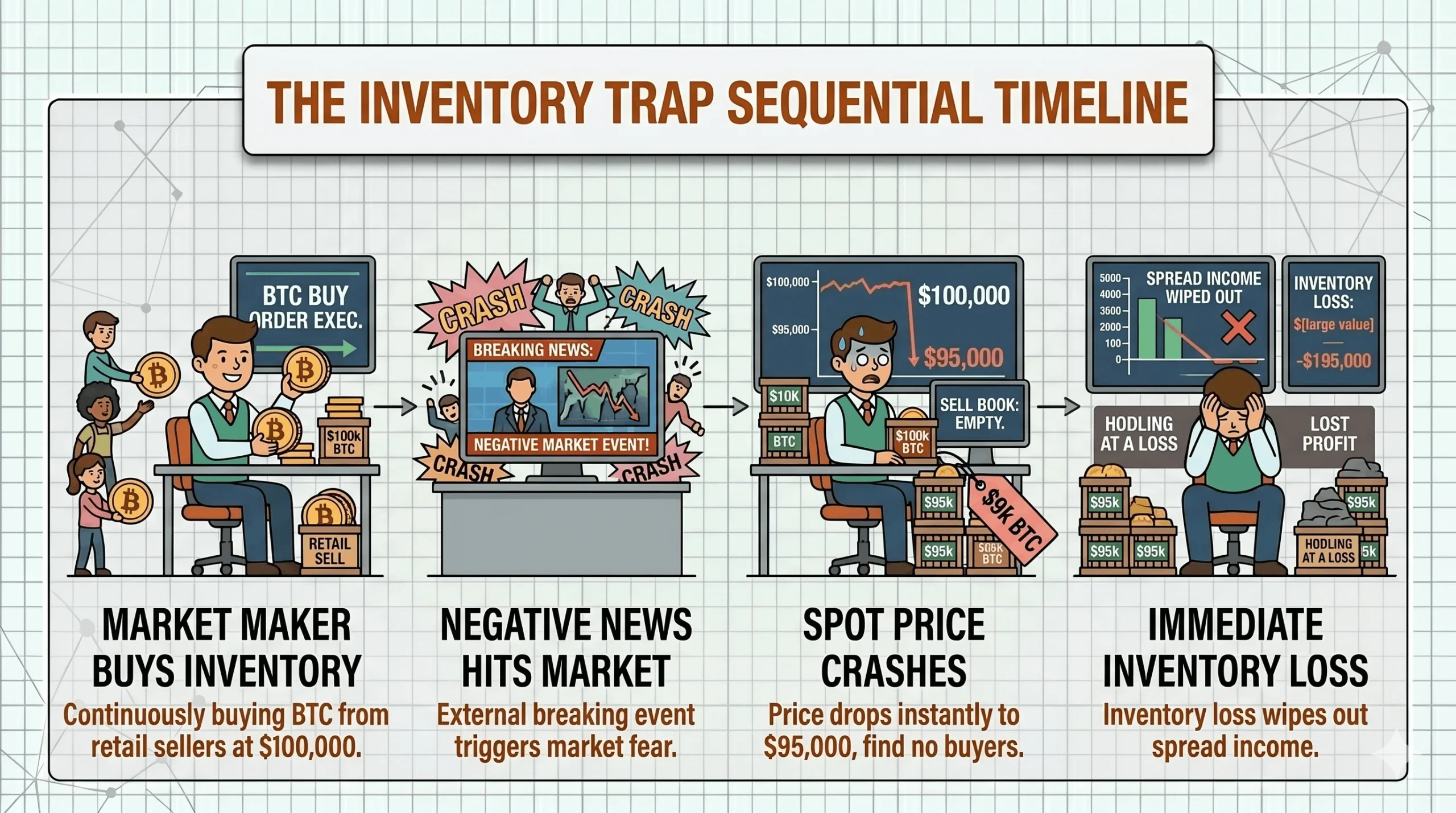
The biggest single threat to a market maker is accumulating too much of one asset right before the price moves against it. Buy BTC from sellers all morning, and a noon crash turns that inventory into a loss no amount of spread income can cover.
Order books and order matching
In order-book markets, buy and sell orders are matched by price and time. Market makers help populate the book with quotes, adding the depth that makes a market look, and function, as if it’s actively traded. More on this in the Market Makers and Order Books section below.
Why Market Makers Matter
Strip the market makers out of a market and it gets slower, more expensive, and harder to use. Buyers and sellers would have to find each other more directly. Some trades would wait. Others would execute at worse prices. Thin markets would become genuinely difficult to navigate.
Market maker roleWhy it mattersProvide liquidityHelps traders buy or sell more easilyNarrow spreadsReduces the cost of entering and exiting tradesAdd order book depthLarger orders can fill with less price movementSupport price discoveryFrequent quotes help markets update prices continuouslyReduce frictionBuyers and sellers don’t always need to wait for each otherSupport new marketsNew assets may need liquidity before natural demand growsMarket maker roleProvide liquidityWhy it mattersHelps traders buy or sell more easilyMarket maker roleNarrow spreadsWhy it mattersReduces the cost of entering and exiting tradesMarket maker roleAdd order book depthWhy it mattersLarger orders can fill with less price movementMarket maker roleSupport price discoveryWhy it mattersFrequent quotes help markets update prices continuouslyMarket maker roleReduce frictionWhy it mattersBuyers and sellers don’t always need to wait for each otherMarket maker roleSupport new marketsWhy it mattersNew assets may need liquidity before natural demand grows
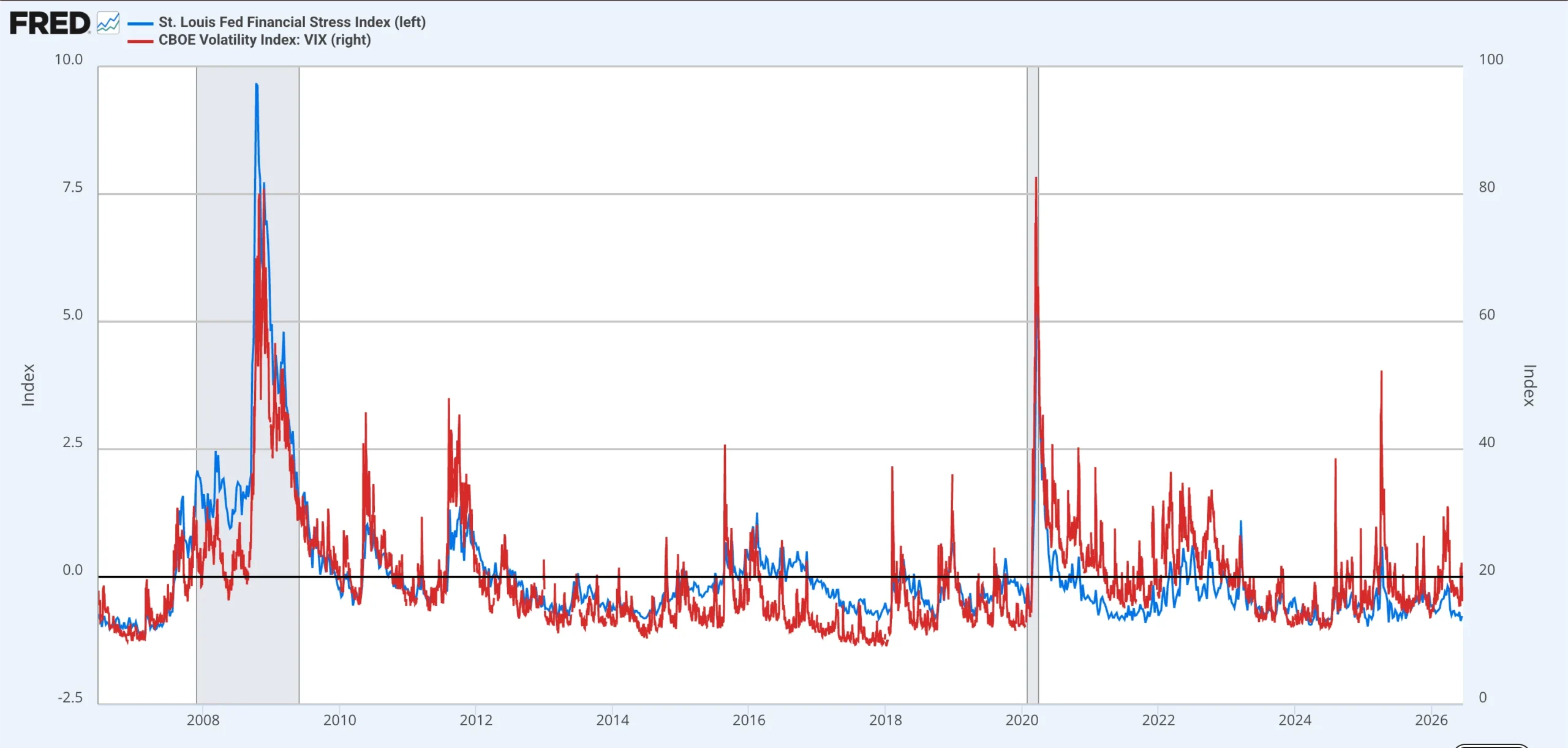
There’s a catch, and it shows up exactly when traders want liquidity most. During extreme volatility, market makers may widen spreads, cut quote sizes, or pull back entirely. The old Wall Street adage, popularized by Morgan Stanley’s legendary strategist Barton Biggs, captures it:
“Liquidity is a coward. It disappears at the first sign of trouble.” | Barton Biggs, former Chief Global Strategist, Morgan Stanley
That pullback is built into market structure rather than a malfunction of it. The U.S. “flash crash” of May 6, 2010 is the textbook case: as prices convulsed, automated market makers widened or yanked their quotes, and a handful of trades briefly printed at absurd “stub quote” prices (some stocks touching a penny, others spiking toward $100,000) before the market snapped back minutes later. Liquidity runs deepest when risk is manageable and thins out when uncertainty spikes.
How Market Makers Make Money
Market makers usually earn the bid-ask spread: buy at $99.95, sell at $100.05, keep the $0.10, repeat thousands of times a day. The math looks obvious. The risk management required to do it profitably is anything but.
StepActionExecution priceInventoryCumulative profit1. QuotePost bid $99.95, ask $100.05—0 BTC$0.002. BuyRetail seller hits the bid$99.95+1 BTC$0.00 (unrealized)3. SellRetail buyer lifts the ask$100.050 BTC+$0.10 (realized)Risk eventMarket drops to $90.00 before step 3—+1 BTC−$9.95 (inventory loss)Step1. QuoteActionPost bid $99.95, ask $100.05Execution price—Inventory0 BTCCumulative profit$0.00Step2. BuyActionRetail seller hits the bidExecution price$99.95Inventory+1 BTCCumulative profit$0.00 (unrealized)Step3. SellActionRetail buyer lifts the askExecution price$100.05Inventory0 BTCCumulative profit+$0.10 (realized)StepRisk eventActionMarket drops to $90.00 before step 3Execution price—Inventory+1 BTCCumulative profit−$9.95 (inventory loss)
That last row is what keeps market makers up at night, and on August 1, 2012 it nearly killed one. A botched software deployment left dormant code running on a single server at Knight Capital, then the largest U.S. retail equity market maker. Its system fired roughly four million unintended orders across 154 stocks in about 45 minutes, accumulating billions in unwanted positions and a loss near $440 million, more than the firm’s annual profit. The stock cratered about 75% in two days, and Knight was swallowed by a competitor within months. No spread strategy survives an inventory accident at that scale.
 Revenue / risk factorExplanationBid-ask spreadDifference between buy and sell quotesExchange incentivesSome venues reward liquidity providersInventory managementMarket maker must manage assets held after tradesHedgingMarket maker may trade elsewhere to reduce riskVolatility riskFast price moves can create lossesAdverse selectionBetter-informed traders may trade against stale quotesRevenue / risk factorBid-ask spreadExplanationDifference between buy and sell quotesRevenue / risk factorExchange incentivesExplanationSome venues reward liquidity providersRevenue / risk factorInventory managementExplanationMarket maker must manage assets held after tradesRevenue / risk factorHedgingExplanationMarket maker may trade elsewhere to reduce riskRevenue / risk factorVolatility riskExplanationFast price moves can create lossesRevenue / risk factorAdverse selectionExplanationBetter-informed traders may trade against stale quotes
Adverse selection deserves its own beat. If traders keep hitting a market maker’s quotes because they know something it doesn’t (a pending news release, a large incoming order) the market maker lands on the losing side again and again. Picture playing poker against someone who can see your cards. The spread is potential compensation for providing liquidity and holding inventory; if market making were risk-free, spreads would approach zero.
Market Maker vs Liquidity Provider
A market maker is a type of liquidity provider, but the terms aren’t interchangeable. A liquidity provider is anyone who supplies tradable liquidity. A market maker typically does it by actively quoting bid and ask prices on an order book.
TermMeaningMarket makerQuotes buy and sell prices, usually on an order bookLiquidity providerBroader term for anyone supplying tradable liquidityTraditional liquidity providerMay be a bank, dealer, or trading firmDeFi liquidity providerDeposits assets into an automated market maker poolCentralized exchange market makerProvides order book depth on a crypto exchangeTermMarket makerMeaningQuotes buy and sell prices, usually on an order bookTermLiquidity providerMeaningBroader term for anyone supplying tradable liquidityTermTraditional liquidity providerMeaningMay be a bank, dealer, or trading firmTermDeFi liquidity providerMeaningDeposits assets into an automated market maker poolTermCentralized exchange market makerMeaningProvides order book depth on a crypto exchange
The distinction matters most in crypto. On a centralized exchange, a BTC/USDT market maker quotes bids and asks on an order book. On a decentralized exchange, a liquidity provider deposits ETH and USDC into a smart-contract pool, and traders swap against that pool while a formula moves the price. Both supply liquidity through completely different machinery.
Market Maker vs Broker
A broker and a market maker do different jobs.
FeatureMarket makerBrokerMain roleProvides buy/sell quotes and liquidityHelps customers access marketsTrades directly?Often trades as principalOften routes customer ordersMakes money fromSpread, incentives, risk managementCommissions, fees, spreads, routing arrangementsTakes inventory riskOften yesUsually less directlyCustomer relationshipOften not directly with retail userOften directly with userExampleTrading firm quoting BTC bid/askApp or brokerage where user places orderFeatureMain roleMarket makerProvides buy/sell quotes and liquidityBrokerHelps customers access marketsFeatureTrades directly?Market makerOften trades as principalBrokerOften routes customer ordersFeatureMakes money fromMarket makerSpread, incentives, risk managementBrokerCommissions, fees, spreads, routing arrangementsFeatureTakes inventory riskMarket makerOften yesBrokerUsually less directlyFeatureCustomer relationshipMarket makerOften not directly with retail userBrokerOften directly with userFeatureExampleMarket makerTrading firm quoting BTC bid/askBrokerApp or brokerage where user places order
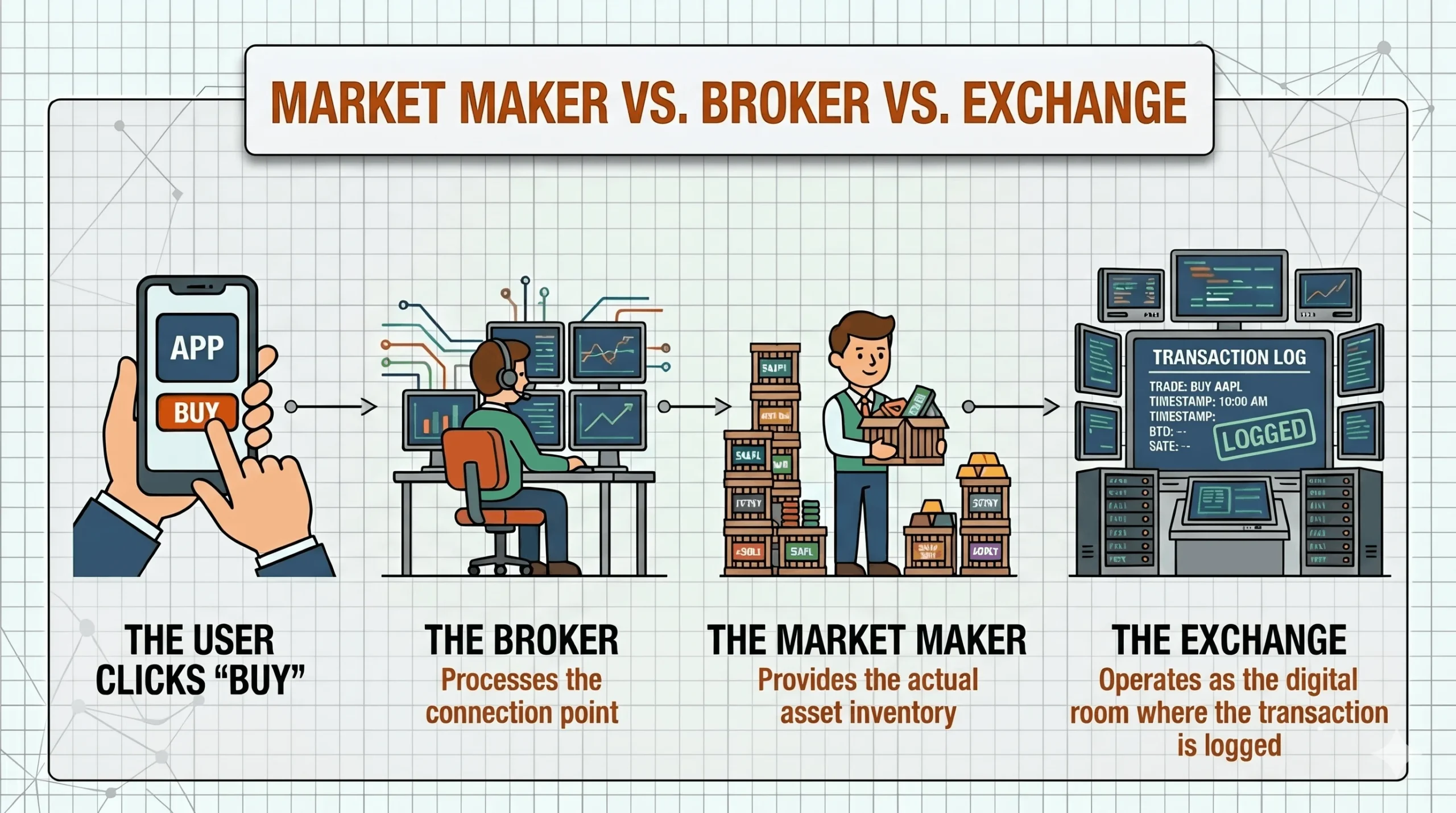
A broker connects traders to markets; a market maker creates liquidity inside the market. When you tap “buy” in a brokerage app, the broker may route your order to an exchange, an electronic venue, or a market maker directly. This routing is where the two worlds collide most visibly: under payment for order flow, some brokers are paid by market makers to send them retail orders.
The arrangement helped make zero-commission trading possible, but it also drew intense scrutiny during the 2021 GameStop frenzy, when retail traders questioned whose interests their “free” broker was really serving. The broker is your access point; the market maker is one possible execution source.
Market Maker vs Taker
Crypto traders see “maker” and “taker” fees on every exchange. These relate to market making but describe something slightly different.
TermMeaningMakerAdds liquidity by placing an order that rests on the order bookTakerRemoves liquidity by executing against an existing orderMarket makerProfessional participant that continuously quotes buy and sell pricesMaker feeExchange fee for adding liquidityTaker feeExchange fee for removing liquidityTermMakerMeaningAdds liquidity by placing an order that rests on the order bookTermTakerMeaningRemoves liquidity by executing against an existing orderTermMarket makerMeaningProfessional participant that continuously quotes buy and sell pricesTermMaker feeMeaningExchange fee for adding liquidityTermTaker feeMeaningExchange fee for removing liquidity
Any user becomes a maker by placing a limit order that rests on the book. A professional market maker does this continuously, at scale, with systems built to manage spreads, inventory, and risk in real time.
What Is a Designated Market Maker?
A designated market maker (DMM) is a market maker with formal obligations for specific securities on an exchange. DMMs are most associated with the New York Stock Exchange, where each is assigned particular stocks and carries documented responsibilities for price discovery, market quality, and orderly trading, especially at the open, the close, and during order imbalances.
Column 1Market makerDesignated market makerRoleGeneral liquidity providerOfficial role on a specific exchangeAssetsMay quote many assetsAssigned specific securitiesMarket presenceCommon across many marketsOften tied to traditional exchangesObligationsResponsibilities varyFormal obligations may applyColumn 1RoleMarket makerGeneral liquidity providerDesignated market makerOfficial role on a specific exchangeColumn 1AssetsMarket makerMay quote many assetsDesignated market makerAssigned specific securitiesColumn 1Market presenceMarket makerCommon across many marketsDesignated market makerOften tied to traditional exchangesColumn 1ObligationsMarket makerResponsibilities varyDesignated market makerFormal obligations may apply
All DMMs are market makers. Not all market makers are DMMs.
Crypto Market Makers Explained
Crypto market makers provide liquidity for digital assets: quoting BTC, ETH, stablecoins, altcoins, or new token pairs across one or many venues. The job mirrors traditional market making: quote bids and asks, keep spreads competitive, manage inventory, and update prices as conditions shift.
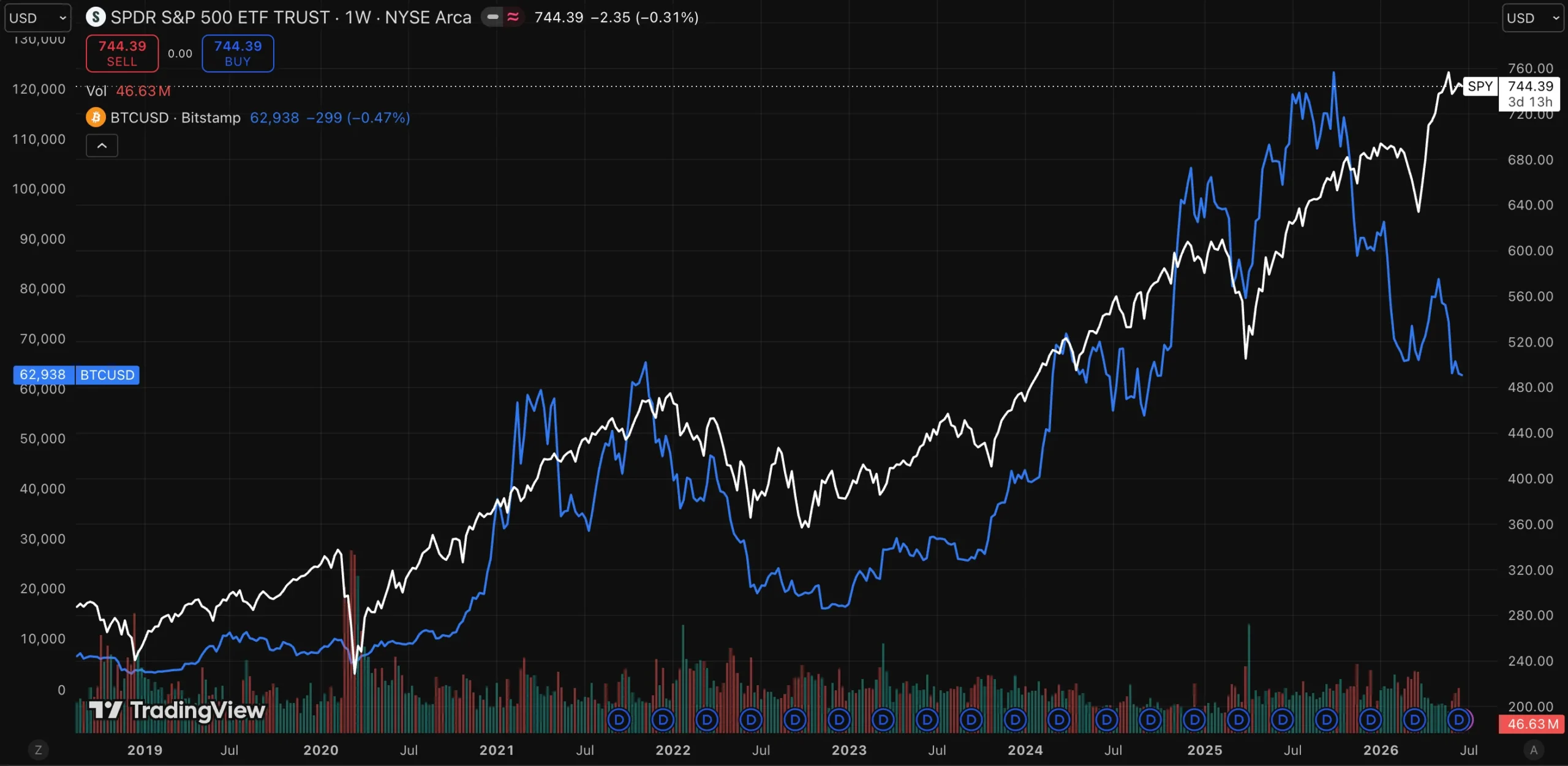
Crypto adds its own complications. Markets trade 24/7 with no closing bell. Assets can be wildly volatile. Liquidity is fragmented across dozens of exchanges. Some tokens have almost no order-book depth. And DeFi layers a completely different liquidity model on top of all that.
Market makers on centralized crypto exchanges
Centralized exchanges run on order books: buyers on one side, sellers on the other.
Order book conceptMeaningBid sideBuyers waiting to buyAsk sideSellers waiting to sellBest bidHighest current buy quoteBest askLowest current sell quoteSpreadDifference between best bid and best askDepthAmount available at different price levelsOrder book conceptBid sideMeaningBuyers waiting to buyOrder book conceptAsk sideMeaningSellers waiting to sellOrder book conceptBest bidMeaningHighest current buy quoteOrder book conceptBest askMeaningLowest current sell quoteOrder book conceptSpreadMeaningDifference between best bid and best askOrder book conceptDepthMeaningAmount available at different price levels
A crypto market maker places bids below the current price and asks above it, updating as trades fill. If it accumulates too much BTC, it might lower bids, raise asks, hedge on another venue, or unwind elsewhere. For large pairs like BTC/USDT or ETH/USDT, this keeps spreads tight and books deep. For smaller tokens, a single market maker can represent most of the visible liquidity.
Market makers for new tokens
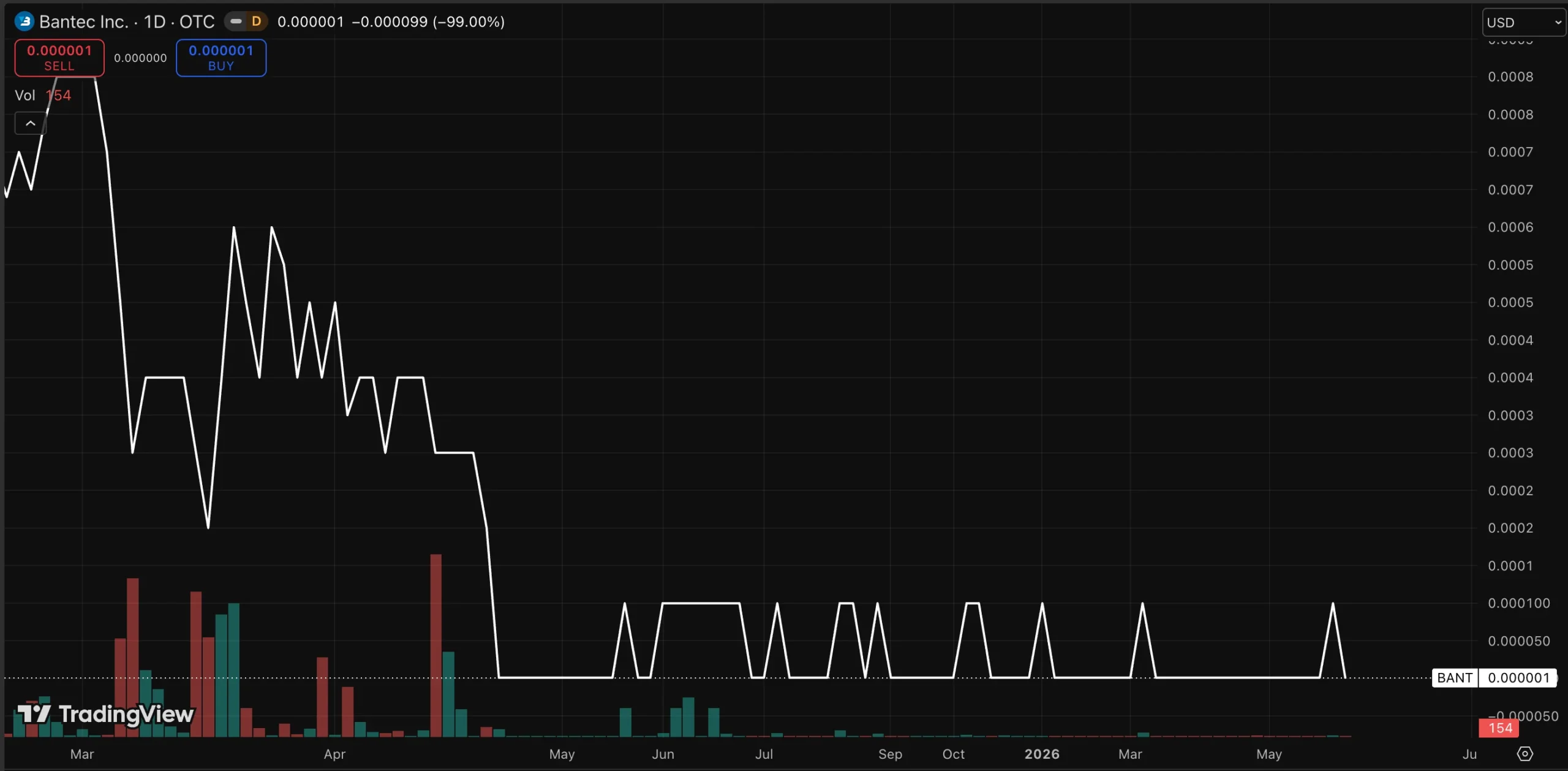
New tokens face a cold-start liquidity problem. Interest may exist, but without enough resting buy and sell orders, spreads are wide and slippage is punishing. Market makers can help by quoting around the market price and making the token actually tradable.
This can work well, and it can also turn murky. Healthy market making improves liquidity and supports orderly trading. Arrangements that drift into artificial volume, opaque incentives, or insider advantages serve no ordinary trader. The practical question for any token: is the liquidity real, transparent, and sustainable?
Market makers vs DeFi liquidity pools
DeFi rewired the model. On many decentralized exchanges, traders don’t interact with a traditional order book at all. They trade against an automated market maker (AMM), a smart contract holding a pool of two tokens whose price is set by a mathematical formula rather than by a human quoting bids and asks. Deposit into the pool and you become a liquidity provider, earning a share of trading fees.
FeatureCentralized exchange market makerDeFi liquidity provider / AMMVenueCentralized exchange order bookDecentralized protocolPricingQuotes placed on order bookAlgorithmic pool pricingLiquidity sourceTrading firms or usersLiquidity poolsMain riskInventory and volatility riskImpermanent loss and smart-contract riskUser interactionTrades against order bookSwaps against poolExampleBTC/USDT order bookToken pair pool on a DEXFeatureVenueCentralized exchange market makerCentralized exchange order bookDeFi liquidity provider / AMMDecentralized protocolFeaturePricingCentralized exchange market makerQuotes placed on order bookDeFi liquidity provider / AMMAlgorithmic pool pricingFeatureLiquidity sourceCentralized exchange market makerTrading firms or usersDeFi liquidity provider / AMMLiquidity poolsFeatureMain riskCentralized exchange market makerInventory and volatility riskDeFi liquidity provider / AMMImpermanent loss and smart-contract riskFeatureUser interactionCentralized exchange market makerTrades against order bookDeFi liquidity provider / AMMSwaps against poolFeatureExampleCentralized exchange market makerBTC/USDT order bookDeFi liquidity provider / AMMToken pair pool on a DEX
Liquidity can now form without a centralized intermediary, a genuine structural innovation. It does not eliminate risk. Liquidity providers still face impermanent loss, smart-contract bugs, oracle failures, and competition from far more sophisticated players.
Risks and controversies in crypto market making
BenefitConcernTighter spreadsOpaque arrangementsBetter order book depthPotential conflicts of interestSmoother executionArtificial volume concernsSupport for new marketsInsider or information advantagesMore efficient pricingLiquidity may vanish during stressBenefitTighter spreadsConcernOpaque arrangementsBenefitBetter order book depthConcernPotential conflicts of interestBenefitSmoother executionConcernArtificial volume concernsBenefitSupport for new marketsConcernInsider or information advantagesBenefitMore efficient pricingConcernLiquidity may vanish during stress
A market maker is not the same as a whale. A whale is a large holder; a market maker is a participant that quotes both sides and manages flow, rather than a big balance sheet parked on one side of the market. That said, large professional firms carry real advantages: better infrastructure, faster systems, lower fees, deeper data, more capital. In thin crypto markets, that gap can make the playing field feel uneven for retail. Transparency and thoughtful market design are the appropriate responses.
Market Makers and Order Books
An order book is a live list of buy and sell orders. Buy orders sit on the bid side, sell orders on the ask side, and the highest bid and lowest ask form the visible top of the market.
Price levelOrder book side$100.10Sell orders$100.05Best ask$99.95Best bid$99.90Buy ordersPrice level$100.10Order book sideSell ordersPrice level$100.05Order book sideBest askPrice level$99.95Order book sideBest bidPrice level$99.90Order book sideBuy orders
The spread is the gap between best bid and best ask. Depth is how much is available at each level. Market makers populate the book; a liquid book stacks many orders near the current price, letting trades execute with less slippage. Slippage is the difference between the price you expected and the price you got, usually because your order was larger than the liquidity available at the best level.
 MarketWhat happensDeep order bookLarge order fills across a small price rangeThin order bookSame order pushes price much furtherTight spreadLower immediate trading costWide spreadHigher immediate trading costMarketDeep order bookWhat happensLarge order fills across a small price rangeMarketThin order bookWhat happensSame order pushes price much furtherMarketTight spreadWhat happensLower immediate trading costMarketWide spreadWhat happensHigher immediate trading cost
Market makers can’t erase slippage, but they can shrink it substantially by adding depth.
Example: Buying Bitcoin With and Without a Market Maker
Two Bitcoin markets, same asset, completely different experience. Market A is liquid: active market makers, deep order books, tight spreads. Market B is illiquid: few orders, wide spreads, minimal depth.
ScenarioWhat the user experiencesLiquid BTC marketTight spread, faster execution, less slippageIlliquid BTC marketWider spread, worse price, more slippageNo active market makersBuyer may wait longer for a sellerActive market makersMore quotes available near the market priceScenarioLiquid BTC marketWhat the user experiencesTight spread, faster execution, less slippageScenarioIlliquid BTC marketWhat the user experiencesWider spread, worse price, more slippageScenarioNo active market makersWhat the user experiencesBuyer may wait longer for a sellerScenarioActive market makersWhat the user experiencesMore quotes available near the market price
In Market A, BTC might show:
BidAskSpread$99,995$100,005$10Bid$99,995Ask$100,005Spread$10
In Market B:
BidAskSpread$99,700$100,300$600Bid$99,700Ask$100,300Spread$600
Same Bitcoin. The buyer in Market B pays an extra $295 on entry before any price movement, purely because liquidity is thin. Market makers don’t make Bitcoin less volatile and don’t guarantee a good fill. They make trading smoother by adding liquidity around the current price, and the difference shows up most clearly when they’re absent.
Are Market Makers Good or Bad?
Market makers are participants with a useful function and a profit motive. The hero-versus-villain framing doesn’t survive contact with how markets actually work. They help markets when they provide real liquidity, narrow spreads, add depth, and improve execution. They raise concerns when incentives are opaque, liquidity proves unreliable, or a handful of firms gains too much control over trading conditions.
BenefitConcernAdds liquidityCan hold informational advantagesNarrows spreadsMay withdraw during stressImproves executionConcentration can create dependencySupports new marketsIncentives may not align with all tradersHelps price discoverySome market structure is opaqueBenefitAdds liquidityConcernCan hold informational advantagesBenefitNarrows spreadsConcernMay withdraw during stressBenefitImproves executionConcernConcentration can create dependencyBenefitSupports new marketsConcernIncentives may not align with all tradersBenefitHelps price discoveryConcernSome market structure is opaque
Market makers provide liquidity because it pays, and understanding that motivation makes you a sharper participant. A market without them can be slow, expensive, and fragmented; a market dominated by a few powerful liquidity providers raises a different set of concerns. Healthy market design keeps their role transparent and aligned with genuine liquidity provision.
A Defensive Execution Checklist
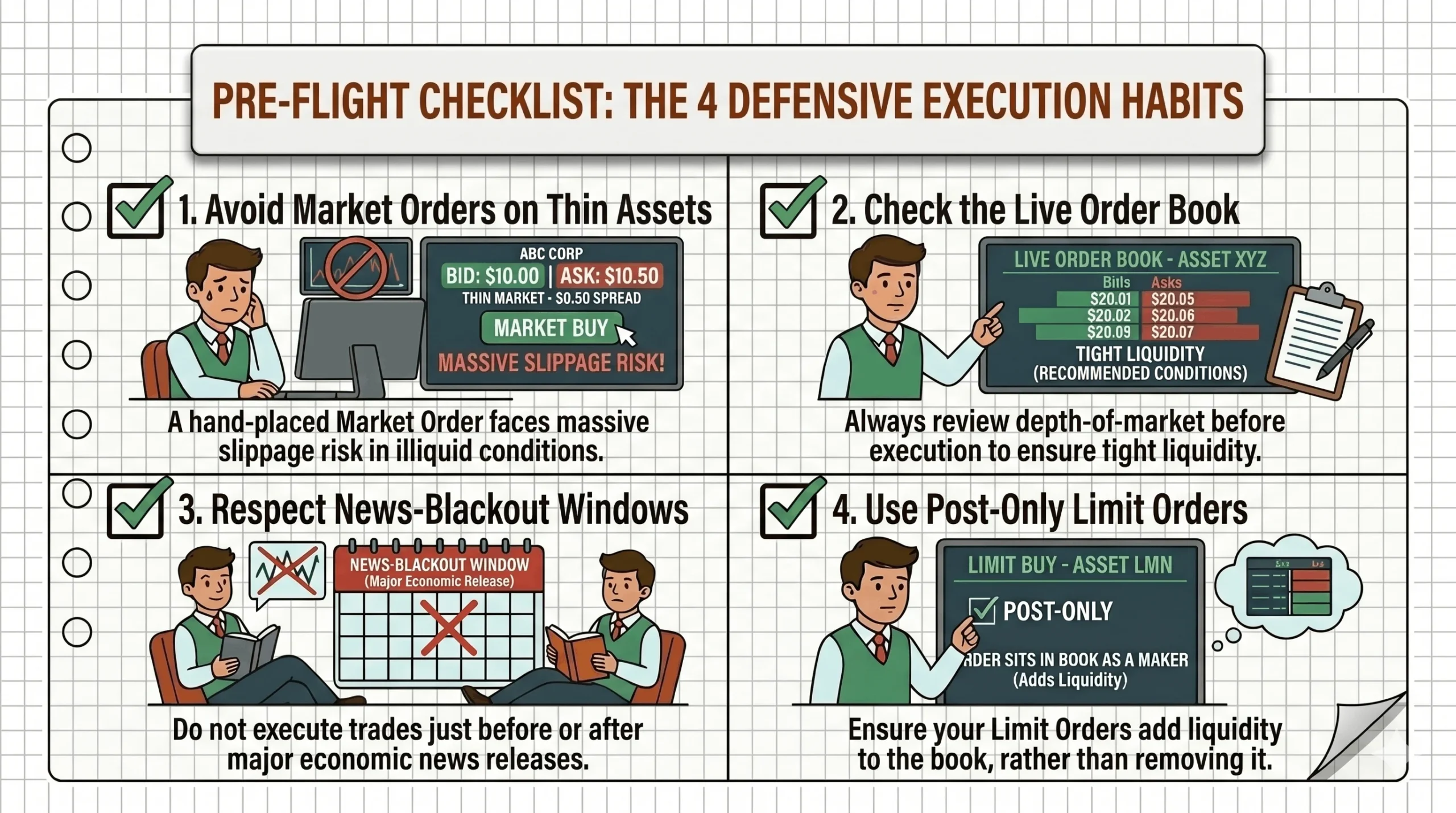
Professional market makers spend hundreds of millions of dollars on quantitative talent and exotic infrastructure all to capture fractions of a penny. You are not going to beat them at their own game. The goal is to navigate the environment they create, not to outrun it. Four defensive habits do most of the work:
- Avoid market orders on illiquid assets: Hitting “market buy” on a low-volume altcoin or a thin pre-market stock all but invites a market-making algorithm to step back and fill you at the worst available resting price.
- Anchor to the order book, not the ticker: The headline price on a charting app is a ghost of the last completed trade. Check live order-book depth to confirm there’s enough resting liquidity to support the size you actually want to trade.
- Respect the news-blackout windows: Around major releases (inflation data, a Federal Reserve rate decision) market makers systematically widen quotes or step away for a few seconds. Sit on your hands until the spread collapses back to normal.
- Use post-only limit orders when you can: A post-only limit order guarantees your order rests on the book, turning you into the maker, capturing the better fee tier, and ensuring you never accidentally cross a blown-out spread.
Closing Thoughts
Market makers play a central role in keeping markets usable by supplying liquidity, narrowing spreads, and helping trades execute more smoothly. They quote both sides of a market for profit, not charity, and their compensation comes from spreads, incentives, and careful risk management.
For traders, the important lesson is that liquidity is never guaranteed. Spreads can widen, order-book depth can disappear, and thin markets can still produce painful slippage, especially during volatile periods or news events.
The best approach is to understand how market makers shape execution, check spreads and order-book depth before trading, use limit orders when appropriate, and avoid assuming the last quoted price reflects what a real trade will cost.