
The Road to $98,800
In order to understand the magnitude of bitcoin (BTC), the decentralized, peer-to-peer cryptocurrency invented by Satoshi Nakamoto, a deep dive into how it all started is extremely helpful and showcases the many achievements of this borderless, and censorship-resistant monetary asset. While bitcoin doesn’t perfectly fit within the framework of Mises’s regression theorem, it intriguingly both defies and meets this classical economic principle in today’s modern context.
In the Beginning
When Bitcoin was first introduced on Halloween in 2008, it was a niche group of tech-savvy coders and cypherpunks who saw its potential value. These early enthusiasts were the ones who originally brought value to the concept, not by chance, but by embracing it and taking action—people like computer scientist Hal Finney were among them. Bitcoin’s initial value was essentially rooted in its groundbreaking technology.
It introduced the world to the first triple-entry bookkeeping system while simultaneously cracking the long-standing Byzantine Generals’ Problem. For years, cryptographers and computer scientists wrestled with these challenges, while cypherpunks explored the idea of digital cash in tandem with the expanding internet. This innovation became bitcoin’s utility or ‘commodity’ value—a spark for the Misean regression theorem that gave an intangible concept a foothold in the real world.
2009-2010
In its early days, Bitcoin and its native currency, BTC, were mysteries to most. On Oct. 5, 2009, New Liberty Standard facilitated a bitcoin transaction, pricing 1,309.03 BTC at $1—just $0.0007 per coin. At the time, only a select few tech enthusiasts grasped its potential, appreciating that the system actually worked. These pioneers congregated on a forum called bitcointalk.org, where they chatted about Bitcoin and occasionally exchanged thoughts with its enigmatic creator, Satoshi Nakamoto.
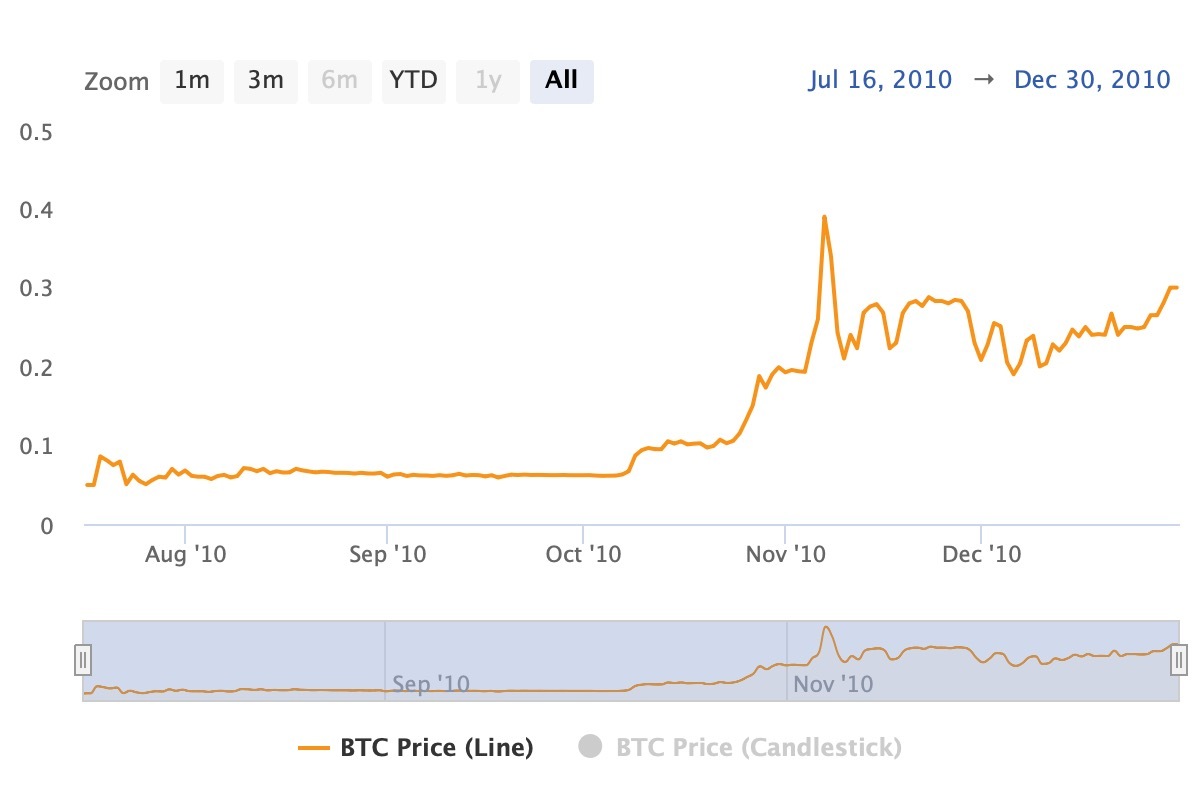
Through this forum, Bitcoin made its first leap into the real world on May 22, when 10,000 BTC bought two pizzas—marking bitcoin’s value at $0.0025 per coin. By July, BTC hit its first notable milestone, climbing to $0.08 per coin. Then, on Nov. 7, 2010, it reached an all-time high of $0.39 before closing the year at $0.30 per bitcoin.
2011 and 2012
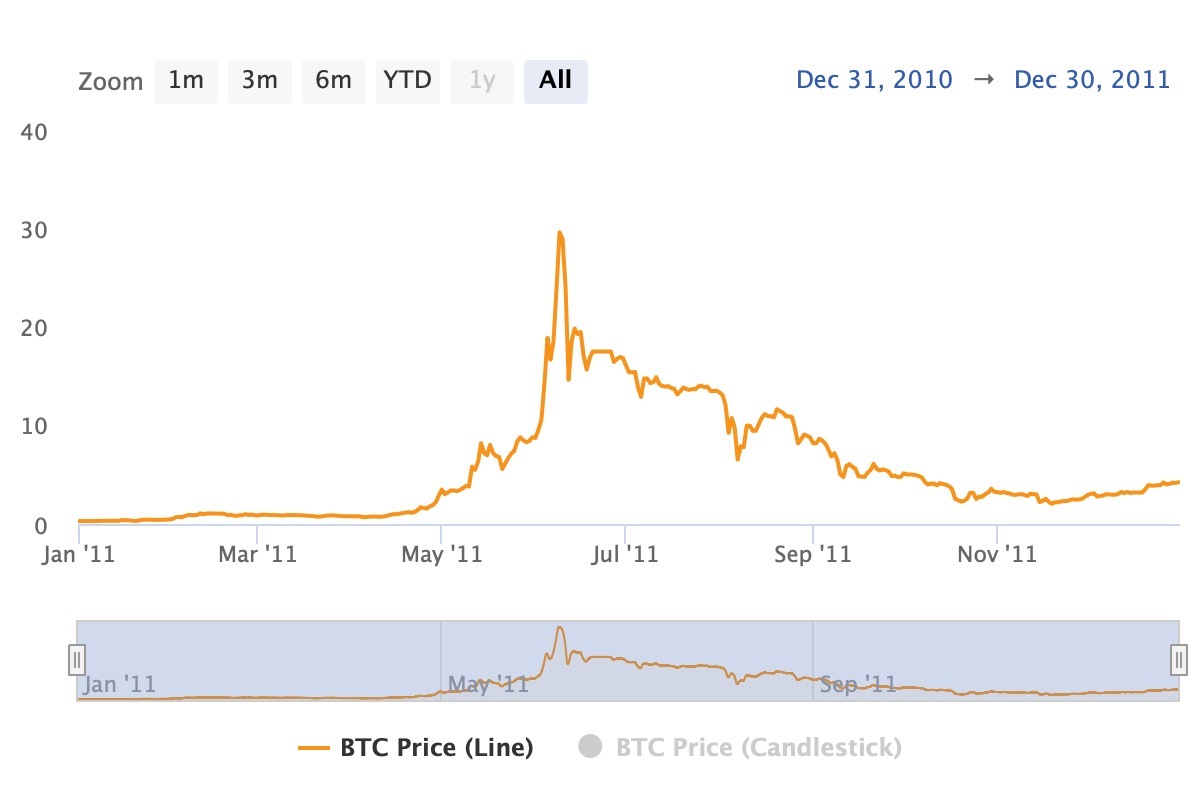
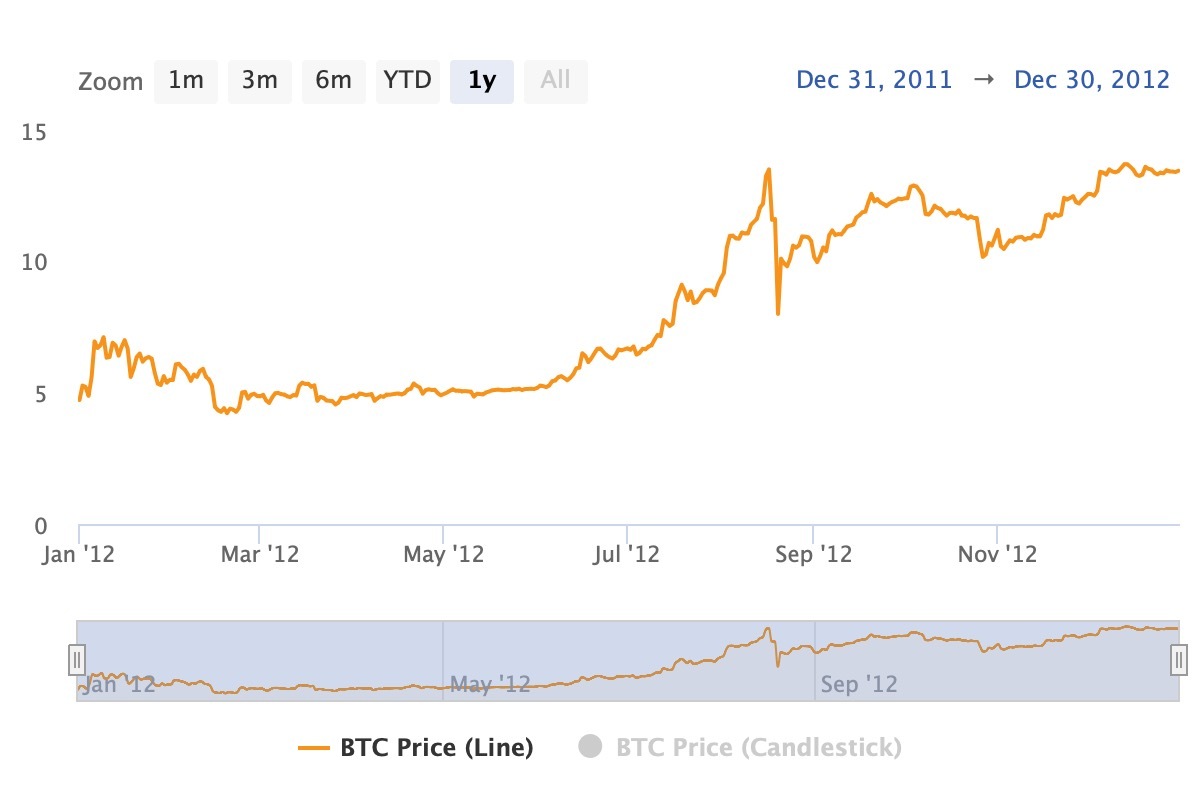
In 2011, bitcoin hit an exciting milestone, achieving parity with the U.S. dollar sometime between April 11 and April 15. Later that year, it climbed to a peak of $28.92 per coin—though some sources suggest it may have briefly touched $31.91 on June 8—before officially hitting $28.92 on June 10. However, the year wasn’t without its challenges, as bitcoin faced a sharp correction, closing out 2011 at $4.25 per coin.
By 2012, bitcoin was steadily gaining attention across the internet, fueled in part by the bustling activity on the Silk Road marketplace in 2011 and 2012, which added practical value to the peer-to-peer currency. Bitcoin wrapped up the year at around $13.45—a 216.47% increase from its Dec. 31, 2011, low. Another major milestone in 2012 was Bitcoin’s first halving event, which cut the block reward from 50 BTC to 25 BTC. This pivotal moment influenced bitcoin’s supply and highlighted the unique structure of its monetary policy.
2013 and 2014
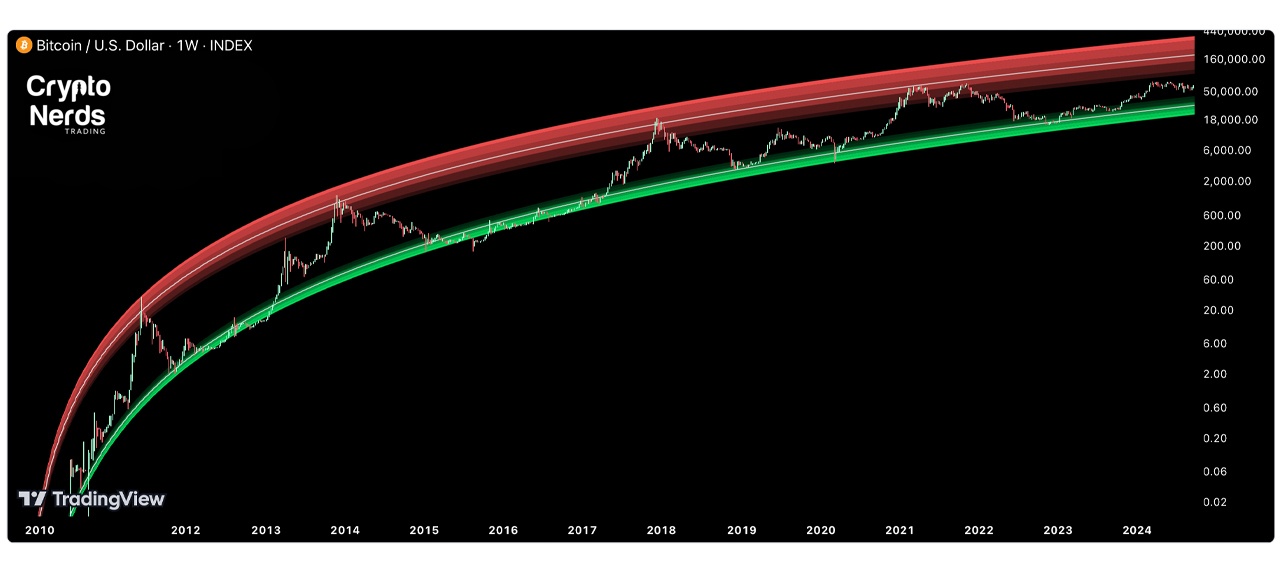
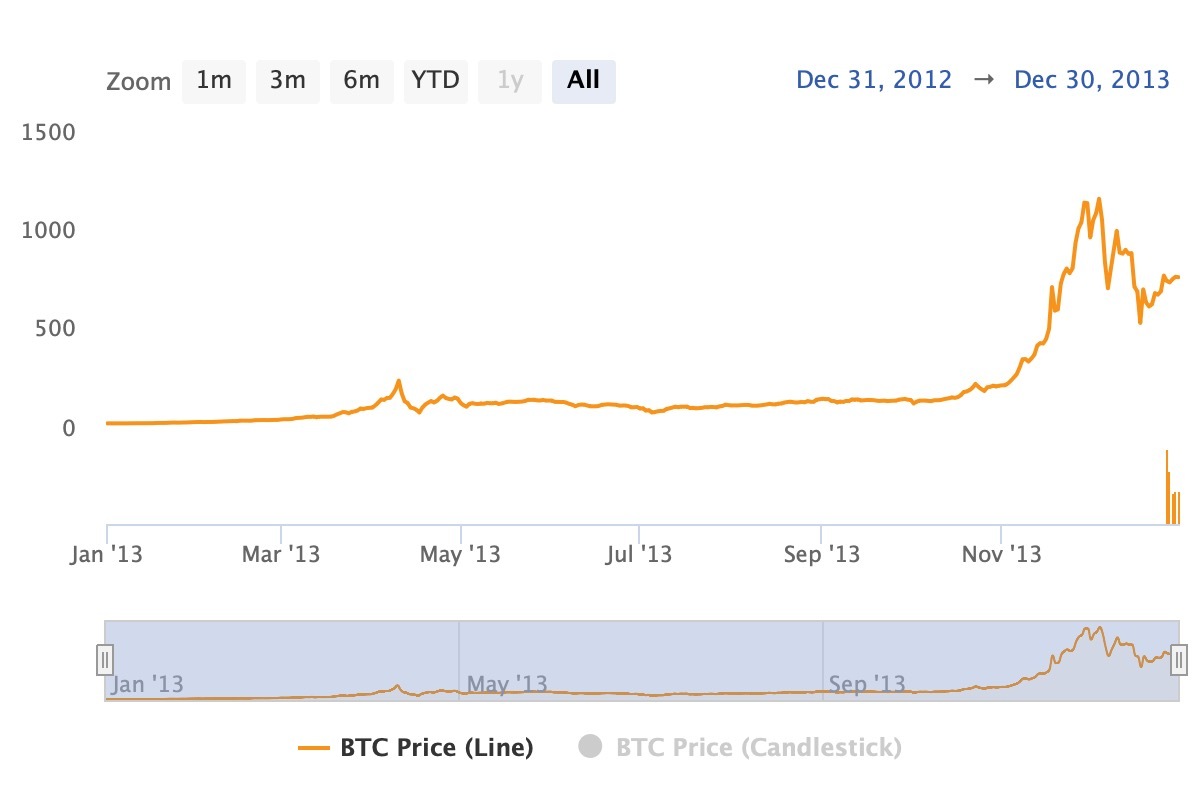
The year 2013 marked a defining chapter for bitcoin, with BTC smashing through milestones like $20, $50, $100, $200, $500, and eventually soaring to $1,151 per coin on Dec. 4. This explosive growth was partly fueled by the Cyprus banking crisis in March, when the government announced a controversial bank bail-in. The move left shareholders and large depositors facing steep financial losses, drawing attention to bitcoin as a decentralized alternative.
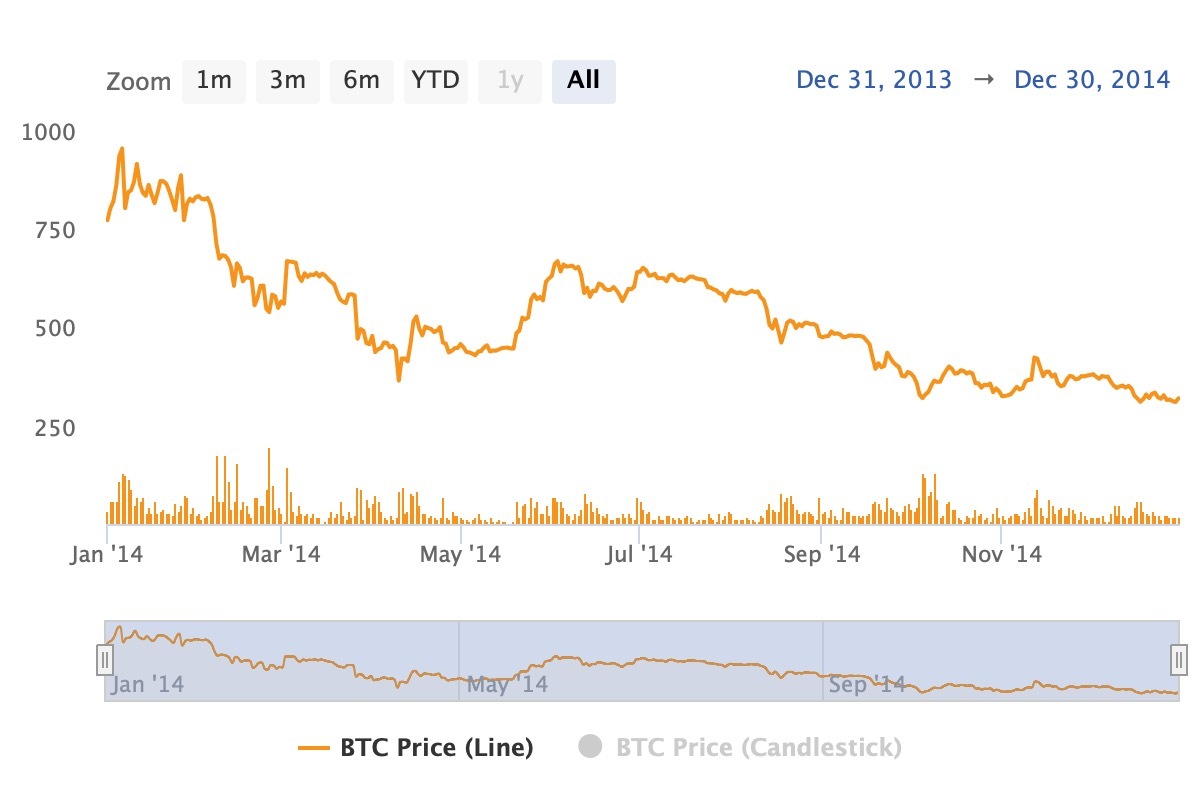
By 2014, the bitcoin world faced a major setback with the collapse of its largest exchange. In Feb. 2014, Mt Gox, then the most prominent exchange globally, filed for bankruptcy in Japan after a devastating hack led to the loss of roughly 850,000 bitcoins. This incident shook the BTC community to its core. The same year, in October 2014, a trader dubbed the ‘Bear Whale’ transferred 30,000 bitcoins to Bitstamp and placed a sell limit order at $300 per coin. While bitcoin had nearly touched $1,200 per coin by Dec. 2013, it ended 2014 at around $320.
2015 and 2016
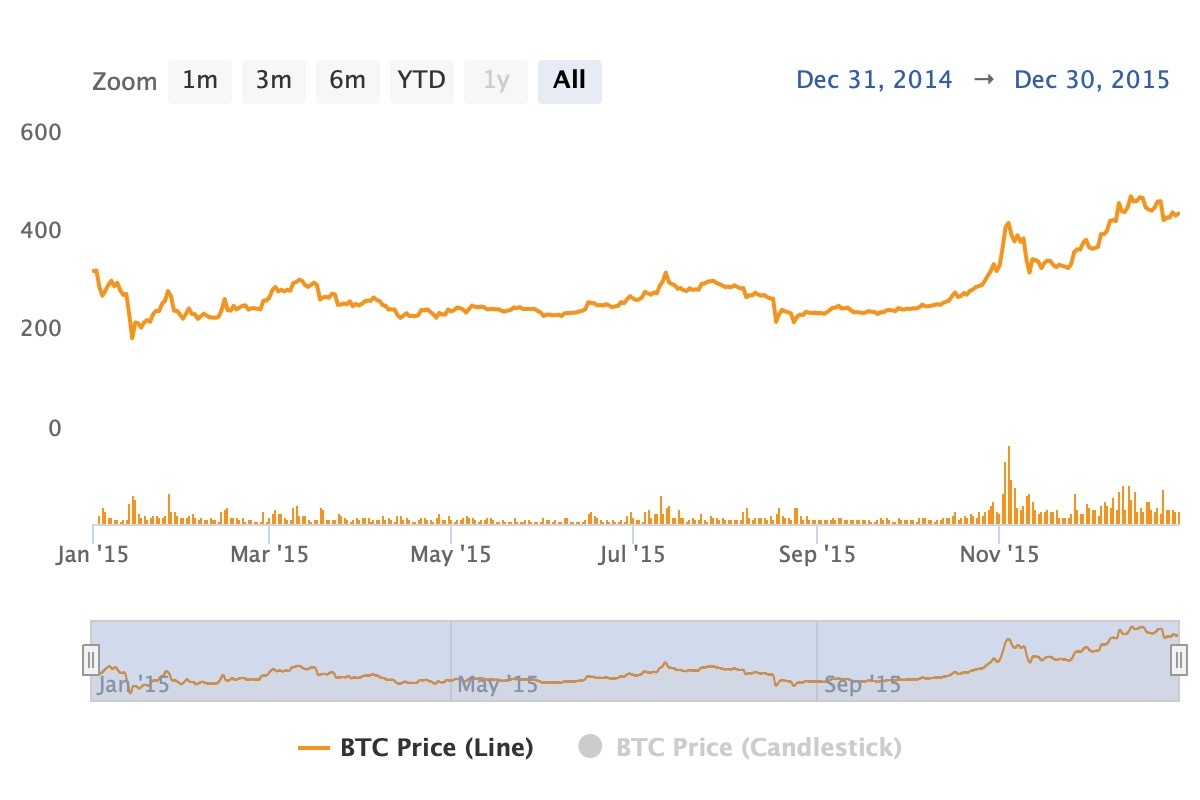
In 2015, BTC suffered through a bear market and it reached a low of $170 per coin. It closed the year higher at $430 per coin on Dec. 31, 2015. In 2015, regulators took bold steps to integrate bitcoin and cryptocurrencies into established financial systems. The CFTC labeled bitcoin a commodity after penalizing Coinflip for running unregistered operations. New York’s NYDFS launched the Bitlicense framework, awarding the first to Circle Internet Financial, while the CSBS introduced a Model Regulatory Framework to streamline state oversight. FinCEN also made waves by penalizing Ripple Labs for anti-money laundering violations, cementing the year as a turning point for digital asset regulation.
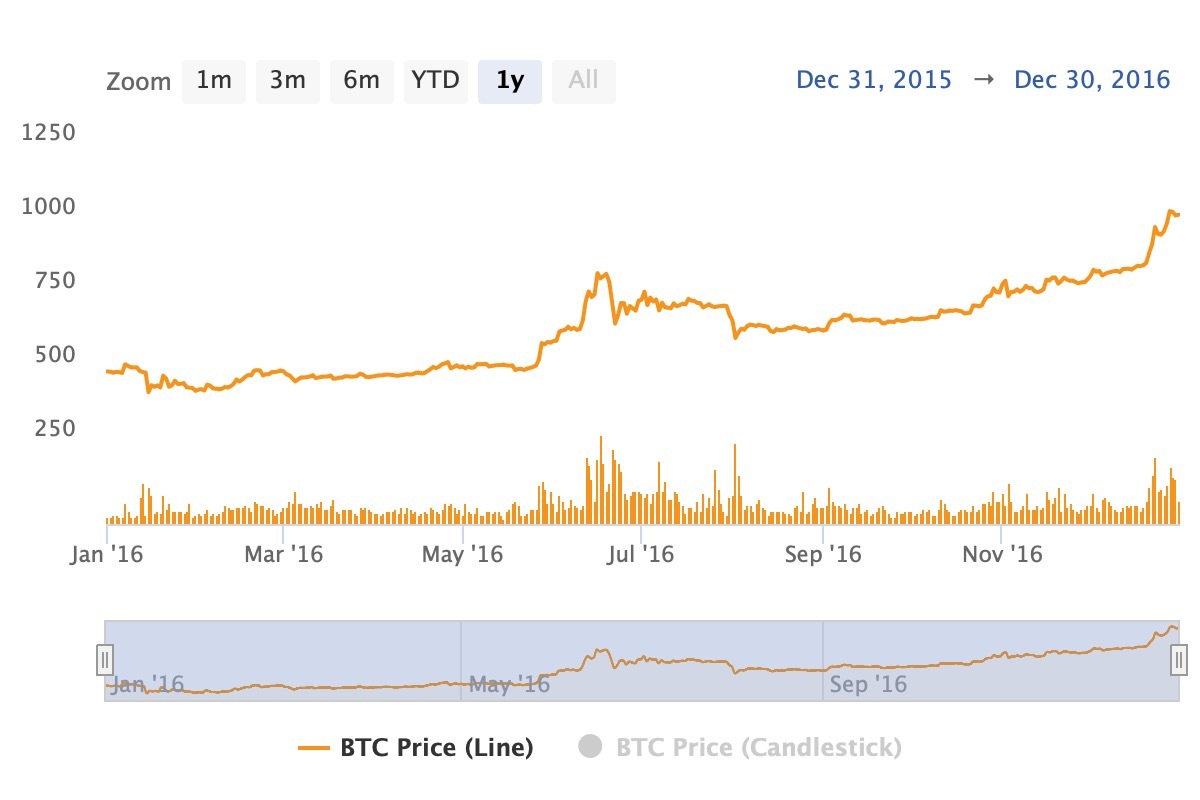
In 2016, BTC’s price performance started to gain ground again seeing substantial growth. Additionally, on July 9, 2016, Bitcoin underwent its second halving event, reducing the block reward from 25 to 12.5 BTC per block. By the end of 2016, the leading crypto asset was trading at $963 per coin. Bitcoin’s infrastructure saw key advancements in 2016. The network’s hashrate grew to 1 exahash, reflecting increased miner participation and enhanced security. Regulatory scrutiny also intensified as governments and financial institutions explored frameworks to tackle fraud and money laundering while acknowledging blockchain’s potential.
2017 and 2018
In 2017, bitcoin’s price journey was nothing short of dramatic, cementing its place in financial history. Starting the year trading at $998, bitcoin climbed to around $2,300 by late May. By mid-August, it had soared past $4,000, shattering the $5,000 mark in September and hitting $7,000 by early November. Factors fueling this rise included growing media coverage and the launch of Bitcoin futures trading on the Chicago Board Options Exchange (Cboe).
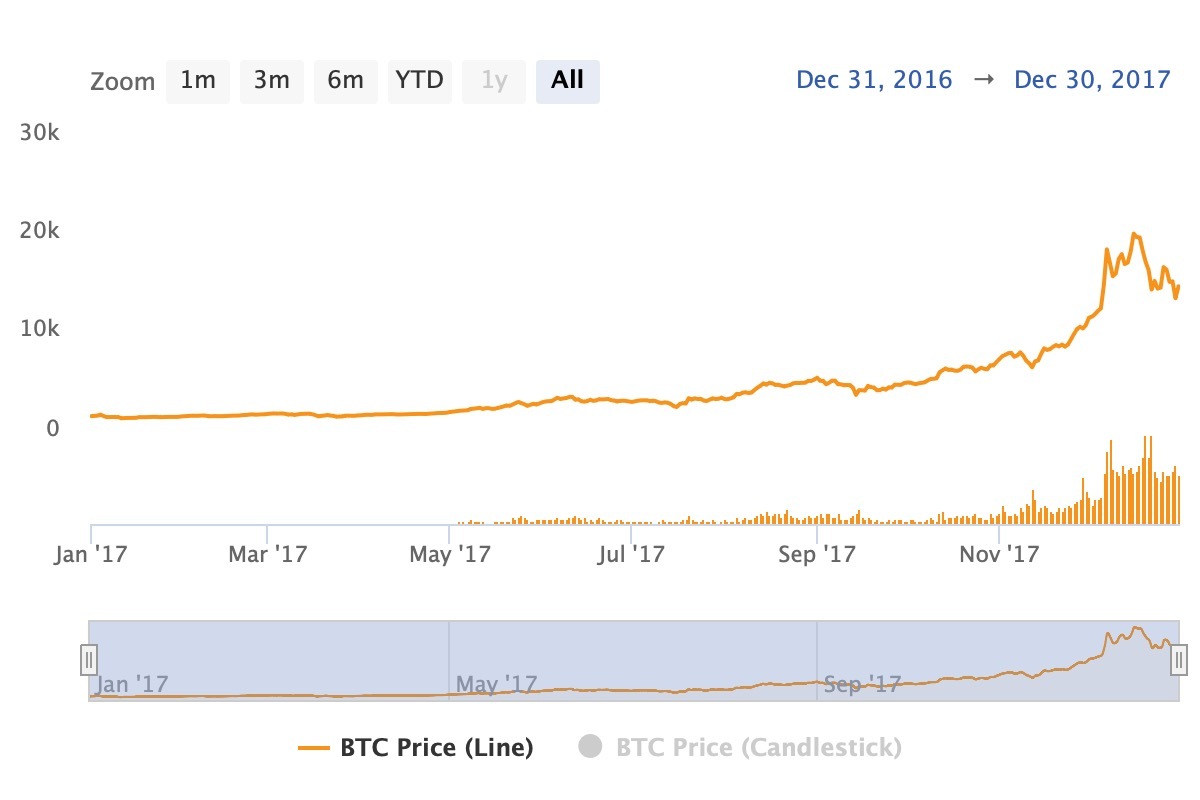
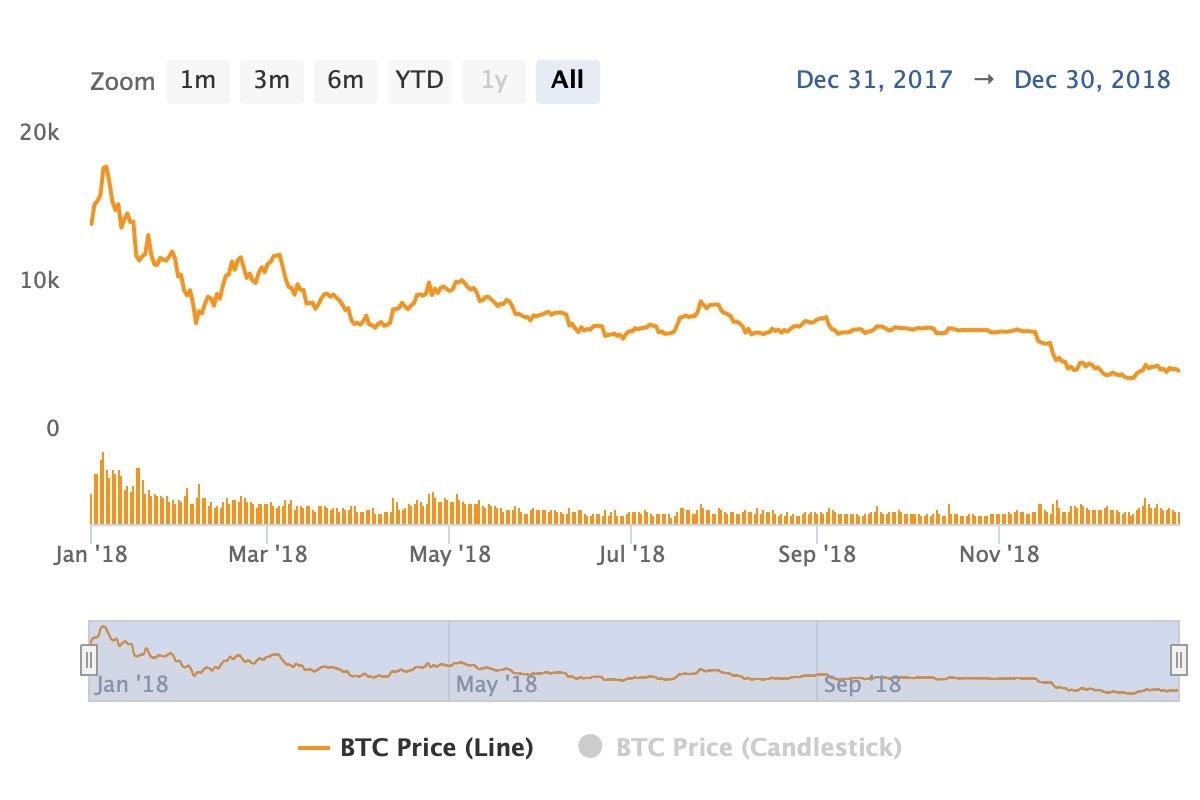
The rally gained steam as the year ended, with bitcoin crossing $10,000 and peaking above $19,000 in December. It flirted with the $20,000 milestone but didn’t quite reach it in 2017. By January 2018, bitcoin stood at approximately $13,657, but a bearish turn soon followed. Throughout 2018, its price seesawed between $6,000 and $8,000 before ending the year at about $3,742—a steep 80% fall from its December 2017 high. This downturn stemmed from regulatory concerns over initial coin offerings (ICOs) and a market cooldown after 2017’s speculative frenzy.
2019 and 2020
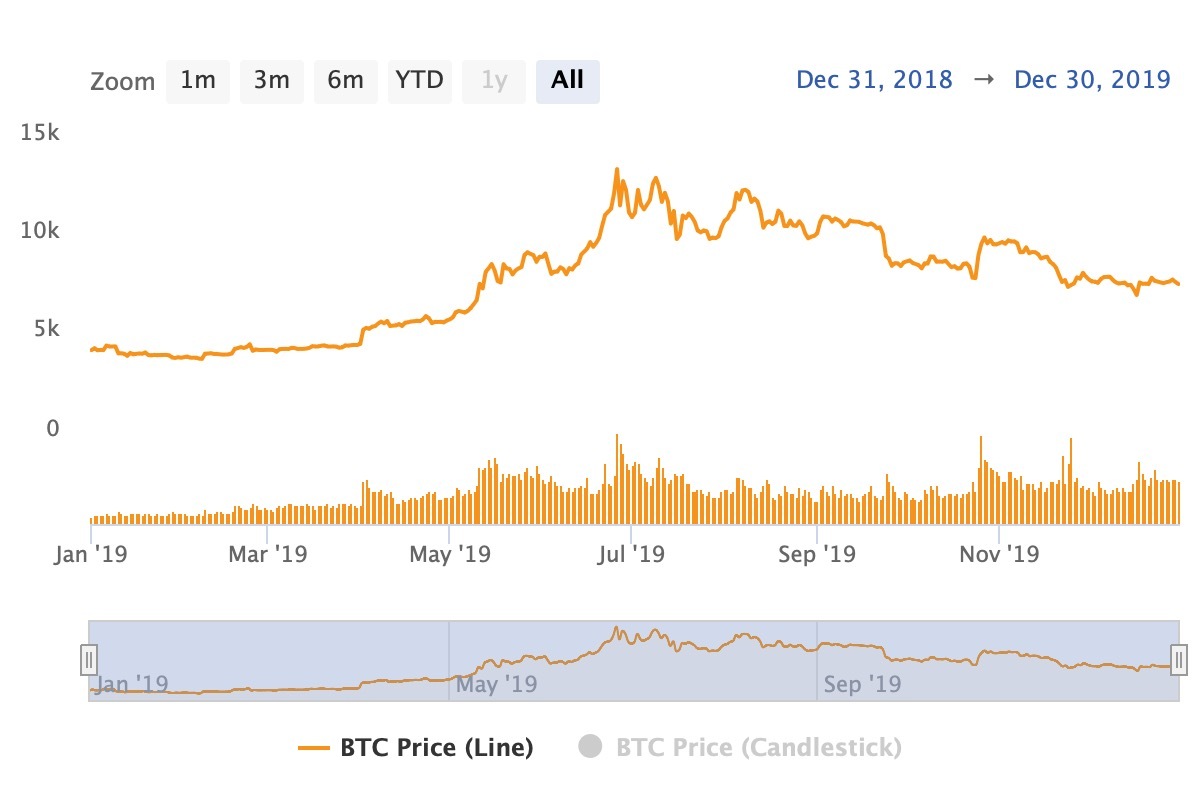
In 2019, bitcoin’s price put on quite the show, swinging between highs and lows that kept everyone guessing. It kicked off the year at about $3,843, struggling to build momentum at first. April brought a breakthrough as bitcoin climbed past $4,000 and quickly hit $5,000. By June, the rally reached its peak near $13,000 before cooling off. The second half of the year was less thrilling, with bitcoin dipping below $10,000 and wrapping up 2019 just shy of $7,193.
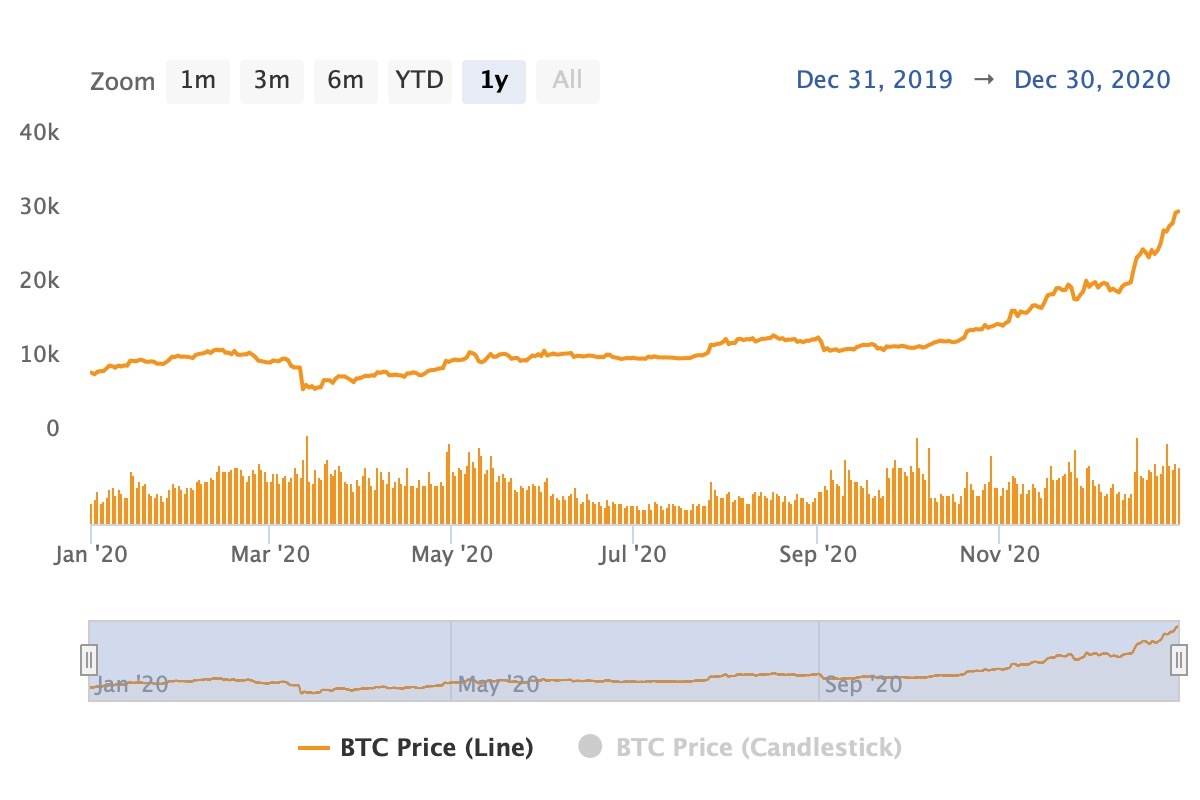
The year 2020 brought a comeback story for bitcoin, filled with both hurdles and triumphs. It started at roughly $7,200 and was back over $10,000 by mid-February. Then, March came crashing in with the Covid-19 pandemic, dragging bitcoin down to under $4,000. But the dip didn’t last long—bitcoin bounced back as economic uncertainty and monetary policy fueled fresh interest in cryptocurrencies. By May, it had climbed above $9,000, and the momentum kept building. October saw bitcoin break through $13,000, and the excitement peaked in November as greater market liquidity pushed prices higher. By December’s end, bitcoin was knocking on $29,000, an impressive 416% jump from where it began the year.
2021 and 2022
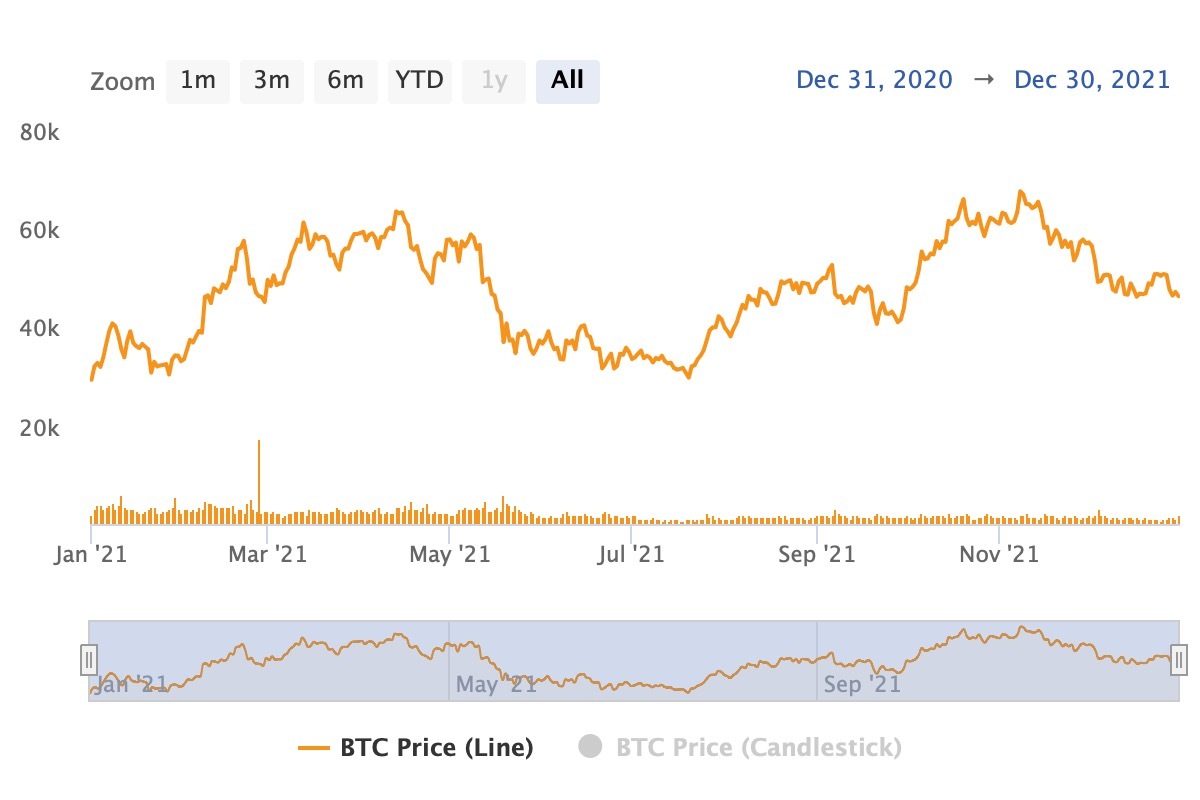
In 2021, bitcoin delivered a rollercoaster of highs and lows, kicking off the year at around $29,000. By mid-April, it shattered records, soaring past $64,000, fueled by growing institutional interest and the much-anticipated public debut of Coinbase, a major cryptocurrency exchange. But the celebration was short-lived. In May, China’s crackdown on cryptocurrency activities, including a ban on financial institutions offering crypto services, sent prices tumbling. By July, bitcoin had shed more than half its value, landing near $30,829. Undeterred, bitcoin staged a comeback in the fall, climbing to a fresh peak of close to $70K in November. As December rolled around, market jitters over inflation and the Omicron variant of Covid-19 pushed bitcoin down to close the year at approximately $46,306.
The challenges didn’t stop in 2022. Bitcoin’s price continued to slide as global economic instability and tighter monetary policies took their toll. Starting the year at about $47,686, bitcoin gradually lost ground. By May, it dipped below $30,000, a level not seen since July 2021. The pressure only mounted as concerns over rising interest rates and shrinking market liquidity weighed heavily on the crypto market. By June, bitcoin had fallen below $23,000 and remained under $20,000 as the year drew to a close. It was a tough stretch for bitcoin, grappling with economic headwinds and heightened regulatory scrutiny worldwide.
The crypto market essentially faced major upheaval in 2022, with the dramatic collapses of Terra and FTX stealing the spotlight. In May, Terra’s ecosystem, which included the algorithmic stablecoin terrausd (UST) and its sister token LUNA, fell apart. UST lost its dollar peg, triggering a crash that wiped out around $40 billion in market value and left investors reeling.
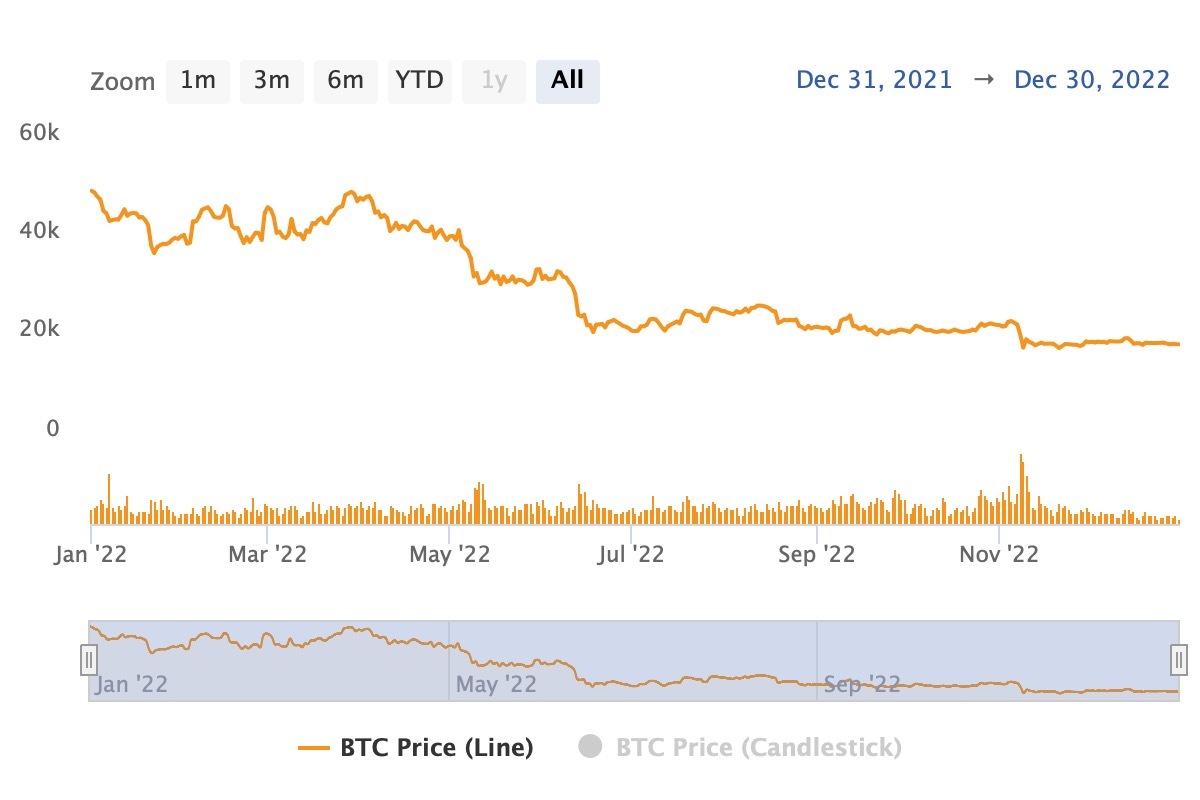
By November, the trouble deepened with the downfall of FTX, one of the largest cryptocurrency exchanges. A liquidity crisis unraveled after it was revealed that Alameda Research, tied to FTX, heavily relied on FTX’s native token, FTT. A wave of withdrawals followed, and after failed bailout attempts, FTX filed for bankruptcy on Nov. 11. The fallout hit hard, causing bankruptcies at firms like Blockfi and Genesis. The chaos of 2022 left deep financial scars and shook investor confidence across the crypto world.
2023 and Now
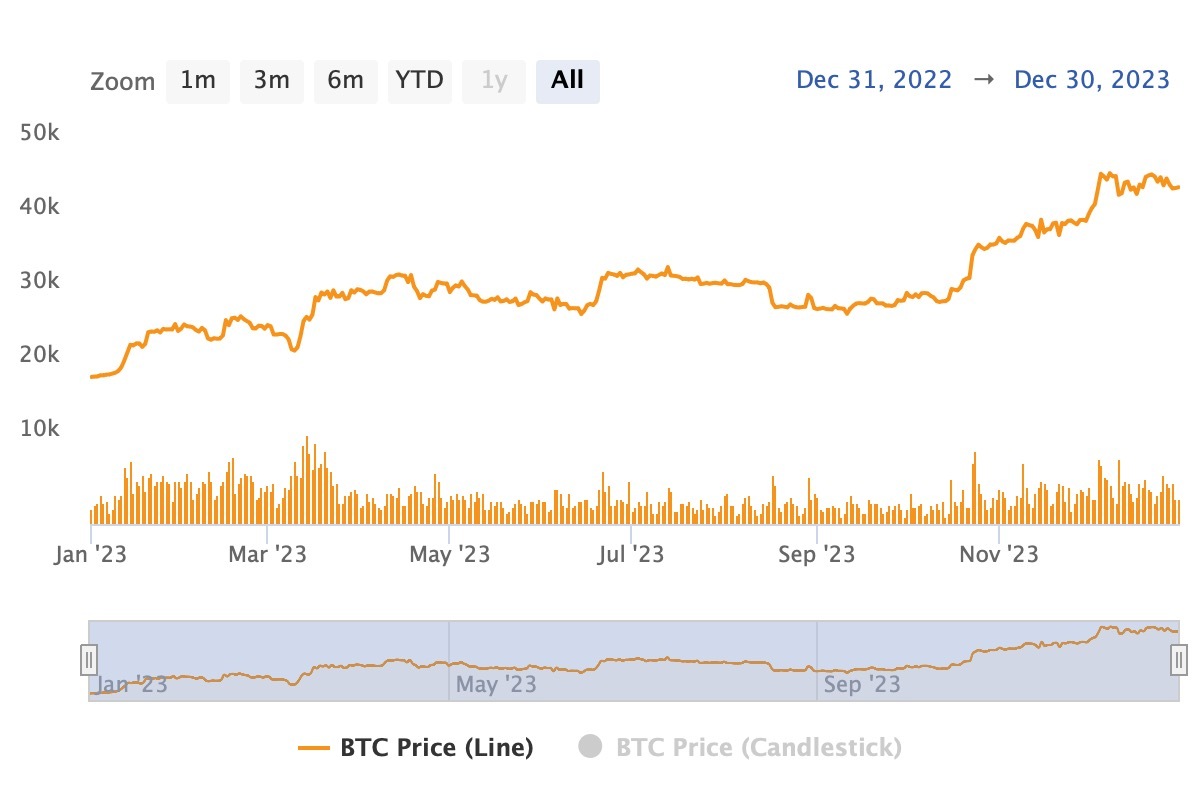
In 2023, bitcoin made a strong comeback after the previous year’s slump. Starting at about $16,625 in January, it steadily gained ground. By June, bitcoin reached $26,820 and continued climbing, hitting $35,437 in November. Renewed investor interest and upbeat market sentiment fueled the rally, closing the year at approximately $42,265.
The momentum carried into 2024, with bitcoin’s growth accelerating. It kicked off the year at $44,167 and quickly crossed significant price milestones. By March, it touched $62,441 and kept climbing. In November, bitcoin hit an all-time high of $99,800 per coin, buoyed by institutional investments and favorable regulatory moves.
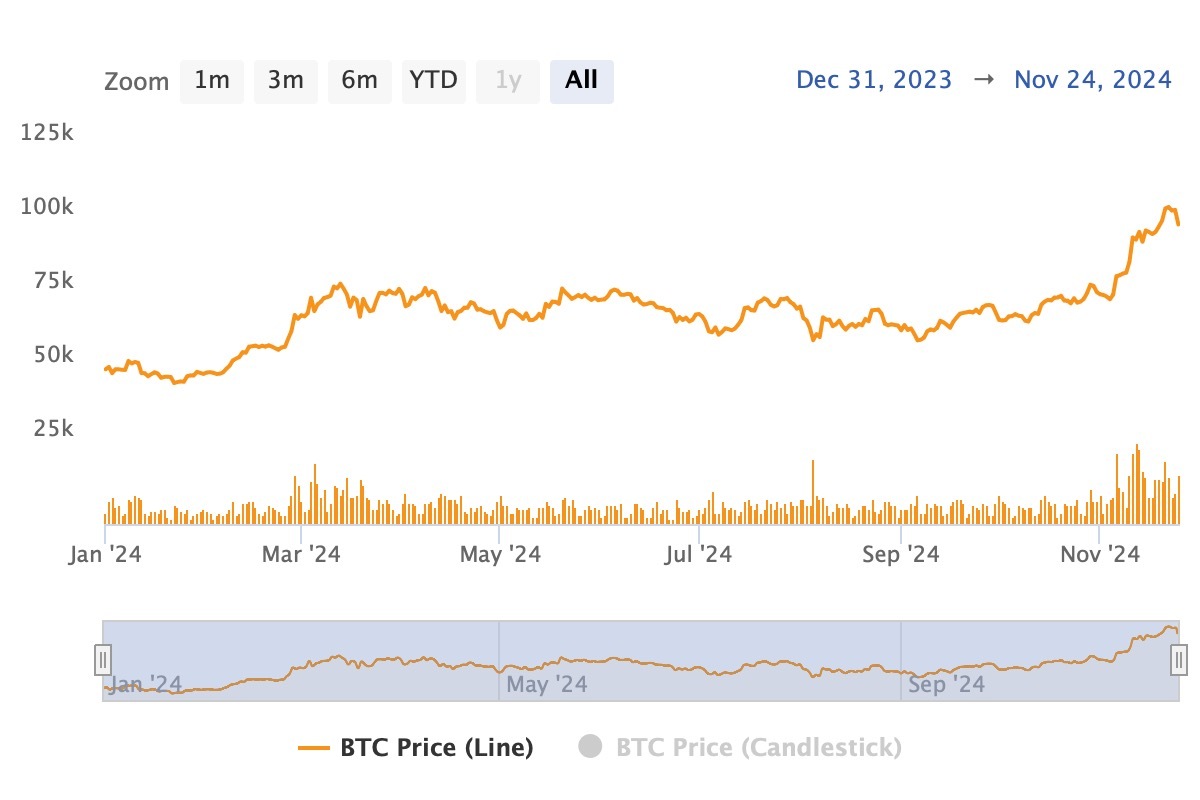
As of late November 2024, bitcoin is trading at prices between $95.4K to $96.5K per unit and is tantalizingly close to $100,000. Whether it hits that mark by year’s end remains to be seen—but the excitement is undeniable.