DOJ Targets Southeast Asia Scam Networks, Freezing $3.8M in Stolen Crypto
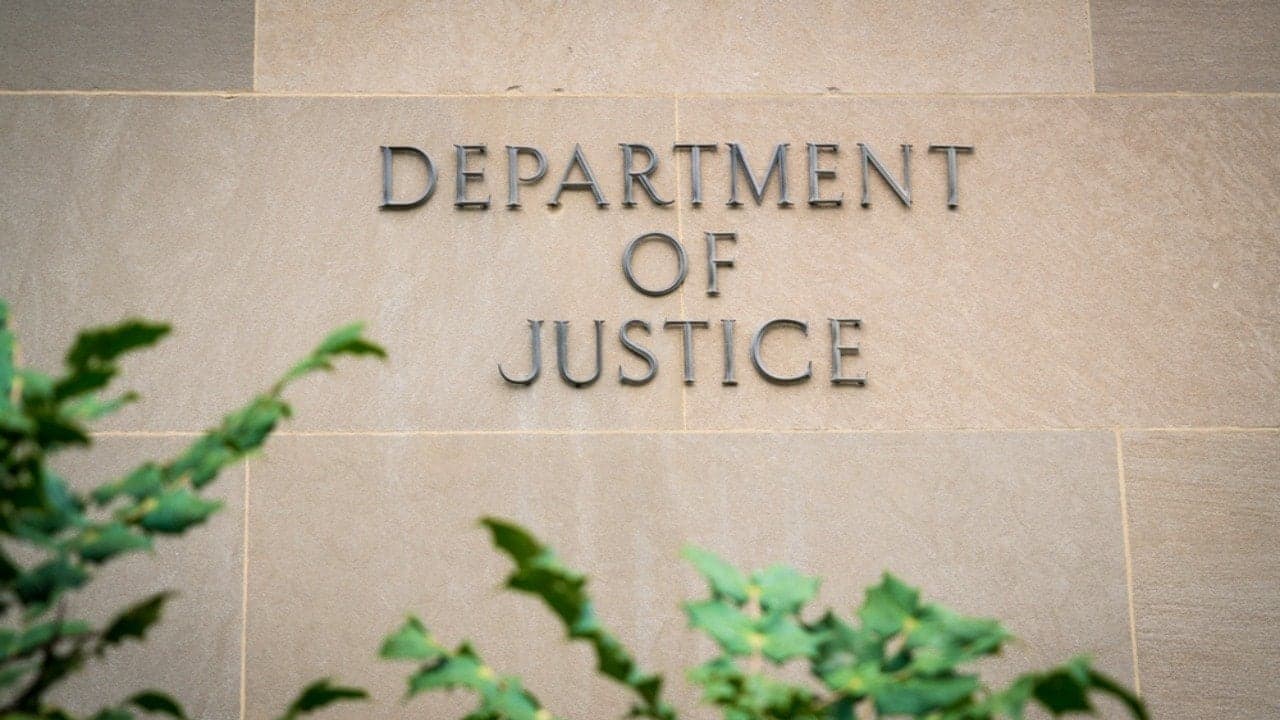
The U.S. Justice Department said it has carried out a first-of-its-kind operation with major technology and crypto firms to disrupt cyber-enabled investment fraud networks targeting Americans.
The campaign, called “Disruption Week,” brought together federal investigators, foreign law enforcement agencies, and private companies in Washington from May 18 to May 21. The effort was led by the DOJ’s Scam Center Strike Force, with participation from the FBI, U.S. Secret Service, and Homeland Security Investigations.
The DOJ said private companies voluntarily interrupted more than 1.4 million social media and email accounts used by transnational criminal groups. The government also shared information that helped private-sector firms freeze more than $3.8 million in cryptocurrency linked to the laundering of stolen funds.
The participating companies included Apple, Coinbase, Google, Meta, Microsoft, Silent Push, SpaceX, TRM Labs, and Zenlayer. Foreign agencies from Australia, Canada, New Zealand, Thailand, and the U.K. also joined the operation. Meta played a central role in coordinating private-sector participation, according to the DOJ.
Authorities said the operation targeted scam networks in Southeast Asia that run crypto investment fraud schemes, often known as “pig butchering.” In these scams, criminals build trust with victims over time, then persuade them to deposit money into fake investment platforms that appear to show profits. The funds are then stolen.
U.S. Attorney Jeanine Ferris Pirro for the District of Columbia said the schemes are devastating ordinary Americans and wiping out life savings. He remarked:
Disruption Week shows what is possible when governments and private industry focus their efforts in tandem: millions of scam accounts interrupted, and criminal networks pushed off the U.S. internet platforms on which they rely.
Assistant Attorney General A. Tysen Duva said the U.S. is facing an “unprecedented threat from industrial-scale, foreign organizations looking to prey on citizens” that requires new forms of coordination.
The disruption went beyond online accounts. The DOJ said participants interrupted malicious IP traffic, cut network connections used by scammers, and decommissioned servers, hosting infrastructure, and colocation environments tied to fraud operations.
The operation also identified several scammers and scam platforms for possible U.S. prosecution. Thai authorities arrested seven suspected scammers and opened new cases through the Royal Thai Police Anti-Cyber Scam Center.
Coinbase said it froze more than $3 million in crypto assets tied directly to the criminal networks. The exchange said blockchain records helped investigators trace illicit funds because transactions are transparent and permanent.
Coinbase also said the broader effort resulted in 63 arrests, thousands of Starlink kits terminated, and millions in criminal assets frozen.
The scale of the problem is growing. According to the FBI’s Internet Crime Complaint Center, reported losses from investment scams rose from $3.96 billion in 2023 to $5.8 billion in 2024. Reported losses climbed again in 2025, reaching more than $7.2 billion. Crypto-related fraud made up 83% of reported investment scam losses in 2023.
Officials believe actual losses are far higher because many victims never report the crime.
Many of these fraud operations are run from large compounds in Cambodia, Laos, and Burma near the Thai border. Workers are often lured with fake job offers, stripped of identity documents, and forced to scam victims under threat of violence.
For the DOJ, Disruption Week marks a new model: attacking scam networks simultaneously across platforms, payment rails, and internet infrastructure.