An ETF, or exchange-traded fund, is an investment fund that holds a basket of assets and trades on a stock exchange like a stock. A single ETF can hold stocks, bonds, commodities, crypto-related products, or a mix of them, handing an investor exposure to many assets through one tradable product. The SEC’s Investor.gov describes ETFs as exchange-traded investment products that pool money from many investors and put it into stocks, bonds, money-market instruments and other securities.
Here’s the catch worth absorbing early: the word “ETF” describes the wrapper, and the contents are a separate question entirely. Two funds can be built the same way and behave nothing alike, one holding the 500 largest U.S. companies, the other tracking a single commodity or magnifying daily moves. So the useful question goes beyond “what is an ETF?” to “what does this ETF hold, and how is it built?”
This guide explains ETFs in plain English: what they are, how they work, what they can hold, how they differ from stocks, mutual funds and index funds, and where Bitcoin ETFs fit. It recommends no specific fund or strategy.
Key Takeaways
- An ETF, or exchange-traded fund, is a pooled investment product that holds a basket of assets and trades on an exchange like a stock.
- The ETF is only the wrapper; what matters most is what the fund actually holds, how it is structured, and what strategy it follows.
- ETFs can hold stocks, bonds, commodities, crypto-related products, cash-like instruments, or a mix of assets.
- ETFs differ from stocks because a stock represents ownership in one company, while an ETF usually provides exposure to many holdings through one product.
- ETFs differ from mutual funds because they trade throughout the day on an exchange, while mutual funds are usually priced once after the market closes.
- An index fund is not the same thing as an ETF: “ETF” describes how the fund trades, while “index fund” describes a strategy that tracks a benchmark.
- Bitcoin ETFs and ETPs offer convenient Bitcoin price exposure through traditional brokerage accounts, but they are not the same as holding Bitcoin directly.
- ETFs can be useful investment building blocks, but they still carry risks including market losses, fees, tracking error, liquidity issues, concentration, and product complexity.
What Is an ETF?
An ETF is a fund that trades on an exchange. Like a mutual fund, it holds a portfolio of assets: stocks, bonds, commodities or other securities. Like a stock, it can be bought and sold throughout the trading day through a brokerage account. That combination is the whole idea: the diversification of a fund with the tradability of a share.
ETF featureWhat it meansFull nameExchange-traded fundTrades likeA stock, during market hoursHoldsA basket of assetsCommon assetsStocks, bonds, commodities, crypto-related products, cash-like instrumentsMain useDiversified exposure through one tradable productPriceChanges continuously during the trading dayBought throughA brokerage or investment platformETF featureFull nameWhat it meansExchange-traded fundETF featureTrades likeWhat it meansA stock, during market hoursETF featureHoldsWhat it meansA basket of assetsETF featureCommon assetsWhat it meansStocks, bonds, commodities, crypto-related products, cash-like instrumentsETF featureMain useWhat it meansDiversified exposure through one tradable productETF featurePriceWhat it meansChanges continuously during the trading dayETF featureBought throughWhat it meansA brokerage or investment platform
ETF meaning and exchange-traded fund definition
Broken into its three words, the name explains itself. Exchange-traded means shares change hands on a stock exchange, the same venue as company shares. Fund means your money is pooled with other investors’ and invested as a single portfolio. Together, an exchange-traded fund is a pooled investment you can buy and sell like a share.
A simple ETF example
Suppose an ETF tracks a broad U.S. stock index. Buy one share, and that single share represents a slice of a portfolio holding hundreds of companies at once. If one of them has a terrible day, it’s only a sliver of the basket. That one purchase does the work of hundreds of separate trades.
How Do ETFs Work?
ETFs work by pooling investor money into a fund that owns a portfolio of assets. Investors buy and sell ETF shares on an exchange at prices that move all day. Behind the scenes, large institutions called authorized participants create or redeem ETF shares in bulk. That’s the mechanism that keeps an ETF’s market price close to the value of the assets it holds.
MechanismBeginner explanationBasket of assetsThe ETF owns many securities or assetsETF sharesInvestors buy shares of the fund itselfExchange tradingShares trade during market hours, like a stockNet asset value (NAV)The estimated value of the ETF’s holdingsMarket priceThe price investors actually pay or receive on the exchangeCreation / redemptionThe behind-the-scenes process that adjusts share supplyMechanismBasket of assetsBeginner explanationThe ETF owns many securities or assetsMechanismETF sharesBeginner explanationInvestors buy shares of the fund itselfMechanismExchange tradingBeginner explanationShares trade during market hours, like a stockMechanismNet asset value (NAV)Beginner explanationThe estimated value of the ETF’s holdingsMechanismMarket priceBeginner explanationThe price investors actually pay or receive on the exchangeMechanismCreation / redemptionBeginner explanationThe behind-the-scenes process that adjusts share supply
Market price vs. net asset value
An ETF really has two prices. Its net asset value (NAV) is what its underlying holdings are worth. Its market price is what buyers and sellers agree to on the exchange at any moment. Usually the two sit close together, but when demand spikes the market price can drift slightly above NAV (a premium) or below it (a discount). The mechanism below is what pulls them back in line.
Gow ETF creation and redemption works
This is the part that makes ETFs distinctive. When an ETF’s market price climbs above its NAV, authorized participants assemble the underlying basket, hand it to the fund, and receive new ETF shares to sell. When the price falls below NAV, the process runs in reverse, removing shares. The Investment Company Institute, the trade body for regulated funds, describes this as an arbitrage strategy that lets the supply of ETF shares expand or contract with demand, keeping market prices close to underlying value.
Investors buy and sell ETF shares
↓
ETF holds a basket of assets
↓
ETF share price moves through the trading day
↓
Authorized participants create or redeem shares
↓
Market price stays close to underlying value
The practical takeaway: you never deal with authorized participants or creation baskets yourself. You buy or sell shares through a broker, and the mechanism hums along in the background so the price you see reasonably reflects what the fund owns.
What Can ETFs Invest In?
One reason ETFs have grown so popular is range. The same basic structure can deliver exposure to almost any asset class.
ETF exposureExampleStocksBroad market, single country, sector, dividend, growth or valueBondsGovernment, corporate, municipal, short-term or long-termCommoditiesGold, oil-related exposure, commodity basketsCurrenciesCurrency-linked productsCrypto-related assetsSpot Bitcoin products, Bitcoin futures ETFs, Ether-related productsMulti-asset portfoliosA blend of stocks, bonds and other assets in one fundThematic sectorsAI, clean energy, semiconductors, cybersecurityActive strategiesA portfolio manager picks holdings instead of tracking an indexETF exposureStocksExampleBroad market, single country, sector, dividend, growth or valueETF exposureBondsExampleGovernment, corporate, municipal, short-term or long-termETF exposureCommoditiesExampleGold, oil-related exposure, commodity basketsETF exposureCurrenciesExampleCurrency-linked productsETF exposureCrypto-related assetsExampleSpot Bitcoin products, Bitcoin futures ETFs, Ether-related productsETF exposureMulti-asset portfoliosExampleA blend of stocks, bonds and other assets in one fundETF exposureThematic sectorsExampleAI, clean energy, semiconductors, cybersecurityETF exposureActive strategiesExampleA portfolio manager picks holdings instead of tracking an index
One careful note on the crypto line: not every product with “ETF” in its nickname is legally registered as an ETF. Investor.gov separates ETFs from other exchange-traded products such as commodity trusts and exchange-traded notes (ETNs), which use different structures and carry different protections. Many “Bitcoin ETFs” are technically exchange-traded products. The distinction matters for risk, covered in the Bitcoin section below.
Theory gets concrete on a brokerage screen. Here is what a few of the largest, most recognizable funds actually hold:
ETF categoryReal-world exampleTickerWhat it actually holdsBroad U.S. stocksSPDR S&P 500 ETF TrustSPYThe 500 largest U.S. companies (Apple, Microsoft and the rest)CommoditiesSPDR Gold SharesGLDPhysical gold bullion stored in a secure vaultBondsiShares Core U.S. Aggregate BondAGGThousands of U.S. government and corporate bondsCrypto / BitcoiniShares Bitcoin TrustIBITSpot Bitcoin held by a digital-asset custodianETF categoryBroad U.S. stocksReal-world exampleSPDR S&P 500 ETF TrustTickerSPYWhat it actually holdsThe 500 largest U.S. companies (Apple, Microsoft and the rest)ETF categoryCommoditiesReal-world exampleSPDR Gold SharesTickerGLDWhat it actually holdsPhysical gold bullion stored in a secure vaultETF categoryBondsReal-world exampleiShares Core U.S. Aggregate BondTickerAGGWhat it actually holdsThousands of U.S. government and corporate bondsETF categoryCrypto / BitcoinReal-world exampleiShares Bitcoin TrustTickerIBITWhat it actually holdsSpot Bitcoin held by a digital-asset custodian
That top row has pedigree. SPY was the first U.S.-listed ETF when it launched in 1993, picked up the nickname “the Spider,” and remains one of the most heavily traded securities on the planet, the great-grandparent of the entire industry.
Common Types of ETFs
Most ETFs fall into a handful of recognizable categories, ordered here roughly from simplest to most complex.
ETF typeWhat it usually doesIndex ETFTracks an index, such as a broad stock-market benchmarkStock ETFHolds shares of companiesBond ETFHolds bonds or bond-like instrumentsSector ETFFocuses on one industry, such as technology or energyCommodity ETF / ETPTracks commodity exposure such as gold or oilInternational ETFHolds assets from markets outside the investor’s home countryDividend ETFFocuses on dividend-paying stocksThematic ETFTargets a theme, such as AI or clean energyActively managed ETFA manager chooses the holdingsBitcoin / crypto ETF or ETPProvides crypto price exposure through a regulated market productLeveraged / inverse ETFUses strategies designed to magnify or reverse daily returnsETF typeIndex ETFWhat it usually doesTracks an index, such as a broad stock-market benchmarkETF typeStock ETFWhat it usually doesHolds shares of companiesETF typeBond ETFWhat it usually doesHolds bonds or bond-like instrumentsETF typeSector ETFWhat it usually doesFocuses on one industry, such as technology or energyETF typeCommodity ETF / ETPWhat it usually doesTracks commodity exposure such as gold or oilETF typeInternational ETFWhat it usually doesHolds assets from markets outside the investor’s home countryETF typeDividend ETFWhat it usually doesFocuses on dividend-paying stocksETF typeThematic ETFWhat it usually doesTargets a theme, such as AI or clean energyETF typeActively managed ETFWhat it usually doesA manager chooses the holdingsETF typeBitcoin / crypto ETF or ETPWhat it usually doesProvides crypto price exposure through a regulated market productETF typeLeveraged / inverse ETFWhat it usually doesUses strategies designed to magnify or reverse daily returns
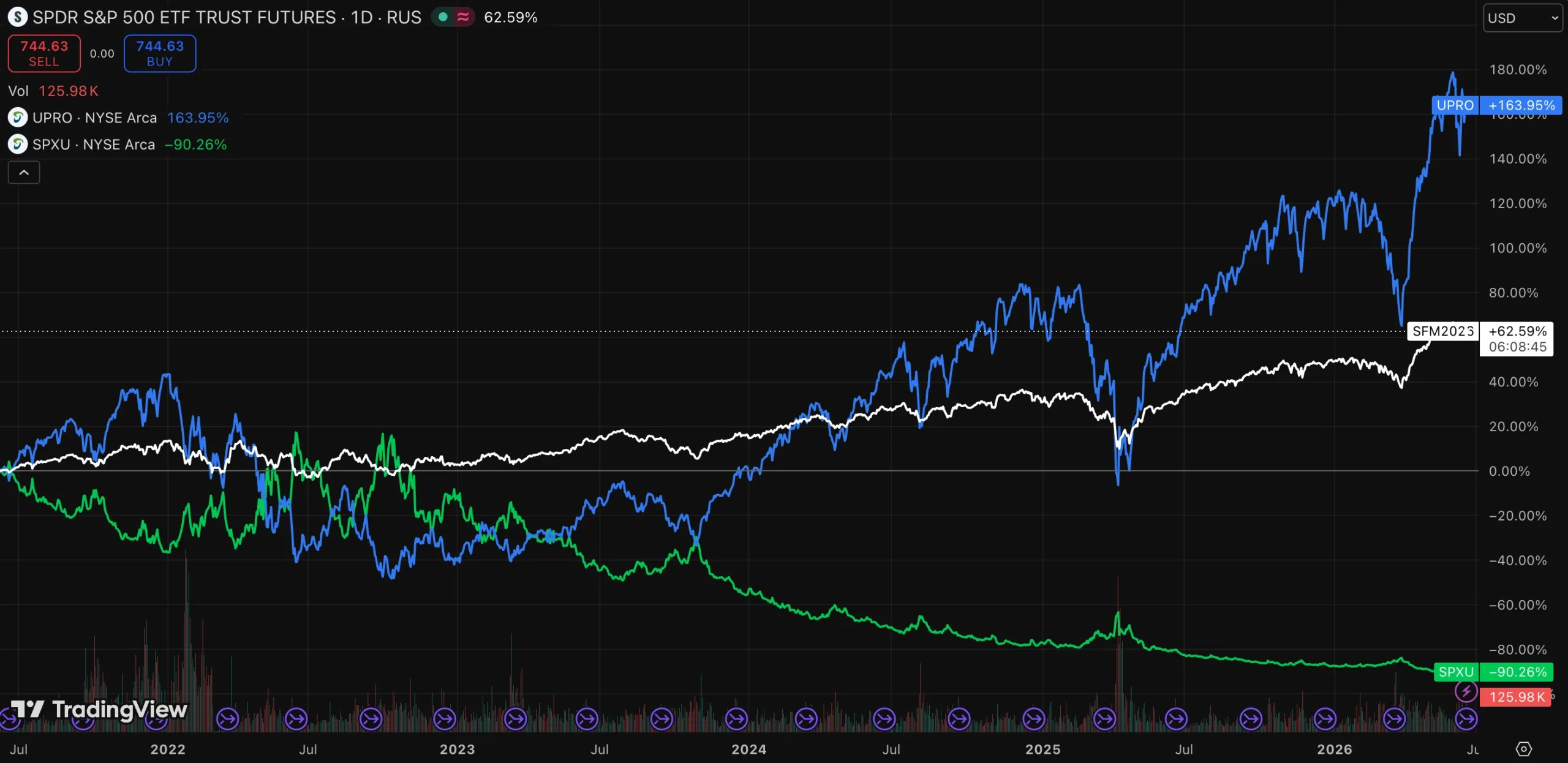
That last row deserves a flashing warning light. Leveraged and inverse ETFs are built to multiply or invert returns over a single day, and that daily reset means their performance over longer stretches can wander far from the index they reference. FINRA, the U.S. broker-dealer regulator, has repeatedly cautioned that these products are complex and carry risks unlike traditional ETFs. Think of them as the espresso shots of the ETF world: fine in small, deliberate, short-term doses, and punishing if you treat them like a water bottle to sip from for years.
The chart below shows why the warning matters. Over the same multi-year stretch, a 3x leveraged S&P 500 fund (UPRO) gained more than the index but with violent swings, while a 3x inverse fund (SPXU) bled down toward a near-total loss even though the underlying index rose. This is the daily-reset “decay” the regulators keep warning about, made visible.
ETF vs. Stock
This is the comparison most newcomers start with, since ETFs and stocks trade in exactly the same way.
FeatureETFStockWhat you ownA share of a fundA share of one companyDiversificationOften holds many assetsUsually a single companyRisk driverThe ETF’s underlying holdingsThe fortunes of one businessTradingOn an exchange, during market hoursOn an exchange, during market hoursWhat to researchHoldings, fees, strategyCompany financials and outlookFeatureWhat you ownETFA share of a fundStockA share of one companyFeatureDiversificationETFOften holds many assetsStockUsually a single companyFeatureRisk driverETFThe ETF’s underlying holdingsStockThe fortunes of one businessFeatureTradingETFOn an exchange, during market hoursStockOn an exchange, during market hoursFeatureWhat to researchETFHoldings, fees, strategyStockCompany financials and outlook
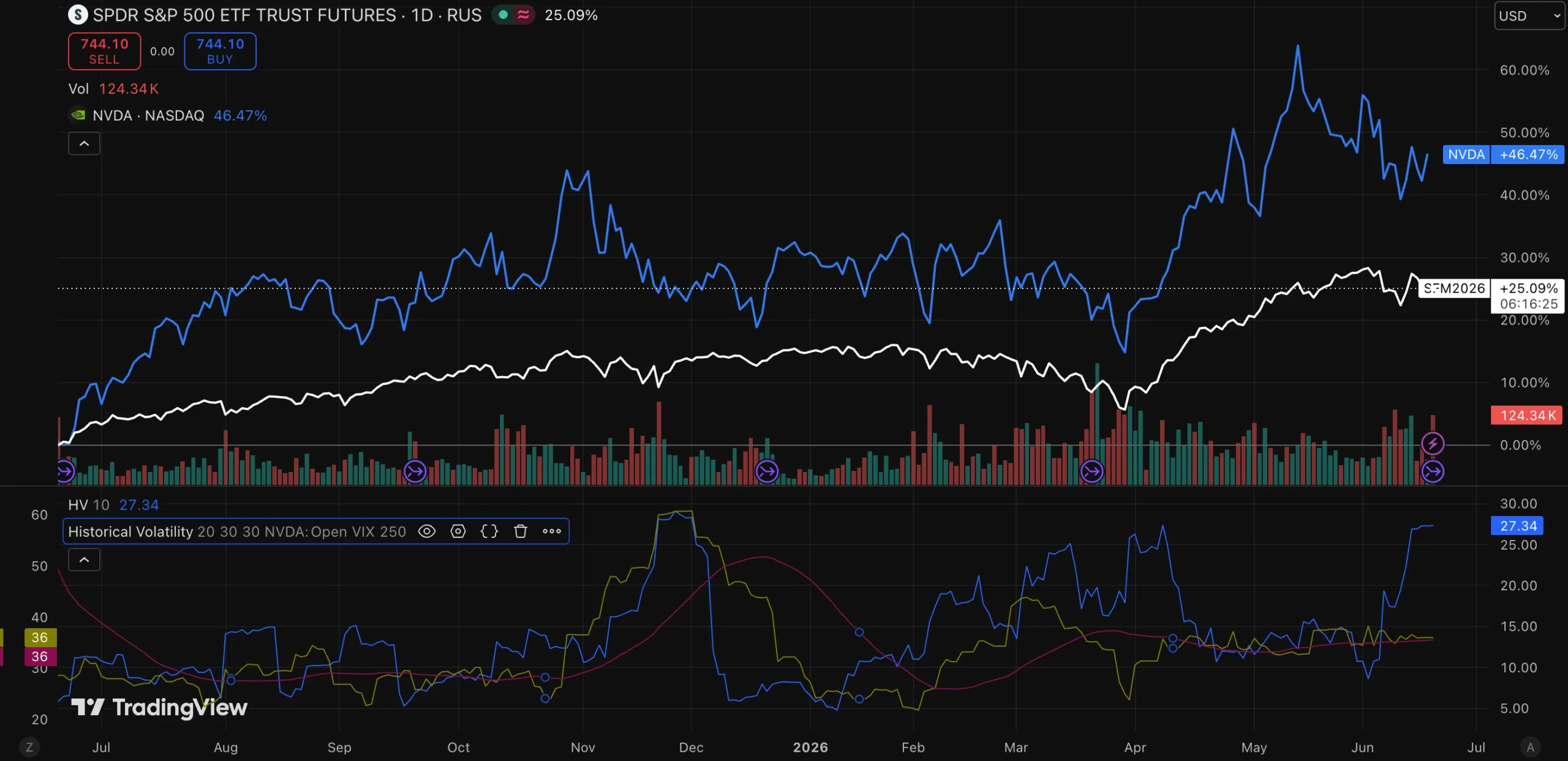
The distinction underneath: buying a stock is a concentrated bet on one company, while buying an ETF usually means exposure to a whole group of assets in one product. The chart below puts the two side by side: a single stock (here, Nvidia) lurches up and down far more sharply than a broad S&P 500 ETF tracking hundreds of companies, whose line is comparatively smooth. Same market, very different ride; that’s diversification at work.
Neither is inherently safer, a single-sector ETF can be riskier than a blue-chip stock, but the shape of the risk differs.
ETF vs. Mutual Fund
ETFs and mutual funds are close cousins: both are pooled funds holding portfolios of assets. The biggest differences are about when and how you trade them.
FeatureETFMutual fundTradingBought and sold throughout the dayUsually priced once, after the closePriceMarket price changes intradayEnd-of-day net asset valueMinimum investmentOften one share, sometimes fractionalMay require a set minimumCostsExpense ratio plus trading spreadExpense ratio, possibly sales loadsTax mechanicsOften tax-efficient, though not alwaysTreatment variesHoldings disclosureMany ETFs disclose dailyFrequency variesFeatureTradingETFBought and sold throughout the dayMutual fundUsually priced once, after the closeFeaturePriceETFMarket price changes intradayMutual fundEnd-of-day net asset valueFeatureMinimum investmentETFOften one share, sometimes fractionalMutual fundMay require a set minimumFeatureCostsETFExpense ratio plus trading spreadMutual fundExpense ratio, possibly sales loadsFeatureTax mechanicsETFOften tax-efficient, though not alwaysMutual fundTreatment variesFeatureHoldings disclosureETFMany ETFs disclose dailyMutual fundFrequency varies
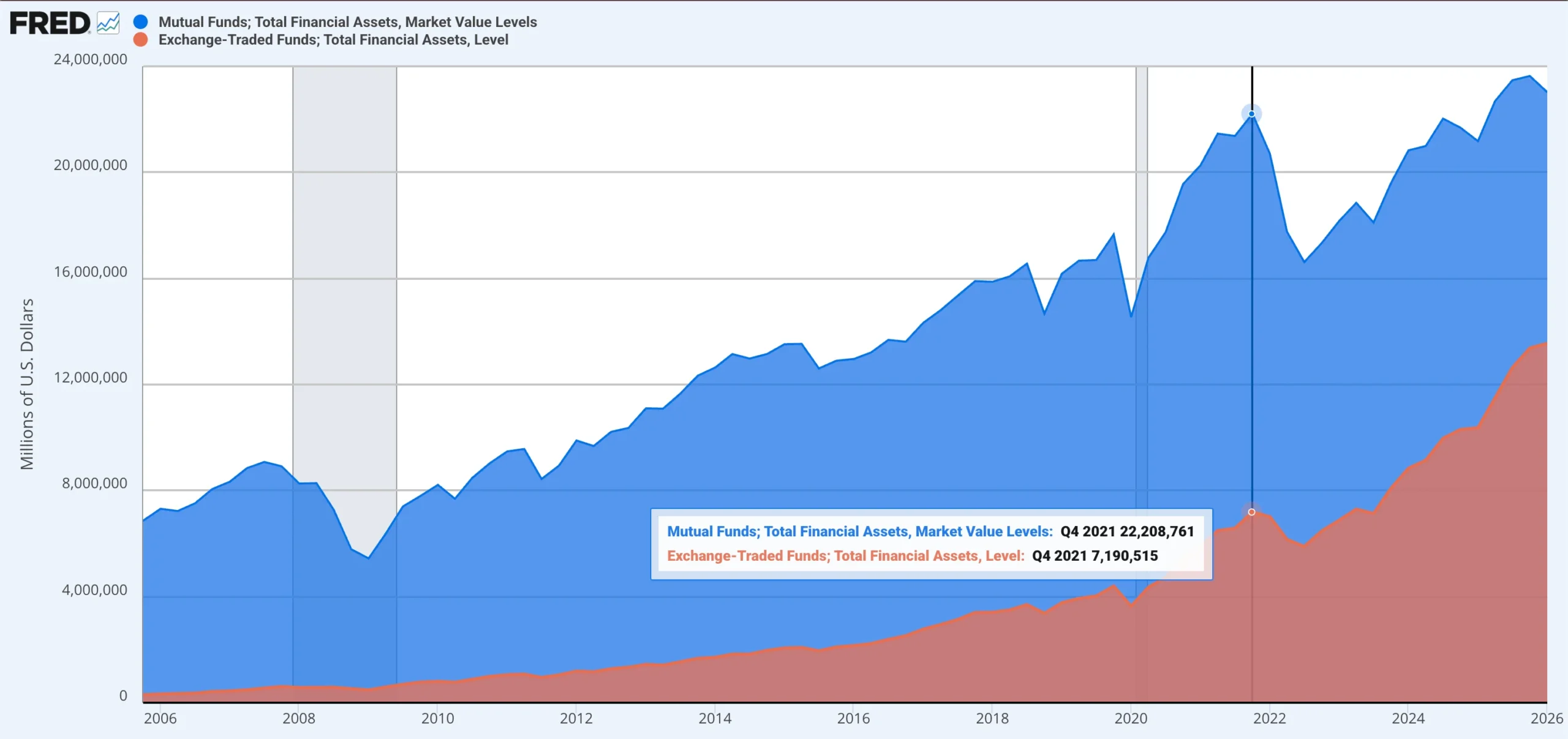
The two products are also on very different trajectories. The chart below tracks total assets held in each: mutual funds still hold far more money overall, but ETF assets have climbed rapidly over the past two decades and are steadily closing the gap.
None of this crowns a universal winner. A mutual fund’s once-a-day pricing suits an investor making automatic monthly contributions; an ETF’s intraday trading suits someone who wants to transact at a precise moment. Which fits better depends entirely on the individual.
ETF vs. Index Fund
Here is the distinction beginners most often tangle, and it genuinely matters: an index fund can be either an ETF or a mutual fund. “ETF” describes how the fund trades. “Index fund” describes what it’s trying to do, track an index rather than have a manager pick winners.
TermWhat it describesETFHow the fund trades (on an exchange, intraday)Index fundWhat strategy the fund follows (tracking an index)Index ETFAn ETF that tracks an indexIndex mutual fundA mutual fund that tracks an indexPassive investingTracking a market or index rather than selecting individual winnersTermETFWhat it describesHow the fund trades (on an exchange, intraday)TermIndex fundWhat it describesWhat strategy the fund follows (tracking an index)TermIndex ETFWhat it describesAn ETF that tracks an indexTermIndex mutual fundWhat it describesA mutual fund that tracks an indexTermPassive investingWhat it describesTracking a market or index rather than selecting individual winners
So not all ETFs are index funds (some are actively managed), and not all index funds are ETFs (plenty are mutual funds). The two words answer different questions: trading structure versus investment strategy.
The case for index-tracking was made most famously by Vanguard founder John Bogle, who spent a career arguing that ordinary investors do best by owning the whole market cheaply rather than hunting for the winners inside it:
“Don’t look for the needle in the haystack. Just buy the haystack.” | John C. Bogle, founder of Vanguard and pioneer of the index fund
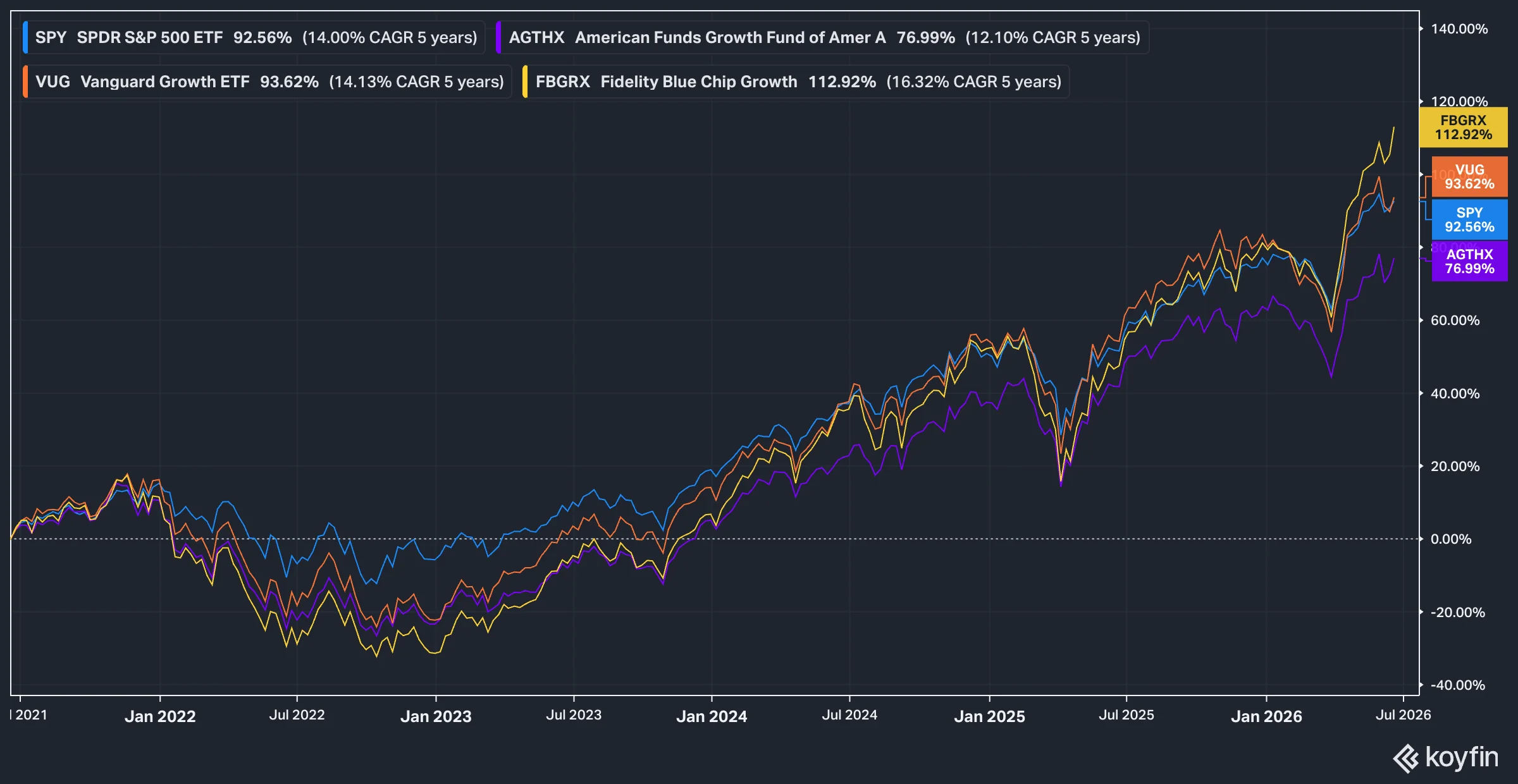
Whether passive actually beats active, though, depends heavily on the window you pick. The chart below compares a plain S&P 500 ETF (SPY) with a few well-known active growth funds over five years: the index ETF tracked the market closely, one active fund (FBGRX) edged ahead of it, and another (AGTHX) fell behind. This is a useful reminder that active management can win over a given stretch even though the long-run, after-fee odds have favored low-cost index tracking.
The academic version of the same idea is just as memorable. In A Random Walk Down Wall Street, economist Burton Malkiel argued that a blindfolded monkey throwing darts at the stock listings could pick a portfolio about as well as the professionals. Bogle’s contribution was to make buying the entire haystack cheap and practical; ETFs then made it tradable on an exchange throughout the day.
What Is a Bitcoin ETF?
A Bitcoin ETF (more precisely, a Bitcoin exchange-traded product) gives investors exposure to Bitcoin’s price through an ordinary brokerage account, without holding Bitcoin in a personal wallet. Depending on the product, it may hold Bitcoin directly (a “spot” product), hold Bitcoin futures, or use another structure.
In a landmark decision on January 10, 2024, the SEC approved the listing and trading of multiple spot Bitcoin products in the United States, opening Bitcoin price exposure to mainstream brokerage and retirement accounts. The agency was conspicuously careful about what that did and did not mean. SEC Chair Gary Gensler said so directly:
“While we approved the listing and trading of certain spot bitcoin ETP shares today, we did not approve or endorse bitcoin. Investors should remain cautious about the myriad risks associated with bitcoin and products whose value is tied to crypto.” | Gary Gensler, Chair of the U.S. Securities and Exchange Commission
The wrapper, in other words, does nothing to sand down the underlying asset’s volatility.
FeatureBitcoin ETF / ETPOwning Bitcoin directlyAccessBrokerage or investment accountCrypto wallet or exchangeWhat you holdPrice exposure via a fund/ETPActual BTCCustodyHandled by the fund’s custodianYou, a wallet provider, or an exchangeTrading hoursExchange hours onlyCrypto markets trade 24/7FeesFund expense ratio plus trading costsExchange fees, spread, network feesTypical usePortfolio exposure in standard accountsSelf-custody, payments, direct ownershipMain risksFund structure, fees, market riskWallet security, exchange risk, market riskFeatureAccessBitcoin ETF / ETPBrokerage or investment accountOwning Bitcoin directlyCrypto wallet or exchangeFeatureWhat you holdBitcoin ETF / ETPPrice exposure via a fund/ETPOwning Bitcoin directlyActual BTCFeatureCustodyBitcoin ETF / ETPHandled by the fund’s custodianOwning Bitcoin directlyYou, a wallet provider, or an exchangeFeatureTrading hoursBitcoin ETF / ETPExchange hours onlyOwning Bitcoin directlyCrypto markets trade 24/7FeatureFeesBitcoin ETF / ETPFund expense ratio plus trading costsOwning Bitcoin directlyExchange fees, spread, network feesFeatureTypical useBitcoin ETF / ETPPortfolio exposure in standard accountsOwning Bitcoin directlySelf-custody, payments, direct ownershipFeatureMain risksBitcoin ETF / ETPFund structure, fees, market riskOwning Bitcoin directlyWallet security, exchange risk, market risk
The essential point for anyone weighing the two: a Bitcoin ETF offers convenient Bitcoin price exposure inside a traditional account, though it differs from self-custodying BTC. With an ETF you own a share of a fund and rely on its custodian; with self-custody you hold the actual asset and the keys to it. They serve different goals, portfolio exposure on one side, direct ownership and use on the other.
Why Do Investors Use ETFs?
ETFs became one of the most widely held investment products for a handful of practical reasons. Mind the careful wording in the table, these describe common advantages rather than guarantees.
ReasonExplanationDiversificationOne ETF can hold many assets at onceSimplicityEasier than buying and managing many individual securitiesLiquidityShares trade on an exchange during market hoursCostMany ETFs have relatively low expense ratiosTransparencyMany ETFs disclose their holdings regularlyAccessExposure to sectors, regions, bonds, commodities or crypto-related productsPortfolio buildingOften used as simple building blocks for a diversified portfolioReasonDiversificationExplanationOne ETF can hold many assets at onceReasonSimplicityExplanationEasier than buying and managing many individual securitiesReasonLiquidityExplanationShares trade on an exchange during market hoursReasonCostExplanationMany ETFs have relatively low expense ratiosReasonTransparencyExplanationMany ETFs disclose their holdings regularlyReasonAccessExplanationExposure to sectors, regions, bonds, commodities or crypto-related productsReasonPortfolio buildingExplanationOften used as simple building blocks for a diversified portfolio
Diversification is the thread through most of these. Spreading money across many holdings is, in the line often attributed to Nobel laureate Harry Markowitz, the only free lunch in investing, and an ETF packages that free lunch into a single trade.
Those advantages have translated into staggering growth. The chart below tracks total ETF assets over the past decade, climbing from a couple of trillion dollars to well over ten trillion as investors have steadily adopted the structure.
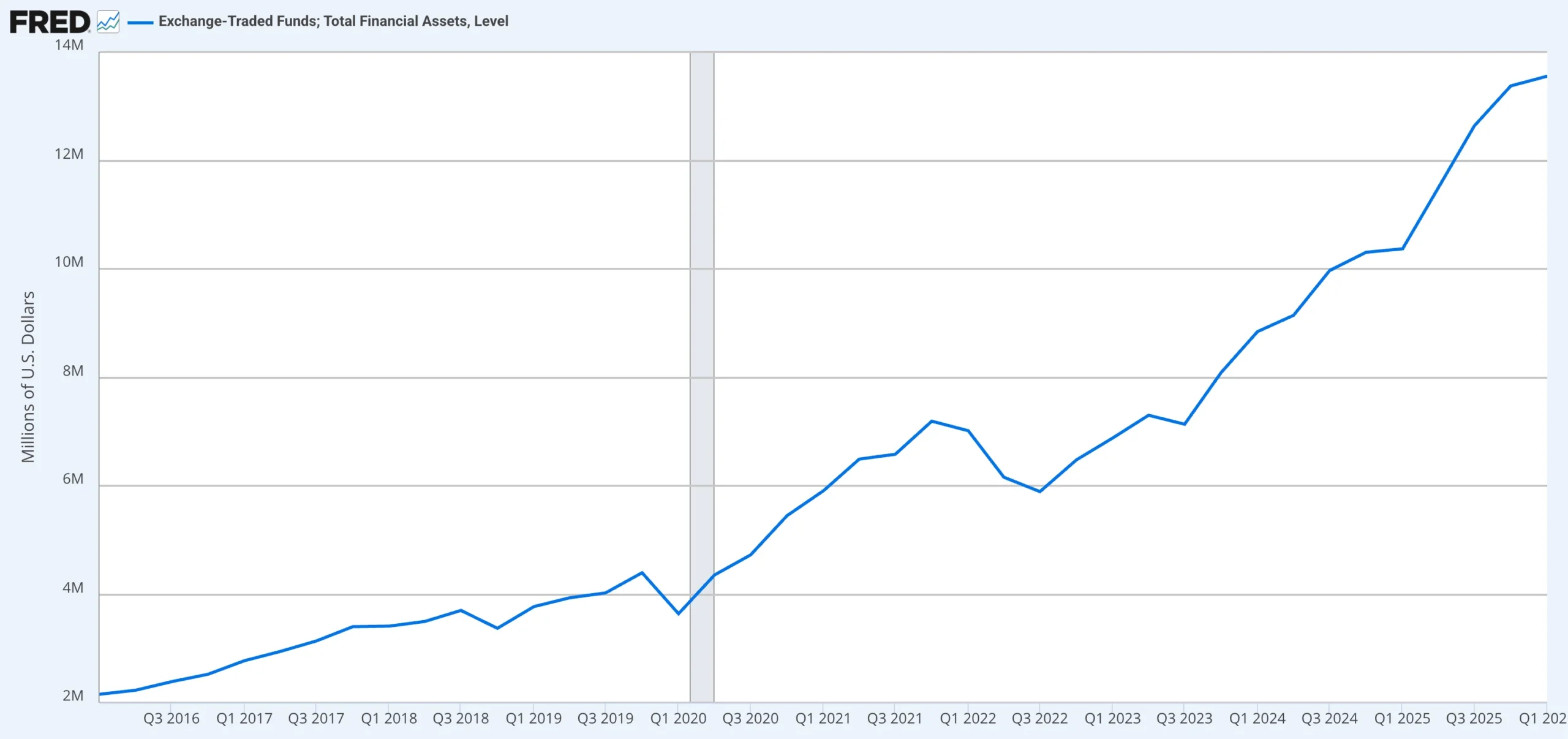
Still, “many ETFs are low-cost” sits a long way from “all ETFs are cheap or safe,” as the next two sections explain.
ETF Risks and Drawbacks
Every ETF carries risk, and some carry a great deal. A broad index ETF and a leveraged single-sector ETF are both “ETFs,” yet they are nowhere near the same proposition.
RiskExplanationMarket riskThe ETF falls in value if its underlying assets fallTracking errorThe ETF may not perfectly match its index or targetFeesExpense ratios and trading costs steadily reduce returnsLiquidity riskSome ETFs trade with wide bid-ask spreadsConcentration riskThematic or single-sector ETFs may be poorly diversifiedComplexityLeveraged, inverse, commodity and crypto products can be hard to understandPremium / discountThe market price can drift from the underlying valueTax differencesTreatment depends on the product’s structure and your jurisdictionRiskMarket riskExplanationThe ETF falls in value if its underlying assets fallRiskTracking errorExplanationThe ETF may not perfectly match its index or targetRiskFeesExplanationExpense ratios and trading costs steadily reduce returnsRiskLiquidity riskExplanationSome ETFs trade with wide bid-ask spreadsRiskConcentration riskExplanationThematic or single-sector ETFs may be poorly diversifiedRiskComplexityExplanationLeveraged, inverse, commodity and crypto products can be hard to understandRiskPremium / discountExplanationThe market price can drift from the underlying valueRiskTax differencesExplanationTreatment depends on the product’s structure and your jurisdiction
Structure is an underrated risk. Investor.gov notes that ETFs can be organized as registered investment companies or unit investment trusts, while some other exchange-traded products (commodity trusts and ETNs among them) use different structures with different protections. Two products that look identical on a brokerage screen can offer very different legal safeguards, which is why reading what a product actually is matters as much as reading what it holds.
ETF Fees and Costs
The headline number is the expense ratio, though it’s far from the only cost, and fixating on it alone can mislead.
CostWhat it meansExpense ratioThe fund’s annual operating cost, charged as a percentageBid-ask spreadThe gap between the buy price and the sell priceBrokerage commissionA trading fee, where one appliesPremium / discountThe difference between market price and underlying valueTax costsVary by product structure and jurisdictionFund-specific costsSpecialized or active ETFs often cost moreCostExpense ratioWhat it meansThe fund’s annual operating cost, charged as a percentageCostBid-ask spreadWhat it meansThe gap between the buy price and the sell priceCostBrokerage commissionWhat it meansA trading fee, where one appliesCostPremium / discountWhat it meansThe difference between market price and underlying valueCostTax costsWhat it meansVary by product structure and jurisdictionCostFund-specific costsWhat it meansSpecialized or active ETFs often cost more
Fees vary widely by fund type, and the cheapest are often the largest and most heavily traded. The chart below plots a sample of ETFs by expense ratio against their trading volume: broad, high-volume funds like SPY and IVV sit near the bottom on cost (well under 0.10%), while niche, thinly traded products run several times more expensive.
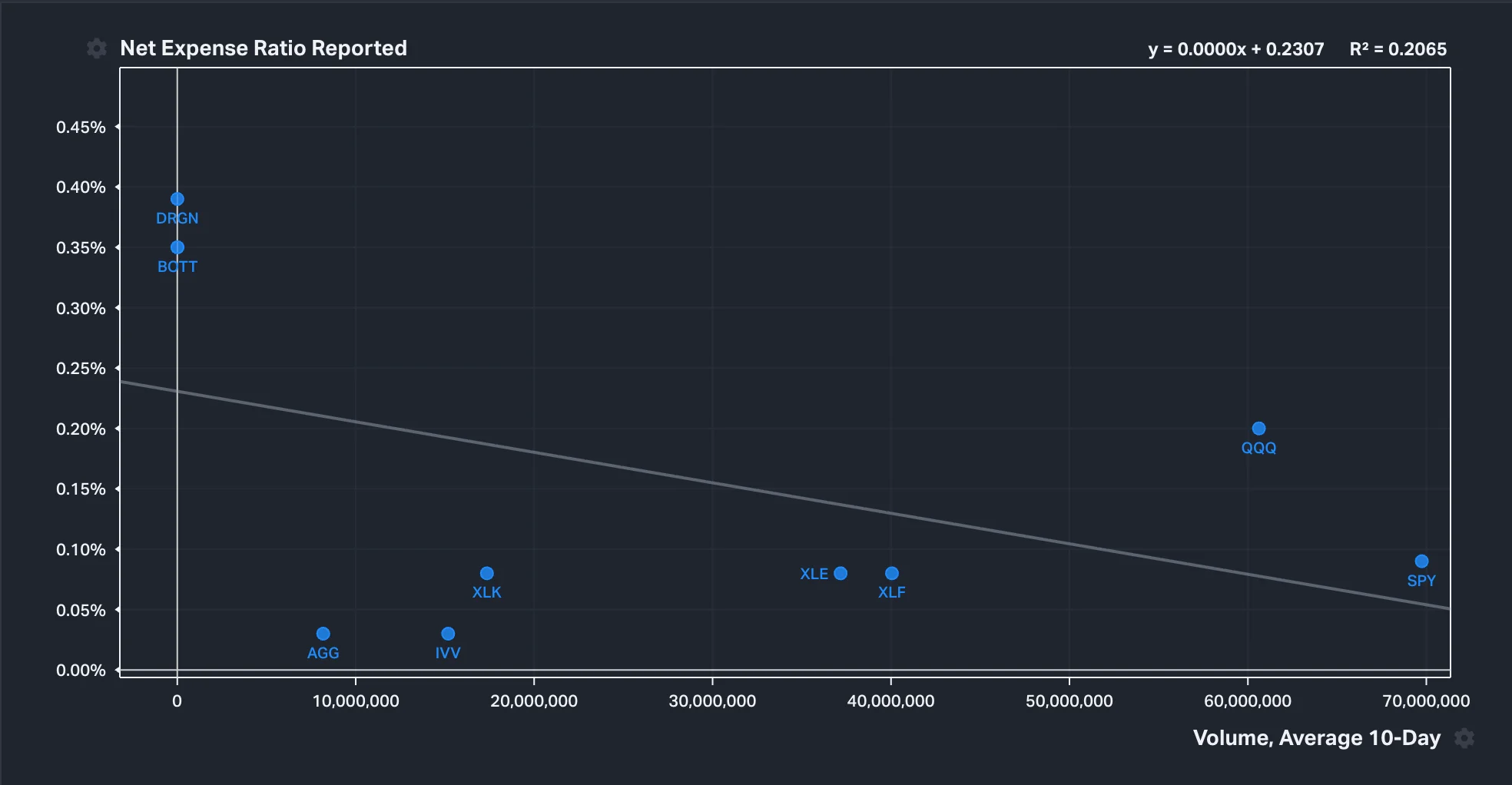
A low expense ratio genuinely helps, but it’s one input among several. Weigh the trading spread, the fund’s liquidity, its structure, the tax treatment where you live, and, above all, whether the ETF actually matches your objective. Even small cost differences compound into large ones over time. The chart below models a $10,000 investment over 20 years in a lower-cost fund versus a pricier one: after two decades, the cheaper option ends up worth several thousand dollars more, a concrete picture of how annual costs quietly drag on a balance.
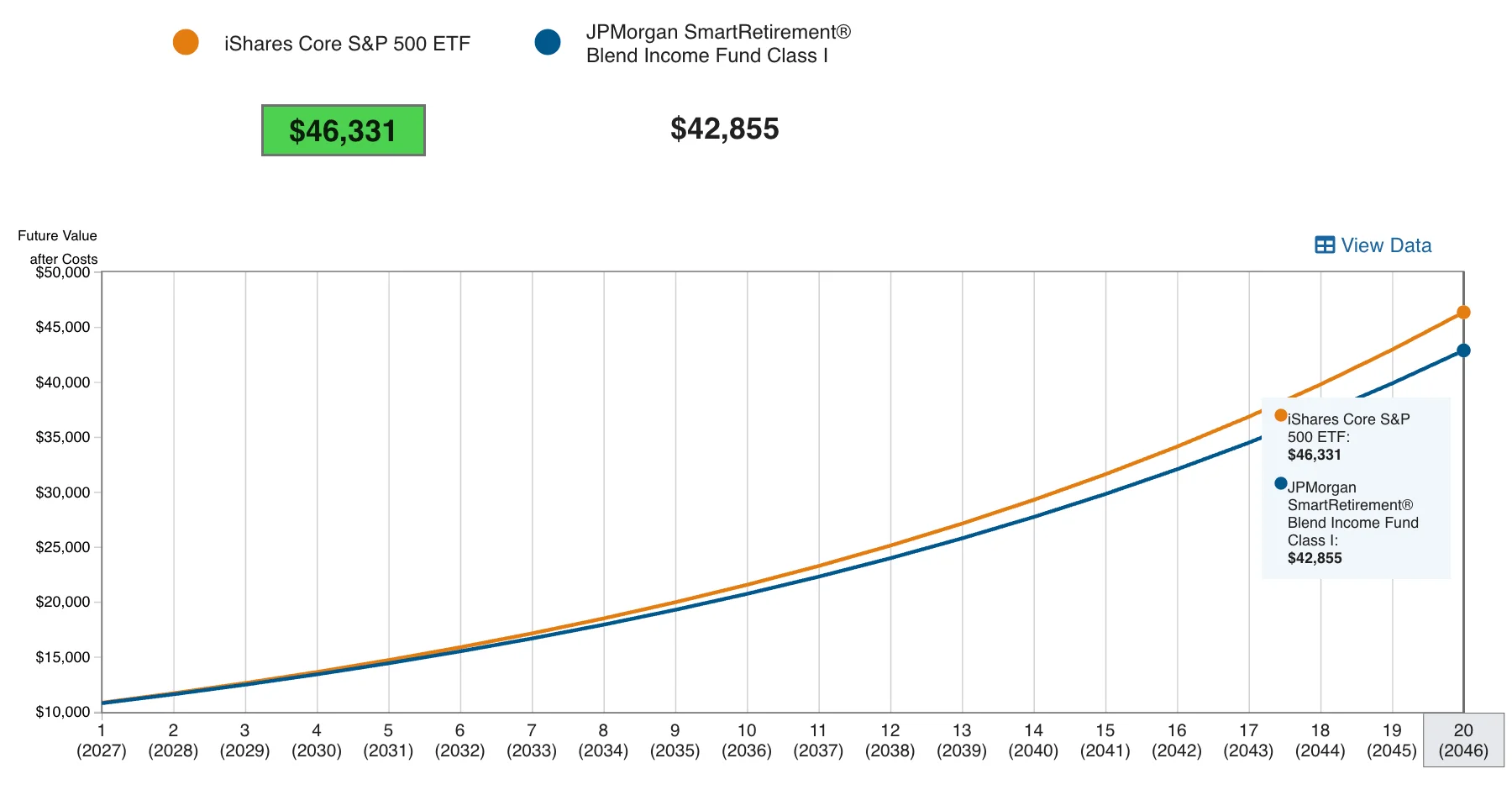
To compare costs across funds directly, FINRA offers a free Fund Analyzer that models the impact of fees across mutual funds, ETFs, ETNs and money-market funds over time.
How Investors Buy and Sell ETFs
The mechanics mirror trading a stock.
StepWhat happens1Open or log in to a brokerage or investment account2Search for the ETF by its ticker symbol3Review the holdings, fees, objective and risks4Choose an order type, such as a market or limit order5Buy shares during market hours6Monitor performance, costs and how it fits your portfolio7Sell through the same brokerage if and when you chooseStep1What happensOpen or log in to a brokerage or investment accountStep2What happensSearch for the ETF by its ticker symbolStep3What happensReview the holdings, fees, objective and risksStep4What happensChoose an order type, such as a market or limit orderStep5What happensBuy shares during market hoursStep6What happensMonitor performance, costs and how it fits your portfolioStep7What happensSell through the same brokerage if and when you choose
To be clear, this article explains how ETFs work. It recommends no specific ETF, asset or strategy, and nothing here is financial advice.
ETF Example: How One ETF Can Hold Many Assets
The “basket” idea is easiest to see at a glance. In every case, a single share has a whole portfolio working behind it.
Investor buysThe ETF holds1 share of a broad stock ETFShares of many companies1 share of a bond ETFA portfolio of bonds1 share of a sector ETFCompanies within one industry1 share of a Bitcoin ETF/ETPBitcoin price exposure via a fund structureInvestor buys1 share of a broad stock ETFThe ETF holdsShares of many companiesInvestor buys1 share of a bond ETFThe ETF holdsA portfolio of bondsInvestor buys1 share of a sector ETFThe ETF holdsCompanies within one industryInvestor buys1 share of a Bitcoin ETF/ETPThe ETF holdsBitcoin price exposure via a fund structure
That is the core appeal in one image: one purchase, many underlying assets.
Are ETFs Good for Beginners?
By the verdict of the world’s most celebrated investor, they can be, for the right kind of ETF. Warren Buffett has put the case bluntly:
“By periodically investing in an index fund, for example, the know-nothing investor can actually out-perform most investment professionals.” | Warren Buffett, Chairman and CEO of Berkshire Hathaway
He wasn’t just talking his book. In a now-famous decade-long wager, Buffett bet $1 million that a simple S&P 500 index fund would beat a hand-picked basket of hedge funds from 2008 to 2017. The index fund won in a rout, and the winnings went to charity.
That said, “ETF” alone tells you little about whether a given product suits a beginner. A broad index ETF is a different animal from a leveraged ETF, an inverse ETF, a narrow single-sector fund or a crypto-linked product. Many ETFs offer broad diversification, transparent holdings and the simplicity of exchange trading; others are built for traders who know exactly what they’re doing.
Beginner-friendly traitsBe careful withBroad diversificationHighly concentrated themesLow expense ratioHigh-fee specialized fundsA clear index or objectiveComplex or opaque strategiesStrong liquidityThinly traded productsSimple, readable holdingsLeveraged, inverse or derivative-heavy exposureA fit for long-term goalsProducts built for short-term tradingBeginner-friendly traitsBroad diversificationBe careful withHighly concentrated themesBeginner-friendly traitsLow expense ratioBe careful withHigh-fee specialized fundsBeginner-friendly traitsA clear index or objectiveBe careful withComplex or opaque strategiesBeginner-friendly traitsStrong liquidityBe careful withThinly traded productsBeginner-friendly traitsSimple, readable holdingsBe careful withLeveraged, inverse or derivative-heavy exposureBeginner-friendly traitsA fit for long-term goalsBe careful withProducts built for short-term trading
Before hitting “buy” on any ETF, run it through a quick safety checklist:
- Check the holdings: Do I understand what assets are actually inside this basket?
- Check the strategy: Does it passively track a benchmark, or does a manager actively pick the investments?
- Check the structure: Is it a standard registered fund, or a complex commodity trust or ETN?
- Check the fees: Is the expense ratio competitive for this asset class?
- Check the leverage: Does it use derivatives to double or invert daily returns? If so, and you’re a beginner, step away.
If any answer is unclear, treat that as a signal to keep reading before committing money.
Closing Thoughts
ETFs can be useful investment building blocks because they combine fund-style diversification with stock-like trading. A single ETF can offer exposure to hundreds of companies, a bond market, a commodity, a theme, or even Bitcoin-linked products through one brokerage-traded instrument.
The key is to remember that “ETF” describes the wrapper, not the quality or risk of what sits inside it. Before buying any ETF, investors should understand its holdings, strategy, structure, fees, liquidity, tracking risk, and whether it uses leverage, derivatives, or crypto-related exposure.
For beginners, broad, low-cost, easy-to-understand ETFs may be more approachable than complex or narrowly focused products. But no ETF is risk-free, and the best choice depends on the investor’s goals, time horizon, risk tolerance, and understanding of the product.