The U.S. stock market and Bitcoin experienced sharp declines following the release of the Personal Consumption Expenditures (PCE) report, which came in slightly worse than expected. While the numbers weren’t catastrophic, investors reacted negatively, fearing prolonged high interest rates from the Federal Reserve.
Market Overview
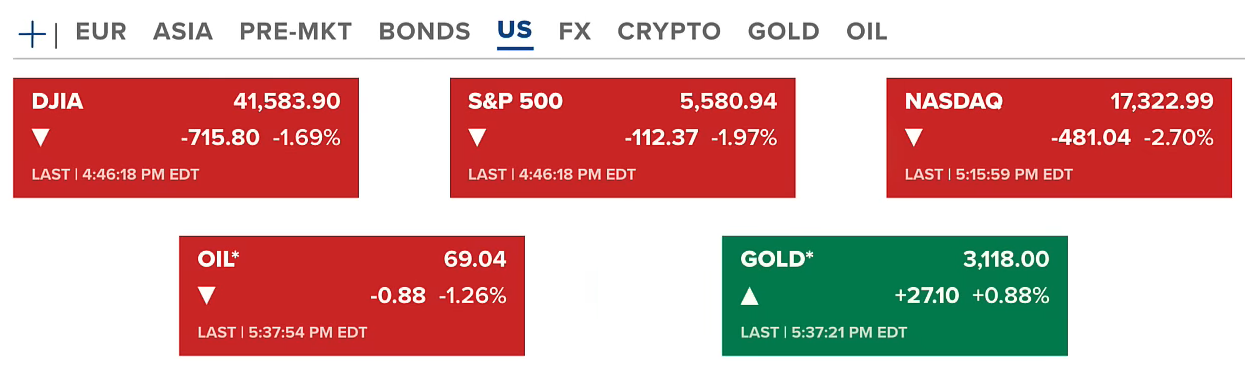
On Friday, March 28, U.S. stock markets plummeted, with:
- Dow Jones falling 1.69%
- S&P 500 dropping 1.97%
- Nasdaq plunging 2.7%
The S&P 500 lost over $1 trillion in market capitalization in a single session, as investors pulled back amid inflation concerns. Meanwhile, gold surged to $3,118 per ounce, reaching a new record high, while oil remained steady around $69 per barrel.
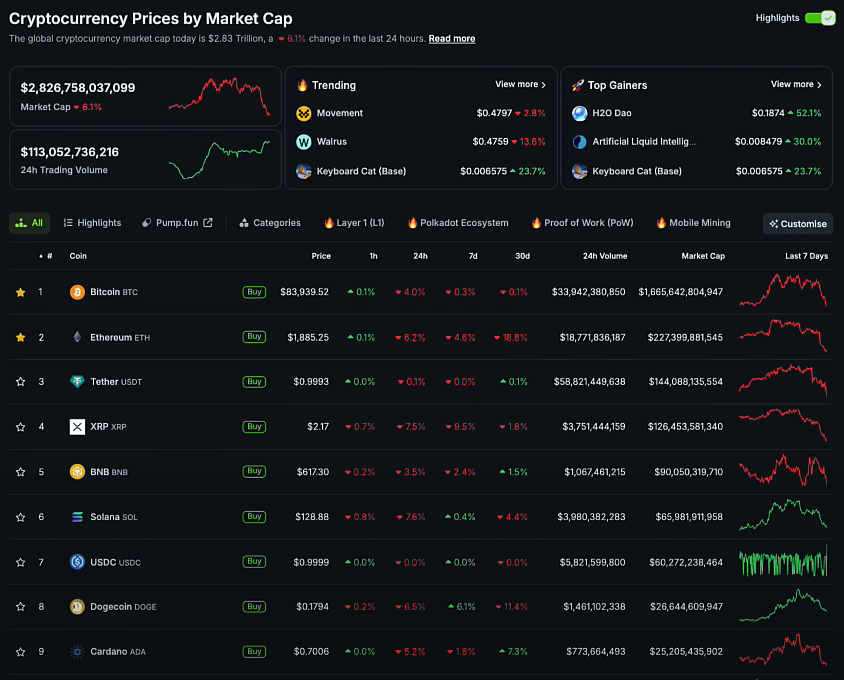
Bitcoin followed the broader market, dropping to $84,000, with most altcoins also in decline. The total crypto market capitalization now stands at $2.8 trillion.
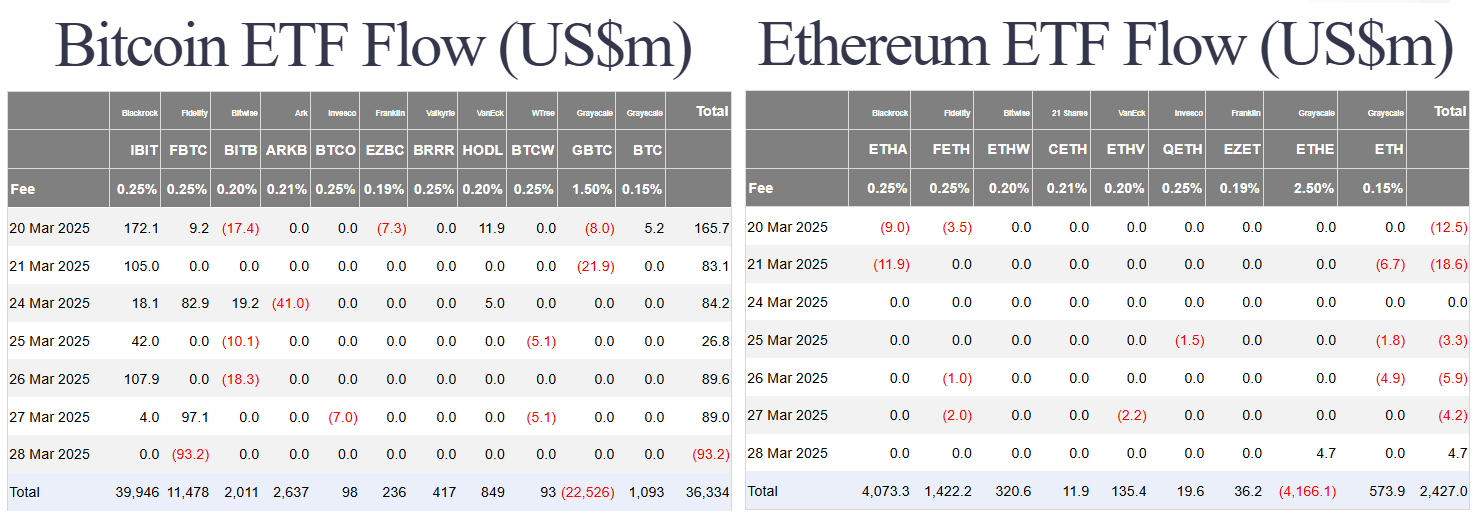
U.S. Bitcoin spot ETFs saw outflows of $93.2 million, entirely from Fidelity’s FBTC fund, marking a shift in investor sentiment. However, Ethereum spot ETFs recorded a small inflow of $4.7 million, suggesting some investors still see ETH as a long-term opportunity.
Despite Bitcoin’s price decline, it returned to its “Max Pain” level of $95,000 ahead of Friday’s options expiration. There has been ongoing speculation that market makers manipulate Bitcoin’s price toward the Max Pain level—the price where most investors incur the greatest losses. While there is no definitive proof, historical patterns suggest a correlation between BTC price movements and options expirations.
Core PCE Misses Expectations, Raising Market Fears
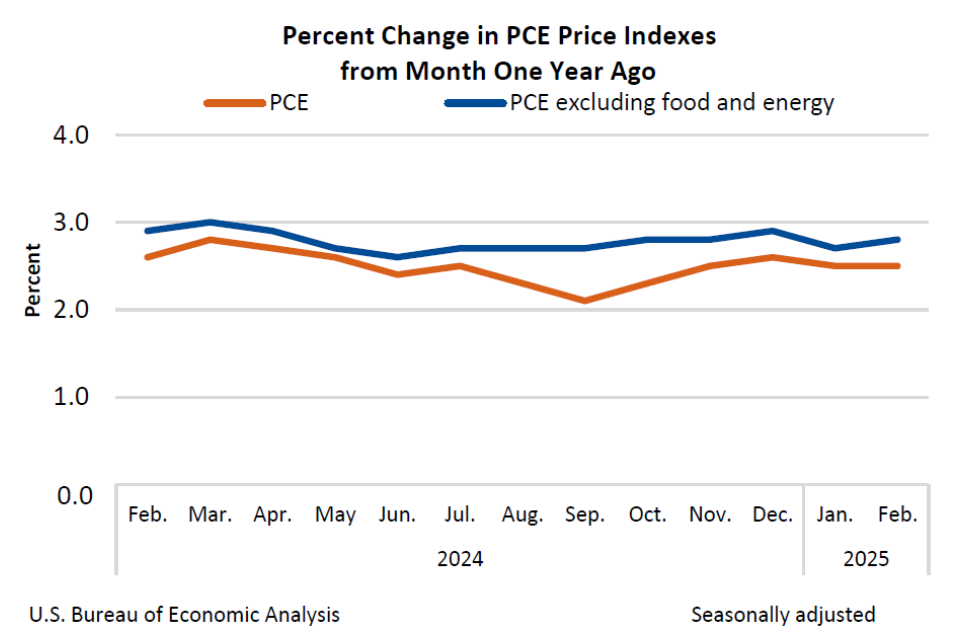
The Personal Consumption Expenditures (PCE) Price Index, the Federal Reserve’s preferred inflation gauge, came in mixed:
- Overall PCE rose 2.5% YoY, exactly matching forecasts.
- Core PCE (excluding food and energy) increased 2.8%, exceeding the expected 2.7%, signaling persistent inflation pressures.
- Personal income grew 0.8%, double the forecast, indicating higher consumer earnings.
While the data wasn’t catastrophic, the market reacted negatively, fearing that higher inflation could delay Fed rate cuts. Treasury yields dropped slightly, but investors remain cautious about the Fed’s next move.
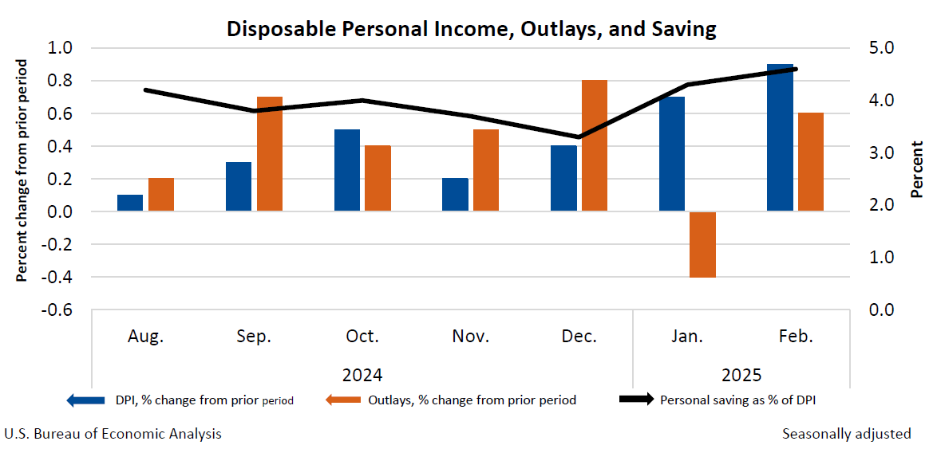
Adding to concerns, U.S. savings rates climbed to 4.6%, the highest level since June 2024, indicating that consumers are tightening their spending in anticipation of economic uncertainty.
Trump’s Tariff Policies Fuel Inflation Fears
President Donald Trump held a conversation with Canadian Prime Minister Mark Carney on Friday, describing it as “extremely productive.” The two leaders found common ground on various issues, though tariff discussions remain a major point of contention.
Investors worry that Trump’s aggressive tariff policies could fuel inflation, further pressuring the Federal Reserve to maintain high interest rates longer than anticipated.
The ongoing trade war with the European Union is also escalating:
- Trump announced a 25% tariff on all imported vehicles, set to be finalized on April 2.
- The European Union expressed deep regret, with France and Germany pledging retaliation.
- Luxury automakers like Ferrari raised prices by 10% to offset higher tariffs, while Porsche and Mercedes-Benz expect a combined $3.4 billion revenue hit.
- Tesla’s stock gained 1%, as investors speculated that U.S. electric vehicle manufacturers could benefit from trade restrictions.
Tesla CEO Elon Musk downplayed the impact, emphasizing that Tesla still imports many components from overseas and would not be fully immune to the tariff effects.
Trump defended his policy, stating:
“Elon has never asked me for any favors, especially not regarding tariffs.”
He also reiterated a key benefit for U.S. car buyers: Loan interest for American-made vehicles will be tax-deductible, giving U.S. manufacturers a major competitive advantage.
Short Selling Hits GameStop After Bitcoin Strategy Announcement
GameStop’s stock price plummeted after announcing its Bitcoin investment strategy, with short interest skyrocketing to 64.67% of daily trading volume.
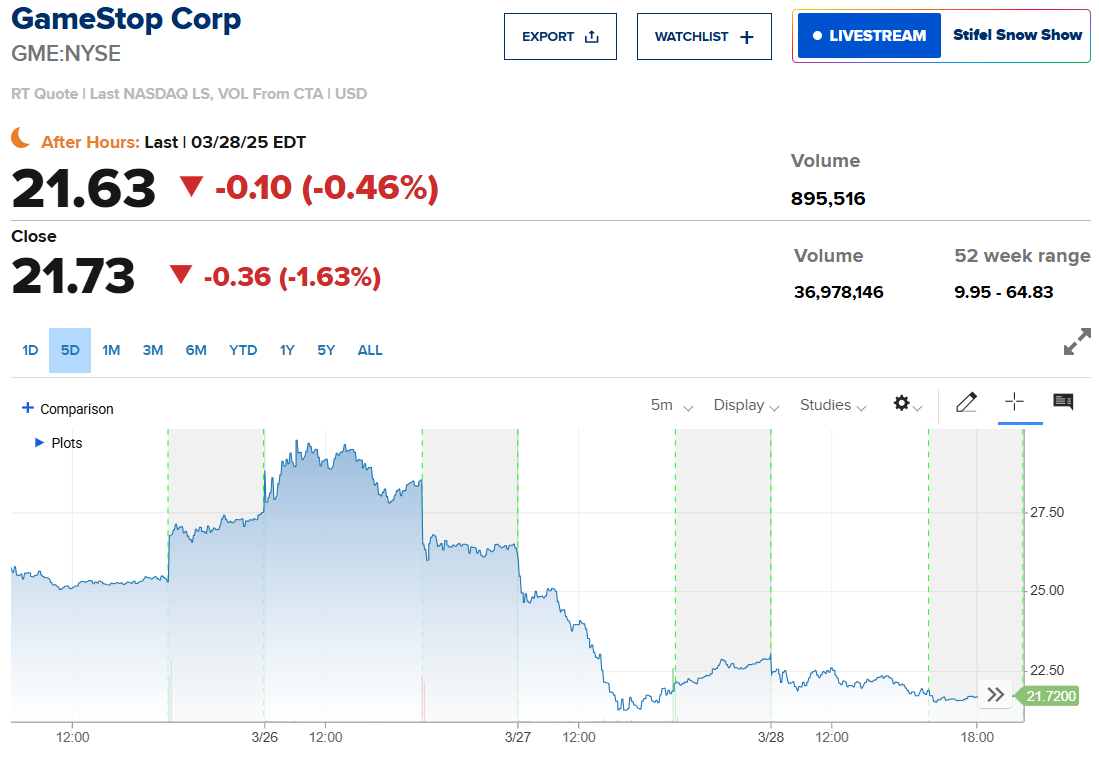
Wall Street analysts suggest that institutional investors are executing a “hedging strategy”:
- GameStop issued $1.3 billion in convertible bonds, which can be exchanged for stock in the future.
- Institutional investors buy these bonds but short GameStop stock to reduce risk.
- Heavy short-selling pressure drives GME stock lower.
This mirrors a previous scenario with MicroStrategy (MSTR):
- MicroStrategy issued $1.05 billion in 0% convertible bonds.
- The stock initially fell due to short selling.
- When Bitcoin surged, short sellers were forced to buy back stock at a loss (short squeeze), sending MSTR skyrocketing.
If Bitcoin rises, GameStop could experience a similar short squeeze, potentially sending GME stock soaring. However, for now, GameStop remains under selling pressure.
U.S. Crypto Regulations Shift Under Trump Administration
Recent developments signal a more favorable regulatory landscape for crypto under Trump’s administration:
- FDIC Loosens Crypto Banking Restrictions
The Federal Deposit Insurance Corporation (FDIC) removed its requirement for banks to seek pre-approval for crypto-related activities, provided they implement proper risk management protocols. This opens doors for traditional banks to integrate crypto services. - Trump Pardons BitMEX Founders
In a surprise move, Trump pardoned BitMEX founders Arthur Hayes, Benjamin Delo, and Samuel Reed.- Hayes had previously pleaded guilty to anti-money laundering violations, receiving six months of home detention.
- Delo and Reed had also settled charges, paying fines to resolve their cases.
- SEC Drops Lawsuits Against Kraken, Consensys, and Cumberland
The Securities and Exchange Commission (SEC) officially ended lawsuits against several major crypto firms, signaling a softening stance under Trump’s leadership. - States Move to Hold Bitcoin in Reserves
- South Carolina proposed allocating 10% of state reserves to Bitcoin.
- North Carolina introduced a similar measure, reflecting growing state-level support for Bitcoin adoption.
These regulatory shifts mark a significant departure from the previous administration’s hostile approach toward digital assets.
Other Key Crypto Developments
- Bpifrance (France’s national bank) launched a $27 million crypto investment fund, focusing on DeFi, tokenization, and AI-powered blockchain solutions.
- Dominari Holdings, a Trump-affiliated investment firm, purchased $2 million worth of BlackRock’s IBIT Bitcoin ETF.
- Trump will host El Salvador’s pro-Bitcoin President Nayib Bukele at the White House next month.
- Panama is moving forward with a new crypto regulatory framework, aiming to position itself as a fintech hub in Latin America.
- Tether invested $10.8 million in Italian media company Be Water, expanding beyond crypto into film, podcasts, and social content.
- Galaxy Digital was fined $200 million for manipulating LUNA prices, as it was revealed that Michael Novogratz’s firm sold off LUNA while publicly endorsing it.