Blockchain technology, the foundation of cryptocurrencies like Bitcoin and Ethereum, is comprised of different layers, each with a specific purpose. This article explores these layers, from Layer 0 (L0) to Layer 3 (L3), explaining their roles and how they interact.
Manage your Bitcoin and crypto securely with the self-custody Bitcoin.com Wallet app.
Blockchain Layers Explained: From Foundation to Applications
Blockchain technology is built on multiple layers, each serving a critical function in ensuring security, scalability, and interoperability. These layers work together to enable decentralized networks, power smart contracts, and support applications used by millions worldwide.
Understanding blockchain layers is essential because they determine how blockchains function, interact, and scale. From the foundational infrastructure that connects different networks to the applications that users interact with daily, each layer plays a unique role in optimizing blockchain performance. As the industry evolves, innovations in interoperability, scalability, and efficiency continue to enhance blockchain networks, paving the way for a more interconnected and seamless Web3 ecosystem.
This article explores blockchain layers from Layer 0, which provides foundational infrastructure, to Layer 3, where decentralized applications (dApps) operate. By breaking down each layer’s role and function, you’ll gain insights into how blockchains work, scale, and integrate with one another, shaping the future of decentralized finance (DeFi) and Web3.
Layer 0: The Foundation (Interoperability and Communication)
Layer 0 enables communication between different blockchains, often called the “internet of blockchains.” It facilitates interoperability, allowing independent chains to exchange data and assets. Examples include Cosmos and Polkadot.
Key Functions:
- Interoperability: Bridges different blockchains for seamless communication.
- Shared Security: Provides security frameworks for connected chains.
- Cross-Chain Transactions: Enables token transfers across networks.
- Data Exchange: Facilitates information sharing between chains. Provides a framework for building and connecting various blockchains.
Layer 1: The Base Layer (Security and Consensus)
Layer 1 represents the core blockchain networks, such as Bitcoin and Ethereum. It ensures security and decentralization through consensus mechanisms like Proof-of-Work (PoW) and Proof-of-Stake (PoS).
Key Functions:
- Transaction Processing: Records and verifies transactions.
- Consensus Mechanism: Maintains decentralized agreement on blockchain state.
- Network Security: Protects against attacks and fraud.
- Token Issuance: Supports native cryptocurrencies like BTC and ETH.
Layer 2: Scaling Solutions (Efficiency and Throughput)
Layer 2 solutions are built on top of Layer 1 to enhance scalability and reduce costs. They process transactions off-chain before settling them on Layer 1, improving speed and efficiency. Popular examples include Bitcoin’s Lightning Network and Ethereum rollups like Optimism and Arbitrum.
Key Functions:
- Scalability: Increases transaction throughput.
- Lower Fees: Reduces gas fees by processing transactions off-chain.
- Faster Transactions: Reduces network congestion and wait times.
- Off-Chain Processing: Some Layer 2 solutions offer private transactions.
Layer 3: Applications (User Experience & dApps)
Layer 3 is where users interact with blockchain-based applications. It includes dApps, wallets, and Web3 services that allow users to trade, invest, and engage with DeFi, NFTs, and more.
Key Functions:
- User Interface: Provides easy access to blockchain functionalities.
- Application Logic: Executes smart contracts and dApp operations.
- Data Presentation: Displays real-time blockchain data for users.
- Integration: Connects with lower layers for seamless blockchain interaction.
How These Layers Work Together
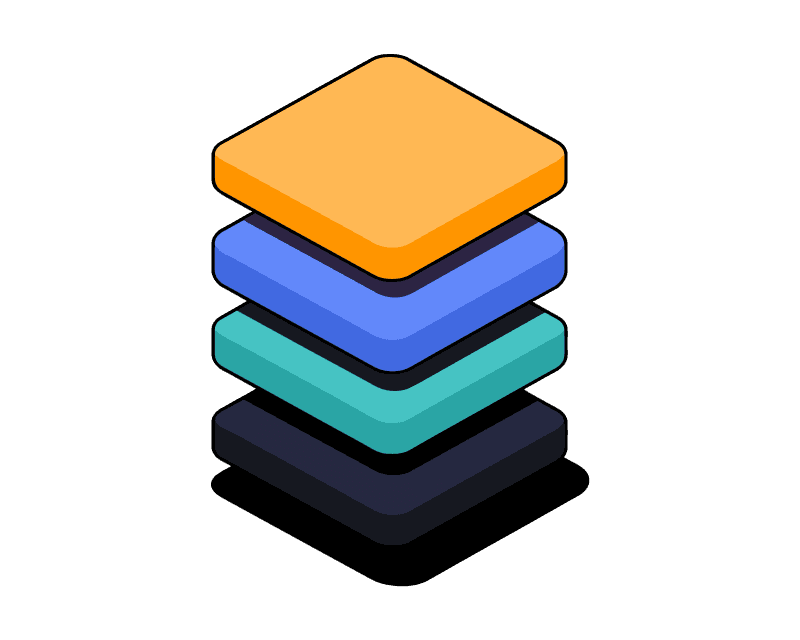
The blockchain ecosystem relies on these interconnected layers: Layer 0 provides a framework for multiple blockchains to communicate. Layer 1 ensures security and decentralization. Layer 2 enhances scalability and efficiency. Layer 3 delivers applications that users interact with daily.
As blockchain technology advances, the distinction between layers may blur, with new innovations enabling more seamless and integrated experiences.
Examples of Blockchain Layers in Action
- Bitcoin operates on Layer 1 with the Bitcoin blockchain, while its Layer 2 solution is the Lightning Network.
- Ethereum‘s Layer 1 is the Ethereum mainnet, with Layer 2 solutions like Polygon, Optimism and Arbitrum.
- Cosmos functions at Layer 0 with the Cosmos Hub, enabling multiple Layer 1 interconnected chains.
Conclusion
Blockchain layers form the foundation of decentralized networks, each serving a specific function to enhance security, scalability, and usability. Layer 0 ensures interoperability, Layer 1 provides security and consensus, Layer 2 enhances scalability, and Layer 3 delivers real-world applications that users interact with daily.
Understanding these layers helps developers and users navigate the crypto space more effectively, fostering innovation and improving blockchain adoption. As the industry evolves, cross-layer integrations and new scaling solutions will continue to push blockchain technology toward a more efficient and interconnected future.