Market Overview
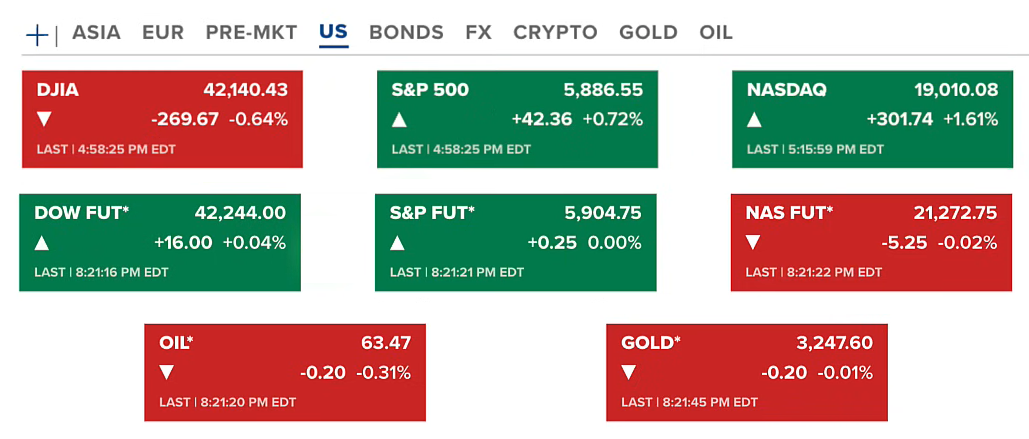
U.S. markets closed mixed on Tuesday (May 13), with the Dow Jones slipping 0.6%, while the S&P 500 and Nasdaq posted slight gains. Futures markets were largely flat, reflecting investor anticipation around macroeconomic signals. Gold held steady at $3,247/ounce, while oil edged up to $63.47/barrel.
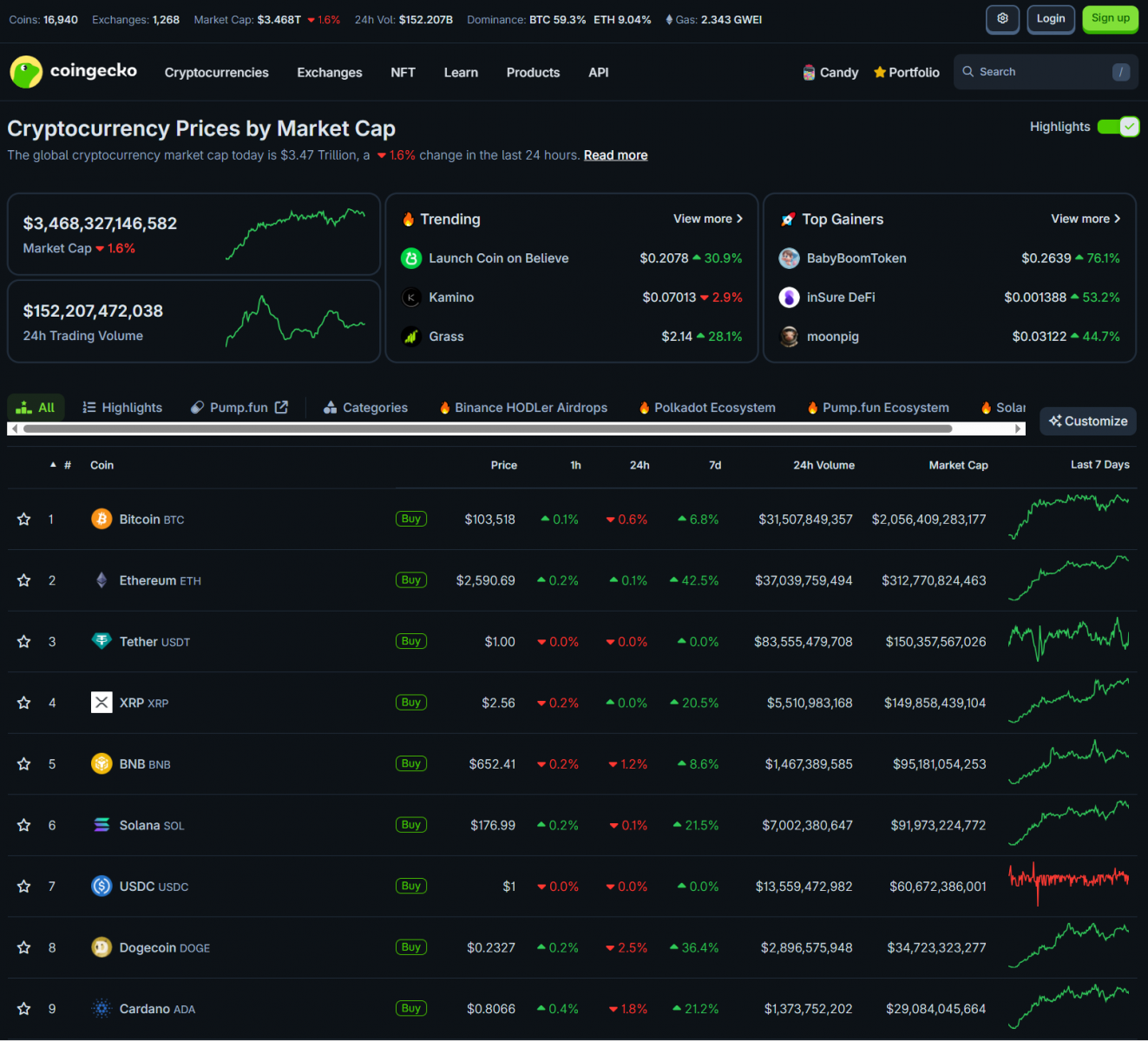
Bitcoin briefly pulled back before returning to the $103,000 mark. Most major altcoins experienced minor declines or moved sideways. The overall crypto market capitalization now stands at $3.468 trillion.
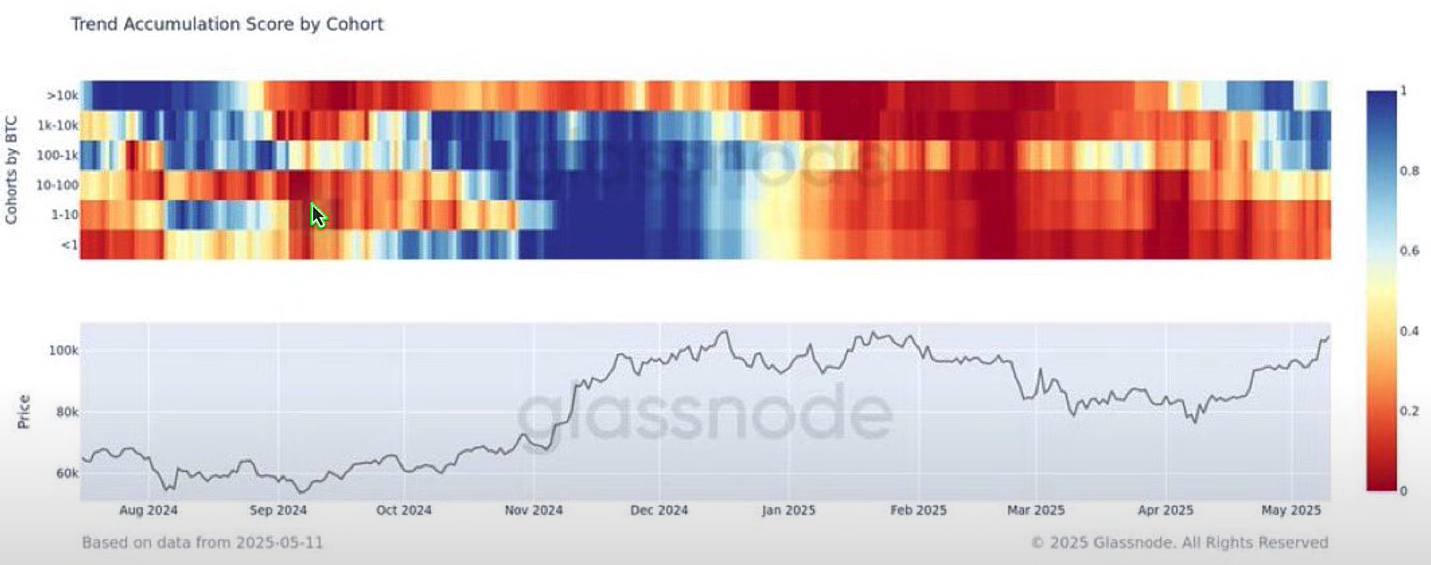
According to Bitcoin Heatmap data, whales holding over 100 BTC have resumed accumulation since April. In contrast, smaller wallet addresses continue to distribute. Research by River confirms this trend, showing that BTC ownership is shifting from individuals to institutions—including corporations, ETFs, and government entities—throughout 2025.
U.S. CPI Data Beats Forecasts
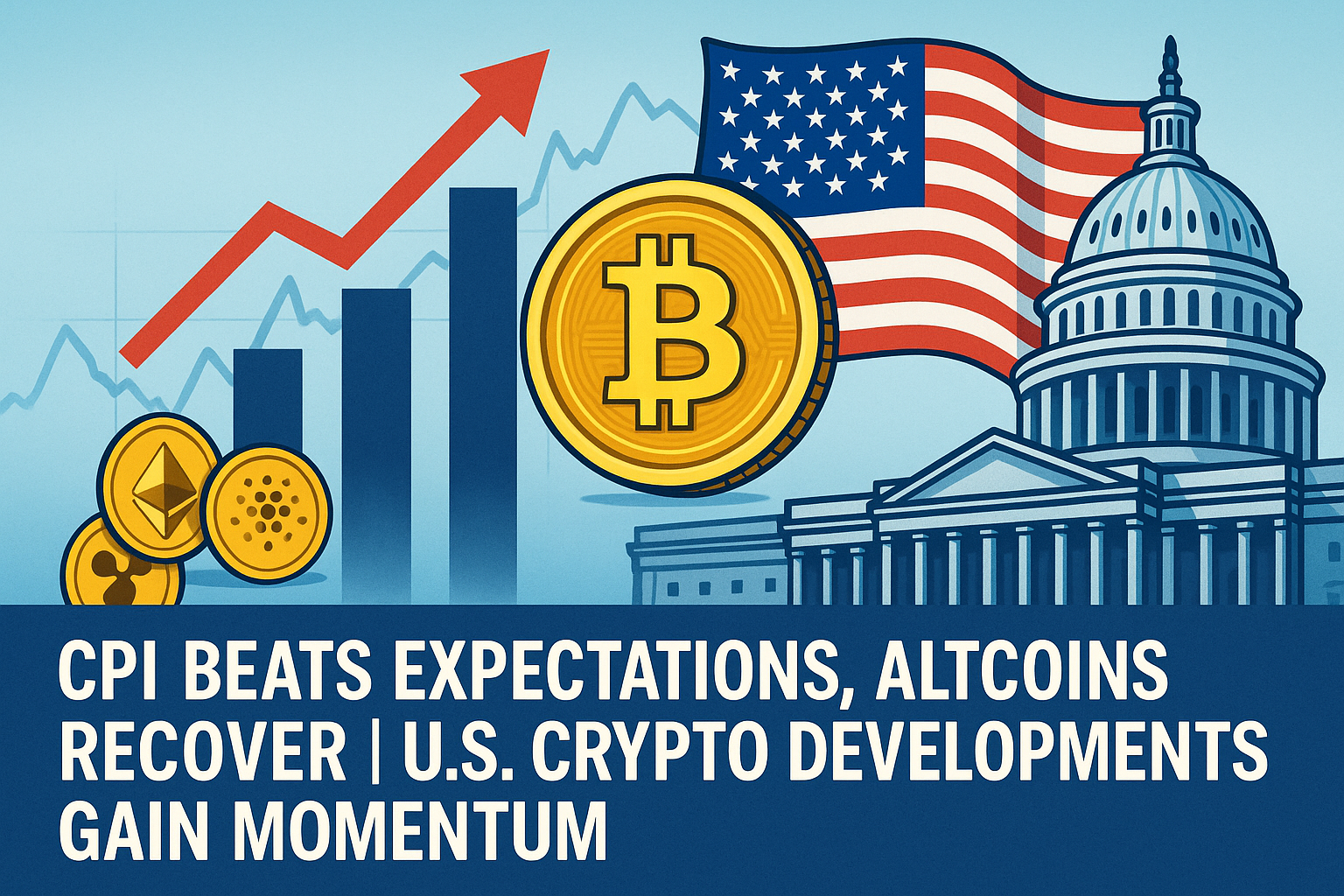
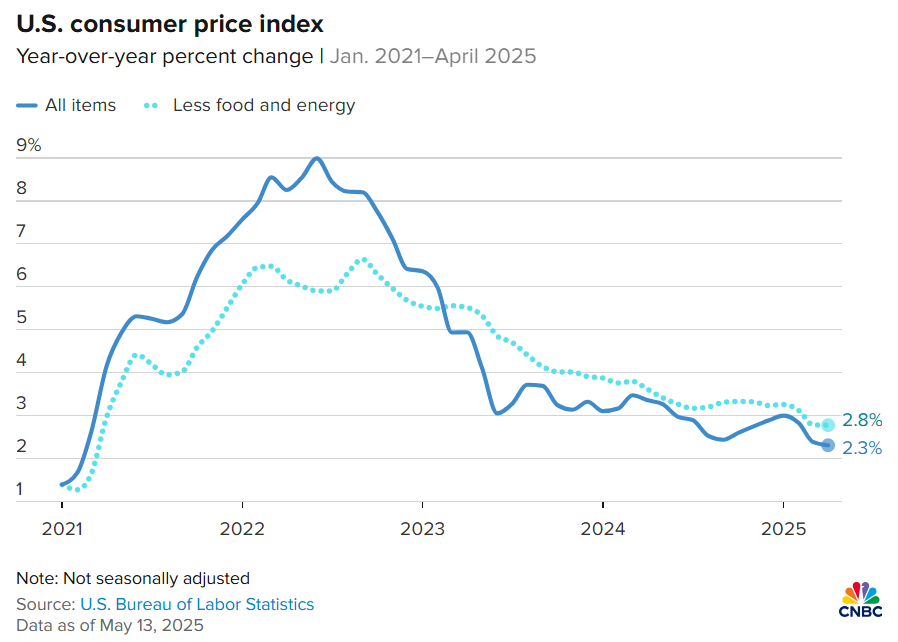
The April CPI report delivered a positive surprise. According to the U.S. Department of Labor, headline CPI rose 0.2% month-over-month, pushing the annual inflation rate down to 2.3%—its lowest level since February 2021 and below the forecasted 2.4%. Core CPI, which excludes food and energy, also rose by 0.2% month-over-month and 2.8% year-over-year, aligning with expectations.
One standout detail was the sharp 12.7% drop in egg prices for the month, though they remain nearly 50% higher year-over-year. Overall, inflationary pressure is narrowing to fewer sectors, which simplifies Fed decision-making as monetary policy can now focus on targeted areas such as energy costs.
This marks the third consecutive month of CPI deceleration—from 3.0% at the start of the year to 2.8%, then 2.4%, and now 2.3%. However, core CPI remains sticky at 2.8%, indicating that while headline inflation is easing, underlying price pressures are more persistent. According to CME FedWatch, over 91% of investors expect the Fed to hold rates steady in June, with most anticipating the first rate cut to come in September.
The next CPI report for May will be released on June 11, just one week before the Fed’s monetary policy meeting on June 18. That report will be critical in determining whether the central bank proceeds with a rate cut in the near term.
One variable to watch is the potential impact of new tariffs on imports from China and other nations. While a recent U.S.–China agreement offers a degree of optimism, the existing 10% blanket tariff could still apply upward pressure on prices. If businesses pass these costs onto consumers, inflation could re-accelerate. That said, if this is only a short-term shock, its inflationary impact could be absorbed without requiring policy shifts.
In summary, inflation is trending lower, but upcoming data—especially from May’s CPI and tariff effects—will play a pivotal role in shaping the Fed’s next move.
Crypto Policy Developments in the U.S.
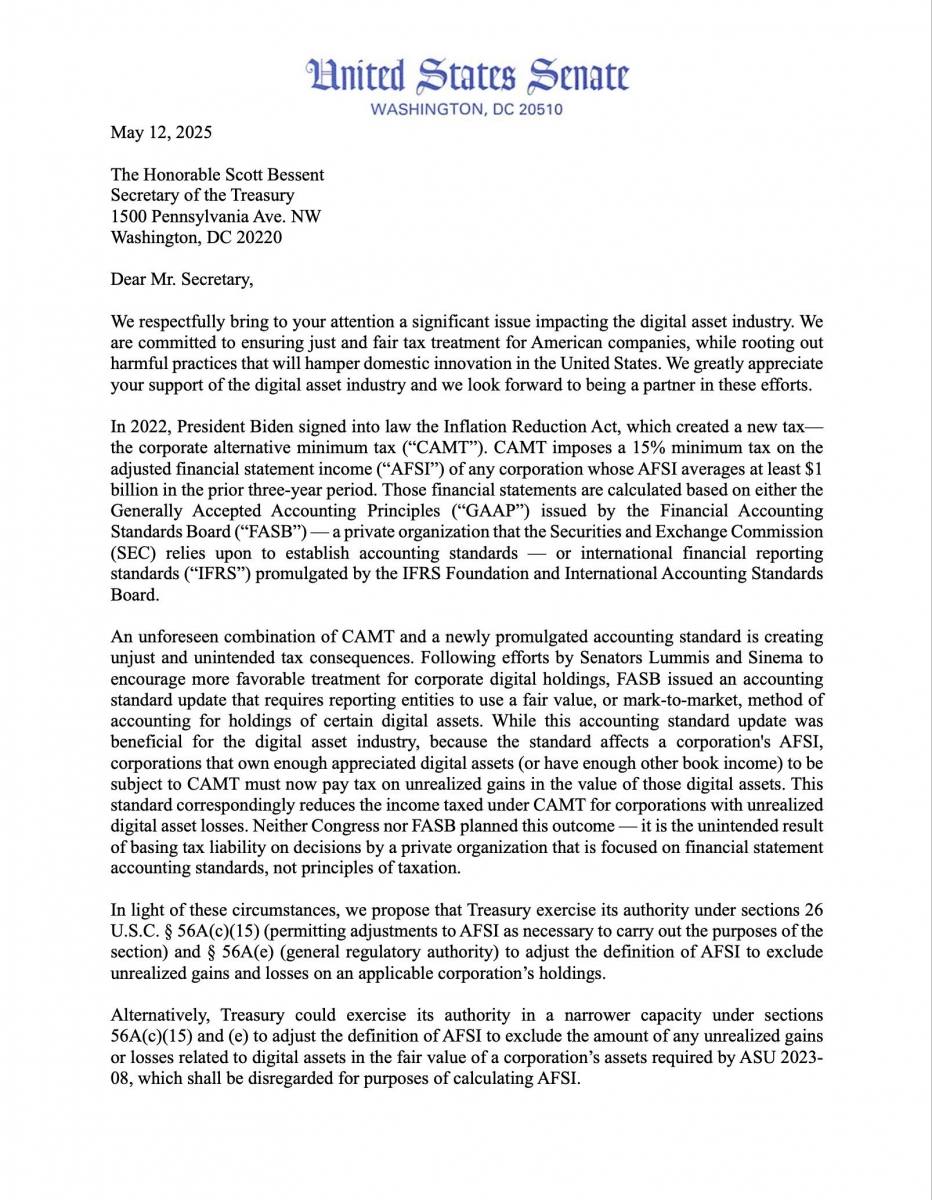
Senator Cynthia Lummis and Senate candidate Bernie Moreno have called on the U.S. Treasury to revise the 15% Corporate Alternative Minimum Tax (CAMT) rule as it applies to crypto. Currently, companies could be taxed on unrealized crypto gains—profits not yet realized through sale—which could be punitive and distort financial outcomes. The senators warned that such tax treatment could lead to widespread sell-offs and undermine U.S. competitiveness in digital finance. They urged urgent action to promote fairness and innovation.
In another development, the SEC has permitted Dell to exclude a shareholder proposal that would have required the company to include Bitcoin on its balance sheet. The SEC stated that such a proposal falls under Dell’s normal business operations and does not warrant regulatory intervention, thereby granting Dell the autonomy to make its own decisions about Bitcoin adoption.
Meanwhile, Coinbase executive Josh D’Agostino noted that Bitcoin is evolving beyond its traditional classification as a “tech stock.” He highlighted four current narratives around Bitcoin: as a tech-like trading asset, an inflation hedge, a gold competitor, and a scarce commodity whose ETF demand far exceeds its mining output. He argued that framing Bitcoin as a commodity—similar to gold—is increasingly appropriate given current institutional flows.
Broader Global and Crypto-Related News
President Trump announced that Saudi Arabia has committed $600 billion in long-term strategic investments in the U.S., covering sectors such as energy, defense, and mineral resources. A $142 billion arms deal is included in the agreement, along with collaboration on infrastructure and global supply chains.
In another diplomatic move, the U.S. will lift all economic sanctions on Syria to help the country rebuild. Trump stated that Syria’s new government offers a pathway to peace, and removing sanctions is the first step toward renewed bilateral relations after years of conflict.
On the institutional investment front, Jack Mallers’ firm Twenty One Capital—backed by Softbank and Tether—purchased 4,812 BTC worth $458.7 million. Metaplanet also issued $15 million in zero-interest bonds to acquire more Bitcoin, continuing its aggressive crypto treasury strategy.
Microsoft announced layoffs of approximately 6,000 employees, or 3% of its global workforce, in a restructuring move aimed at streamlining management. While overall financial performance remains strong, a slowdown in cloud services (excluding AI) prompted the realignment.
Dubai’s Department of Finance has partnered with Crypto.com to allow crypto payments for government services. Citizens will soon be able to pay utility bills, parking fees, and other public services using major cryptocurrencies. Payments will be automatically converted to UAE dirham and securely deposited into government accounts.
TL;DR
The April CPI data confirms that inflation in the U.S. is cooling faster than expected, providing the Fed with more flexibility in future policy decisions. At the same time, the crypto market continues to see bullish momentum from both retail and institutional investors. Regulatory and political signals in the U.S. suggest increasing recognition of digital assets in economic strategy and public policy.
As inflation declines and crypto regulation evolves, investors should remain focused on macroeconomic indicators, monetary policy shifts, and institutional adoption trends—factors that will continue to shape market behavior in the months ahead.
Disclaimer
This article is for informational purposes only and does not constitute financial advice. Always conduct your own research before making any investment decisions.