
Ethereum’s Staking Future
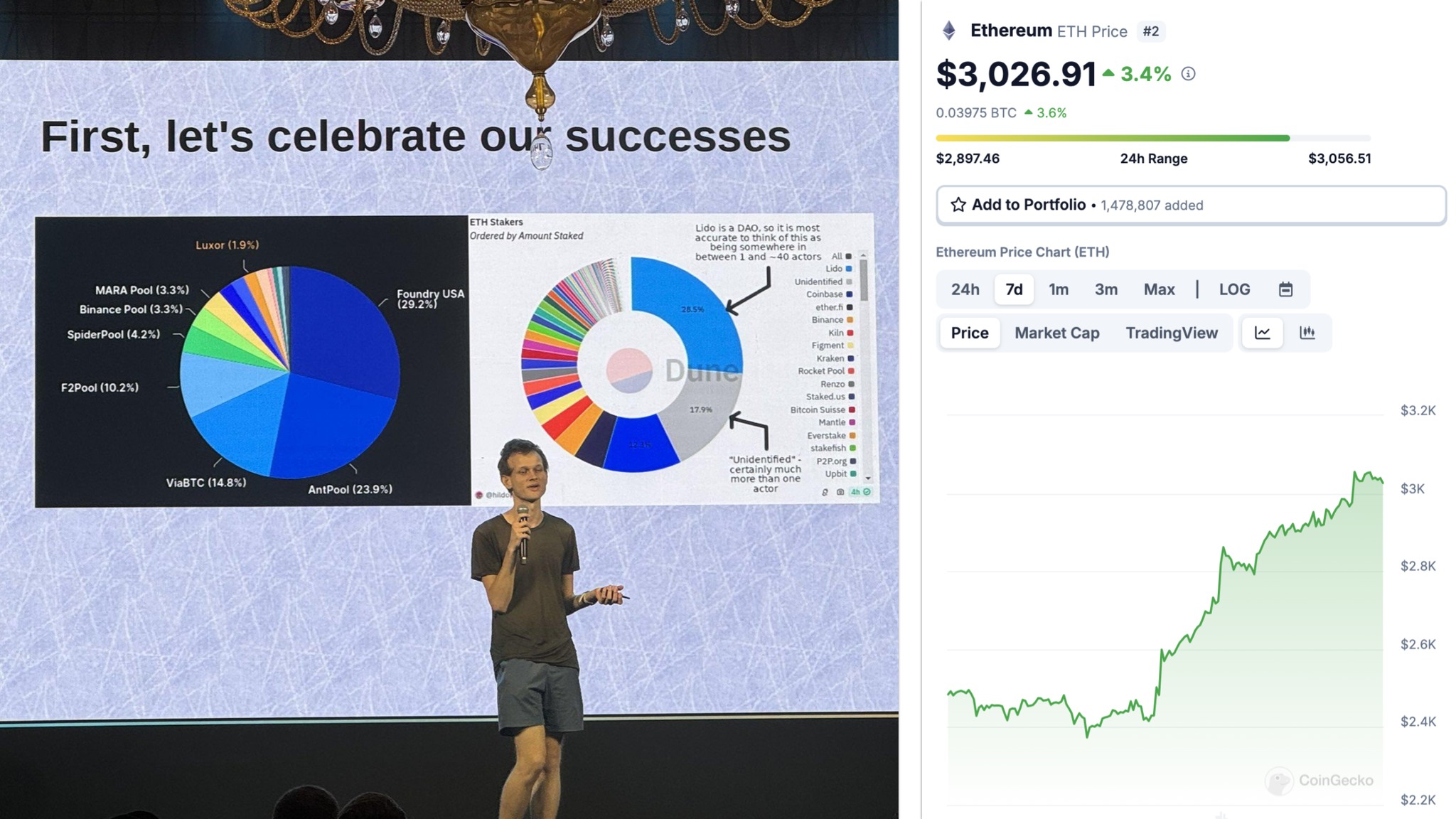
At the recent Staking Summit hosted by Staking Rewards, Ethereum co-founder Vitalik Buterin addressed the evolution of Ethereum’s network under the Proof of Stake (PoS) model. Vitalik’s discussion explored Ethereum’s trajectory, PoS’s benefits over Proof of Work (PoW), and future plans to make staking more accessible, efficient, and decentralized.
PoS vs. PoW: Enhancing Decentralization
Vitalik argued that PoS contributes more significantly to network decentralization than PoW. Although Bitcoin’s PoW model was previously more decentralized than Ethereum’s early structure, the shift to PoS has positioned Ethereum as a leader in decentralization, surpassing even Bitcoin’s current model. This shift represents a significant move toward enhanced network security through a more inclusive and distributed staking model.
The Future of Staking Revenue
Staking is predicted to become a cost-effective security method, increasing accessibility for more participants. Vitalik highlighted plans to make staking attainable by lowering the minimum staking requirement from 32 ETH to just 1 ETH, enabling millions of validators to contribute to the network.
- Signature Aggregation: Future updates will include large-scale signature aggregation, reducing operational costs and enhancing staking efficiency.
- Increased Validator Access: Reducing the minimum staking threshold aims to democratize network security, allowing more users to engage in staking without the prohibitive barrier of a high ETH requirement.
Decentralized Block Production: Enhancing Accessibility and Efficiency
Ethereum’s journey toward complete decentralization also involves democratizing block production. Vitalik mentioned a dual approach to achieve a balance between decentralization and efficiency. Key initiatives include:
- Hardware Specialization for Staking: Specialized hardware for staking can further decentralize the process by lowering entry costs for validators.
- Adoption of Multi-Purpose Tech: Leveraging decentralized VPNs and self-hosted large language models (LLMs) in block production can offer validators more flexibility and accessibility.
- Squad Staking: Flexible, group-based staking allows validators to participate in staking pools or “squads,” further enhancing the decentralization and accessibility of block production.
Conclusion: Ethereum’s Path Toward Greater Decentralization
Vitalik’s statements reflect Ethereum’s commitment to building a more decentralized, accessible, and secure blockchain. By making staking available to millions through lowered requirements and enhancing block production democratization, Ethereum continues to innovate toward a future where the network becomes even more resilient and open.
Disclaimer: This article is not financial or investment advice. It is intended for informational purposes only. Always consult a financial advisor for any investment decisions.
.@VitalikButerin’s vision about the future of PoS is wild. Staking should start at 1 ETH instead of 32 ETH. Here’s the summary of his talk at Staking Summit by @StakingRewards
1/ Why PoS is better than PoW for decentralization.
Decentralization is crucial for network security.… pic.twitter.com/MNAA5olpbd
— Lili ✰ ツ (@lililashka) November 9, 2024