The Reality of Inflation — Causes and Consequences
You may have observed that grocery prices are significantly higher than they were four years ago, before the Covid-19 pandemic. In 2020 and 2021, the U.S. government distributed three rounds of Economic Impact Payments, totaling $931 billion in direct payments to U.S. citizens. Additionally, the relief packages included funding for unemployment benefits, small businesses, healthcare, education, and other pandemic-related support.
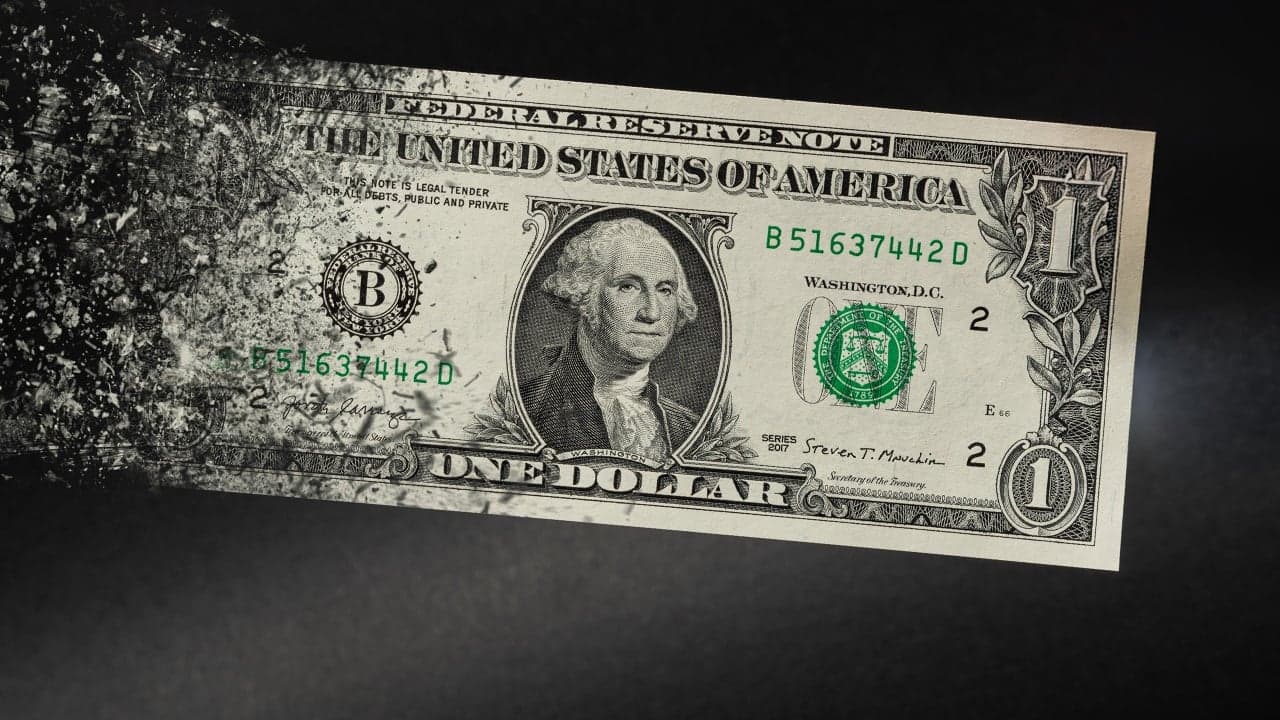
 Subsequently, the U.S. faced its highest inflation in decades. To combat this, the Federal Reserve raised the federal funds rate, aiming to reduce the inflation rate to a 2% target after nearly reaching 10%. In June 2022, the Consumer Price Index (CPI) increased by 9.1% year-over-year, the highest since Nov. 1981. Despite the Fed maintaining high interest rates, inflation has remained persistent, not falling below 3%. The substantial stimulus, just factoring in direct payments alone, was a clear factor contributing to the significant inflation.
The Truth About Inflation
So, what is inflation? In essence, inflation is the overall rise in the prices of goods and services within an economy over time. According to Austrian economic theory, particularly as articulated by economist Murray Rothbard, inflation is chiefly driven by an increase in the money supply. In his 1963 thesis, “What Has Government Done to Our Money?” Rothbard contended that a fiat currency system, where money is not backed by a physical commodity like gold, permits the expansion of the money supply beyond what would be feasible under a commodity-based system.
This expansion, Rothbard explains, results in inflation. In his paper “Taking Money Back,” Rothbard articulately explains the inherent weakness of the fiat system. “If government manages to establish paper tickets or bank credit as money, as equivalent to gold grams or ounces, then the government, as dominant money-supplier, becomes free to create money costlessly and at will. As a result, this ‘ inflation’ of the money supply destroys the value of the dollar or pound, drives up prices, cripples economic calculation, and hobbles and seriously damages the workings of the market economy,” Rothbard wrote.
Further explaining why fiat is considered a Ponzi, Rothbard adds:
As the counterfeiters print new money, spending goes up on whatever the counterfeiters wish to purchase: personal retail goods for themselves, as well as loans and other ‘general welfare’ purposes in the case of the government. But the resulting ‘prosperity’ is phony; all that happens is that more money bids away existing resources, so that prices rise. Furthermore, the counterfeiters and the early recipients of the new money bid away resources from the poor suckers who are down at the end of the line to receive the new money, or who never even receive it at all.
The Ethical Standpoint and Deflecting Blame on the Market
Others might approach the issue from a moral and ethical standpoint, arguing that inflation is a form of hidden taxation. When governments inflate the currency, they effectively reduce the value of money held by the public, transferring wealth from the people to the state. This can be seen as unethical because it erodes personal property rights without explicit consent. Inflation erodes savings, distorts price signals, and redistributes wealth to a small segment of society, such as bureaucrats. Politicians and their media allies, however, often assert that inflation originates from different causes.
Politicians and the media often deflect blame onto merchants, asserting that corporate profits are responsible for inflation. However, attributing economic issues like inflation or economic disparity to corporate profits is often misguided for several reasons rooted in economic theory. Profits indicate that a business is effectively meeting consumer demands more efficiently than its competitors. When a company earns profits, it signifies effective resource allocation and value creation for consumers. Inflation is fundamentally a monetary phenomenon caused by an increase in the money supply, not by corporate pricing strategies.
When the government expands the money supply, it reduces the purchasing power of money, leading to higher prices throughout the economy. Blaming corporate profits for inflation completely overlooks the primary role of monetary policy in driving inflation. Additionally, the media frequently claims that inflation is “good for you,” leading many to believe it is simply a natural occurrence. Corporate profits are a natural and necessary part of a functioning market economy, signaling efficiency and value creation.
Preserving Wealth and Financial Sovereignty
Understanding inflation’s dynamics is essential for any economic participant, particularly as policy decisions and market reactions continue to influence its trajectory. People now look to decentralized crypto assets like bitcoin (BTC) and commodities like gold to avoid inflation, government intervention, and currency devaluation. These assets are perceived as providing stability, security, and independence from centralized monetary policies, aiming to preserve wealth and ensure financial sovereignty.
What do you think about inflation? What steps are you taking to protect your wealth from inflation and economic uncertainty? Share your thoughts and opinions about this subject in the comments section below.