
Has Ethereum Won the Layer 1 War?
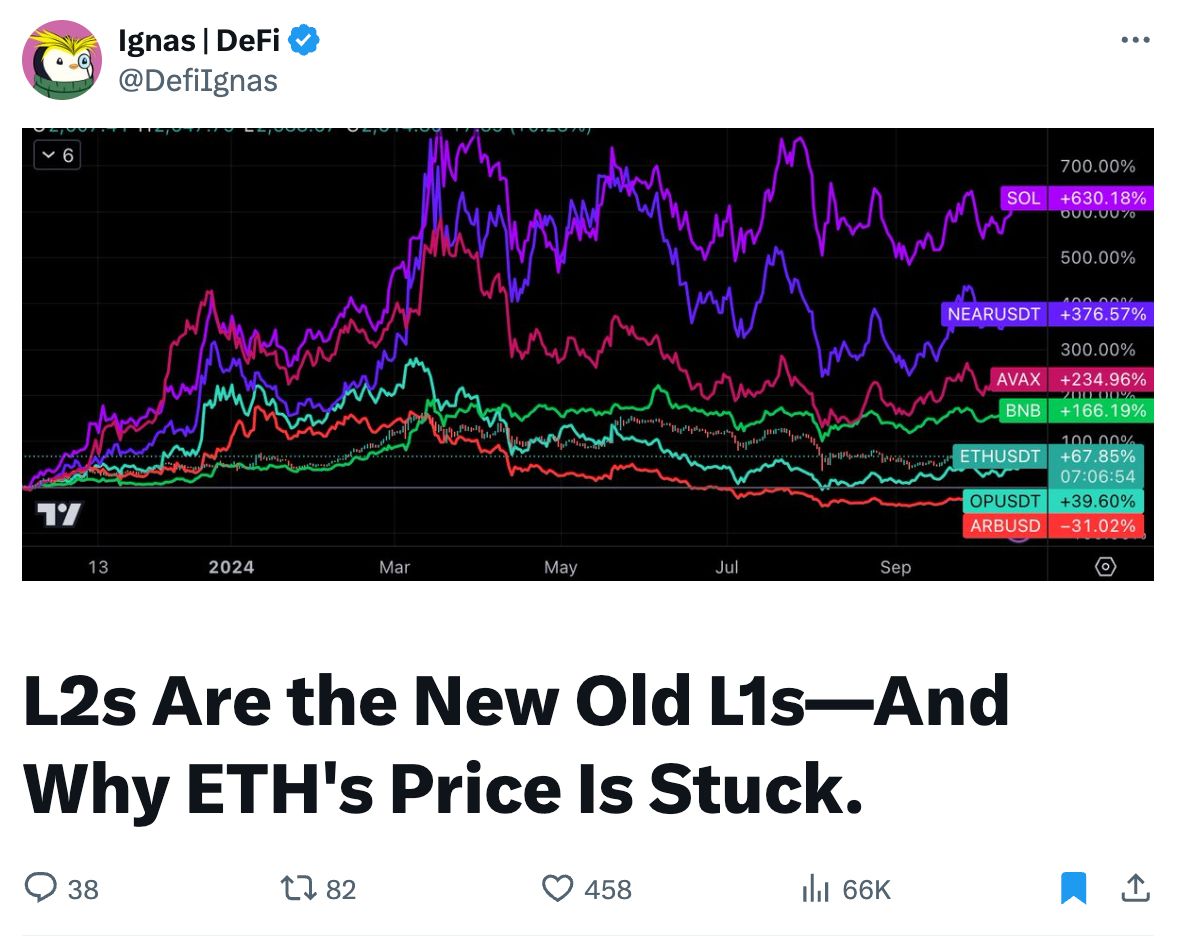
The short answer is no, and this is one of the key reasons why $ETH has been stagnant. In previous market cycles, many believed that Ethereum would emerge as the dominant player in the Layer 1 (L1) race. However, current trends suggest a different reality, offering valuable lessons to investors.
The Layer 1 Landscape
In the past, during bear markets, many sold off alternative Layer 1 (alt-L1) tokens and shifted their focus to BTC and ETH, as they believed these two would be the only survivors in the long term. The belief was that alt-L1s would fade away due to two primary factors:
- Alt-L1 Liquidity Mining Models Were Unsustainable:
- Many alt-L1s, such as Avalanche, BNB Chain, and Polygon, were incentivizing liquidity through mining rewards. However, these rewards were primarily based on protocols forked from Aave and Uniswap V2, lacking significant innovation.
- The primary differentiators among these networks were:
- Lower gas fees
- Faster transaction speeds
- Branding efforts
- Liquidity mining rewards
- The Rise of Layer 2 Solutions:
- Ethereum’s Layer 2 solutions, like Optimism and Arbitrum, started to emerge, promising scalability without compromising security.
- As a result, alt-L1s began to lose both Total Value Locked (TVL) and users, while Layer 2 networks grew steadily, even during the bear market. Meanwhile, Solana challenged the Ethereum narrative by recovering strongly after the FTX collapse, showing resilience and attracting a strong user base.
The Evolution of Layer 1 Networks
Alt-L1s have not given up, and many are actively innovating to stay competitive:
- Avalanche launched Avax9000, enabling the creation of Layer 1 blockchains without the need for Layer 2 solutions.
- Near Protocol is exploring a hybrid approach with both Monolithic and Modular designs.
- BNB Chain introduced opBNB L2, focusing on decentralized DataFi and AI applications.
The Challenge for Layer 2 Solutions
While Layer 2 solutions on Ethereum have gained traction, they are starting to resemble the older Layer 1 networks they were designed to surpass. Many new L2 solutions offer near-zero transaction fees and lack meaningful differentiation beyond their branding. As these L2 networks mature, questions arise about their long-term sustainability and the distinct value they provide compared to alternative L1 networks.
Conclusion
The battle between Layer 1 and Layer 2 continues to evolve. While Ethereum remains a dominant force, its inability to clearly win the L1 war is reflected in $ETH’s price stagnation. The rise of alt-L1s like Solana, along with innovations in L2 solutions, shows that the blockchain space is far from reaching a definitive winner. Ethereum’s future success may rely on its ability to continue innovating while fending off challenges from both Layer 1 and Layer 2 competitors.