
Key Takeaways:
- Token Volatility: Tokens, especially new or less liquid ones, are prone to high volatility, and their prices can be easily influenced by large traders or market makers.
- Importance of Contracts and Trust: This case underscores the importance of clear and enforceable contracts between crypto projects and market makers, as well as the need for transparency and trust.
- Market Maker Abuse: It’s essential to recognize that market makers have a significant amount of power and can, at times, exploit that power for their own gains, often to the detriment of the project they are supposed to be supporting.
Fracture Labs’ Accusation Against Jump Trading
Fracture Labs, a gaming and blockchain company, has accused Jump Trading, a well-known market maker, of engaging in manipulative tactics with their DIO token. The accusation revolves around a classic pump-and-dump scheme, in which Jump Trading allegedly took advantage of their market-making agreement to inflate and crash the DIO token’s value, all while turning a significant profit.
Timeline of the Events:
2021: Partnership for Liquidity and Stability
Fracture Labs, to ensure the DIO token had sufficient liquidity and price stability during its listing on the Huobi exchange (HTX), entered into an agreement with Jump Trading. The terms of the deal outlined that Jump Trading would help maintain the liquidity and stabilize the token’s price through its market-making services.
To facilitate this, Fracture Labs transferred 10 million DIO tokens to Jump Trading, valued at approximately $500,000, and provided 6 million additional DIO tokens to Huobi for similar purposes, worth another $300,000. These tokens were meant to ensure smooth market operations and price stability after DIO’s listing.
The Initial Surge in Token Price
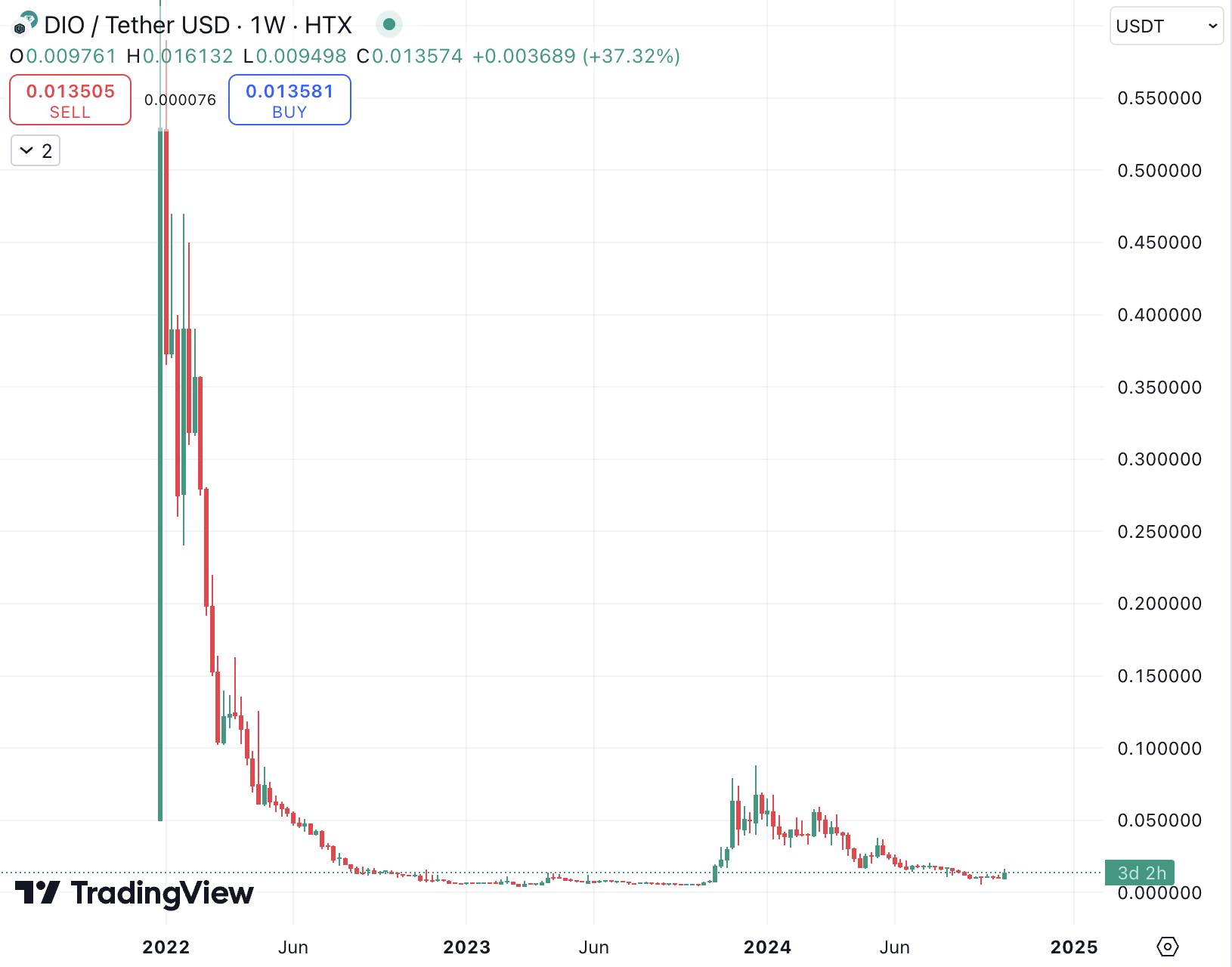
Once DIO was listed on Huobi, the token’s price surged dramatically thanks to a combination of market conditions and HTX’s promotional campaigns. The price soared to nearly $0.98 per DIO token, which significantly increased the value of the tokens held by Jump Trading to approximately $9.8 million.
This price surge was supposed to be a positive moment for Fracture Labs, showcasing their token’s value and creating the momentum needed for future growth and adoption.
Jump Trading’s Alleged Pump-and-Dump
However, instead of fulfilling their role of stabilizing and providing liquidity, Jump Trading allegedly sold off their entire DIO holdings during this price surge. This massive sell-off caused a sharp and dramatic decline in the token’s price, sending it crashing from $0.98 to an all-time low of $0.005 per token.
Once the price of DIO had been sufficiently depressed, Jump Trading allegedly repurchased a large quantity of DIO tokens at this lower price. Afterward, they returned the repurchased tokens to Fracture Labs and unilaterally terminated their agreement.
Severe Financial and Reputational Damage
The consequences of this alleged pump-and-dump were devastating for Fracture Labs:
- Massive Financial Losses: The token price collapse wiped out much of the market capitalization for DIO, damaging investor confidence and significantly reducing the project’s ability to raise further funds.
- Damaged Reputation: With the token price manipulated and plummeting, Fracture Labs suffered reputational damage in the eyes of investors, who may now see the token and the project as unstable or prone to manipulation.
- HTX Fines: On top of these losses, Huobi (HTX), due to the significant decline in price stability, reportedly retained a large portion of the 1.5 million USDT deposit that Fracture Labs had initially provided. The failure to maintain price stability, caused by Jump Trading’s actions, led to additional financial consequences for the company.
Larger Implications: The Role of Market Makers in Crypto
The incident highlights the darker side of the market-making process in the cryptocurrency space. Market makers, who are usually seen as stabilizers that provide liquidity to crypto projects, can also take advantage of their position to exploit market movements, especially in smaller or less liquid tokens.
In this case, Fracture Labs relied on Jump Trading to manage liquidity and price stability during the token’s early stages of being publicly traded. However, instead of protecting the token’s value, Jump allegedly used its privileged position to manipulate the market to its own advantage, with disastrous consequences for the token’s developers and holders.