Key Takeaways:
- With Brazil’s March inflation at 4.14%, firms adopted shrinkflation, ensuring prolonged consumer pain next.
- Bloomberg notes that March food prices surged 1.56% due to Middle East war costs, ensuring tighter budgets next.
- Despite a 7% Jan. wage hike, angry voters blame Lula da Silva, making his upcoming reelection bid uncertain.
Shrinkflation Hits Brazilian Households Even as Lula Jumps to Lighten the Burden
Shrinkflation, a term made famous by former U.S. President Joe Biden during his last reelection bid, has entered the Brazilian economy.
According to reports, companies have started changing their presentation to include fewer quantities, maintaining the same prices to keep consumers buying their products, unaware of this form of hidden inflation.
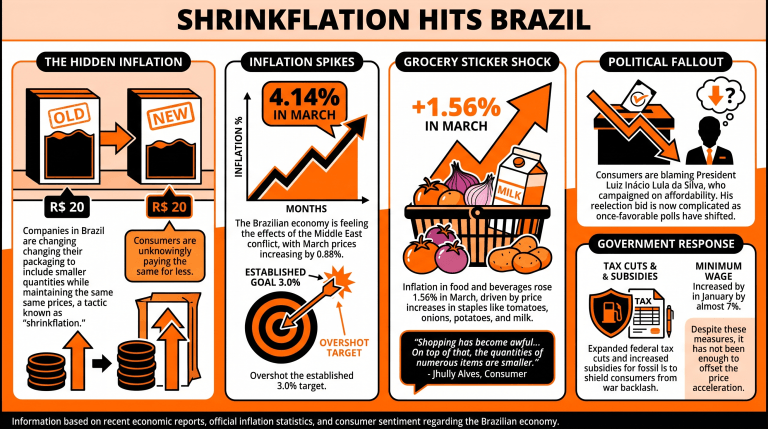
The phenomenon surges as inflation has taken a turn for the worse, with the Brazilian economy feeling the effects of the ongoing conflict in the Middle East. In March, prices rose by 0.88%, with annual inflation hitting 4.14%, above the 3.0% goal established by the central bank.
Consumers are getting the short end of the stick in this situation, with groceries getting way too expensive even while most of the price growth comes from energy commodities. Jhully Alves, a 40-year-old cleaning lady, told Bloomberg that shopping had become “awful.” “Milk, coffee, and sugar are more expensive again, and laundry detergent, too. On top of that, the quantities of numerous items are smaller,” she stressed. Inflation in food and beverages rose 1.56% in March, pushed by increases in tomatoes, onions, potatoes, and milk, according to official sources.
People have started blaming President Luiz Inácio Lula da Silva for these woes, as he campaigned on the premise of affordability and bringing better times for the Brazilian people. But now the polls, which favored him, have changed, and the outcome of the election is uncertain, complicating his reelection bid.
Lula has not been sitting idly to combat this price acceleration, as he increased the minimum wage in January by almost 7% and expanded federal tax cuts while increasing subsidies for fossil fuels to shield consumers from the war backlash. Nonetheless, it seems that it has not been enough.