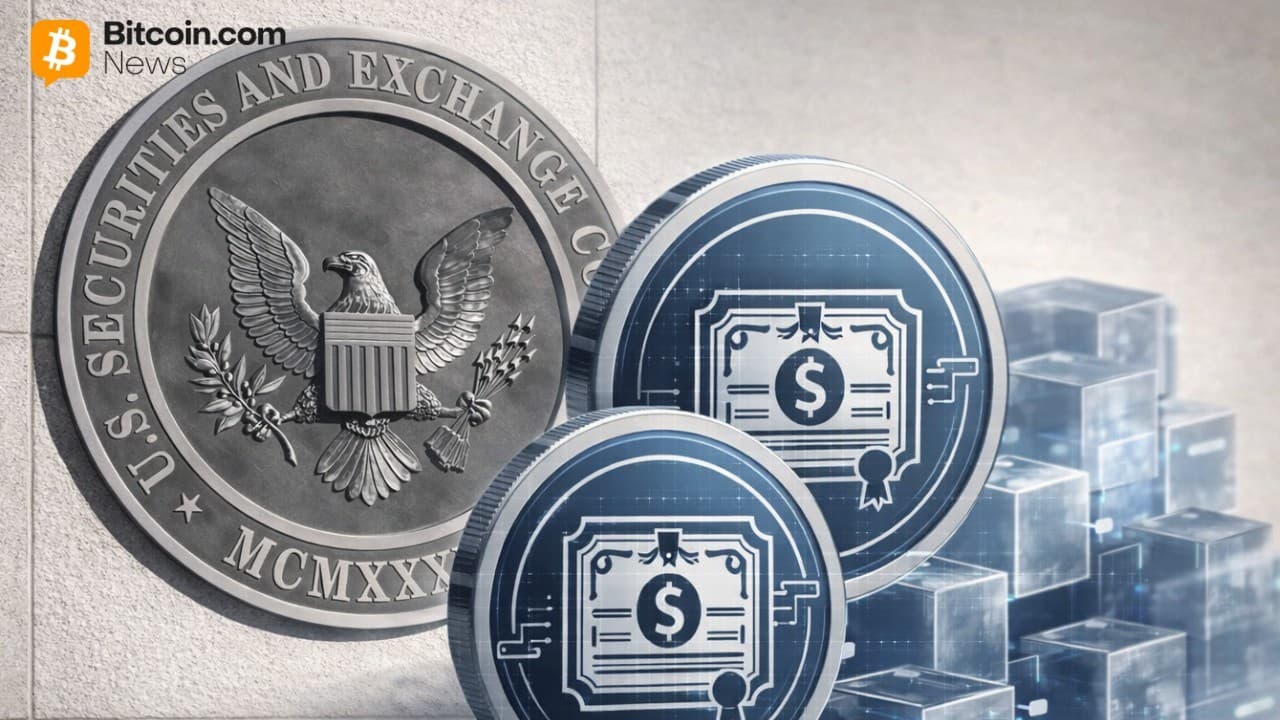
Wall Street and Blockchain Collide as SEC Explores Tokenized Equity Framework
Regulators are evaluating new frameworks for blockchain-based securities. U.S. Securities and Exchange Commission (SEC) Chairman Paul S. Atkins, Commissioner Hester M. Peirce, and Commissioner Mark T. Uyeda discussed the tokenization of equity securities on March 12 during a meeting of the SEC’s Investor Advisory Committee (IAC), a panel that advises the agency on investor protection and market regulation.
Atkins highlighted the committee’s role as the SEC considers regulatory approaches for blockchain-based equities. He stated:
“The committee will vote on recommendations regarding the tokenization of equity securities.”
“I want to thank the IAC for engaging thoughtfully with this topic, as well as for your recognition that tokenization can enhance settlement efficiency, reduce settlement risk, and eliminate unnecessary intermediaries,” he added. He also pointed to a potential pilot framework for the technology, noting: “As I have previously discussed, I expect the Commission to soon consider an innovation exemption to facilitate limited trading of certain tokenized securities with an eye toward developing a long-term regulatory framework.”
Peirce outlined how regulators are designing that exemption to allow controlled experimentation with blockchain-based securities. She stated: “Commission staff is working on an innovation exemption to facilitate limited trading of certain tokenized securities—much narrower than the ‘blanket’ exemption mentioned in the draft recommendation.”
Peirce asked the committee to consider several policy questions related to the proposal, including whether existing issuer disclosure requirements sufficiently explain ownership rights in tokenized securities and whether broker-dealers or clearing agencies that tokenize securities should face additional disclosure obligations. She also raised questions about how tokenized equities could operate under current market structure rules, including whether atomic settlement would require relief from existing T+1 settlement requirements. The commissioner further questioned whether regulatory frameworks built around intermediaries remain appropriate if blockchain systems allow direct trading without brokers, exchanges, or clearing agencies, and whether multiple tokenization models should be permitted under the exemption.
Uyeda placed the discussion within the SEC’s broader history of responding to financial innovation. He noted:
“Tokenization of equity securities may be the next example of an innovation that could bring significant benefits to investors but does not fit neatly into the existing regulatory framework.”
The commissioner pointed to earlier market developments such as money market funds and exchange-traded funds, which initially operated through SEC exemptions before permanent regulatory structures were adopted.
FAQ 🧭
- Why is the SEC discussing tokenized equity securities?
Regulators are exploring whether blockchain-based shares could improve settlement efficiency, reduce risk, and reshape how equities trade. - What is the proposed SEC innovation exemption?
It would allow limited trading of certain tokenized securities so regulators can study how blockchain markets operate before creating permanent rules. - How could tokenized equities affect market structure?
They could enable direct blockchain-based trading with faster settlement, potentially reducing reliance on brokers, exchanges, and clearing agencies. - Why should investors watch the SEC’s tokenization debate?
New rules could unlock blockchain-based equity markets and influence how traditional stocks are issued, traded, and settled.