
What is Bitcoin Halving?
Bitcoin halving is a scheduled event that occurs approximately every four years, reducing the block reward given to Bitcoin miners by half. The primary purpose of halving is to control the rate of Bitcoin’s issuance, ensure scarcity, and protect against inflation.
Introduced by Satoshi Nakamoto, the event is programmed into the Bitcoin protocol to maintain a fixed total supply of 21 million BTC. With each halving event, the amount of Bitcoin miners earn per block decreases, reducing the flow of newly mined BTC into circulation.
How Does Bitcoin Halving Work?
The mechanism of Bitcoin halving works as follows:
- Block rewards are given to miners for validating transactions and adding new blocks to the blockchain.
- Initially, miners received 50 BTC per block when Bitcoin launched in 2009.
- After every 210,000 blocks mined (approximately four years), the block reward is halved.
- This cycle continues until the maximum supply of 21 million BTC is reached, which is expected around 2140.
Here’s a timeline of past and upcoming halving events:
Bitcoin Halving Events
Bitcoin Halving Events
Halving Event
Block Height
Year
Block Reward
First Halving
210,000
2012
50 BTC → 25 BTC
Second Halving
420,000
2016
25 BTC → 12.5 BTC
Third Halving
630,000
2020
12.5 BTC → 6.25 BTC
Fourth Halving (Upcoming)
840,000
2024
6.25 BTC → 3.125 BTC
Why is Bitcoin Halving Important?
Bitcoin halving plays a crucial role in Bitcoin’s deflationary economic model. It limits the supply of new Bitcoin, reducing inflation over time and helping maintain the asset’s scarcity. Let’s explore the key impacts of Bitcoin halving:
1. Reducing Bitcoin’s Inflation Rate
Bitcoin’s inflation rate drops with every halving event because fewer new BTC are created. Initially, Bitcoin’s annual inflation rate was 12.5%. However, after the upcoming halving in 2024, it is expected to fall to below 1%, making Bitcoin’s inflation lower than traditional fiat currencies like the US dollar.
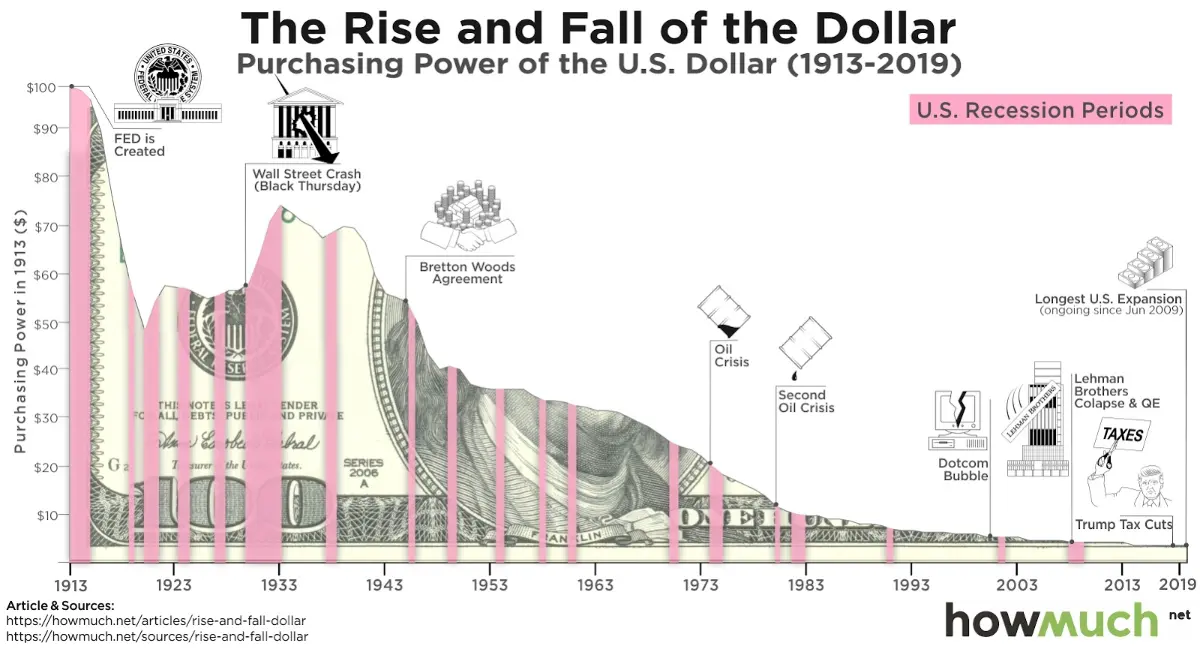
Fact: Compared to fiat currencies that can be printed indefinitely, Bitcoin’s fixed supply ensures its value remains largely unaffected by inflation.
Annual Inflation Rate
Annual Inflation Rate Over Time
Year
Block Reward
Annual Inflation Rate
2009
50 BTC
12.5%
2012
25 BTC
9%
2016
12.5 BTC
4.1%
2020
6.25 BTC
1.8%
2024
3.125 BTC
<1%
2. Strengthening Bitcoin’s Security
Miners play a vital role in validating transactions and maintaining the network’s security. As the block rewards decrease, miners become more dependent on transaction fees for profitability. Although this poses challenges in the short term, it also helps filter out miners who lack long-term vision or efficiency, making the mining ecosystem more robust.
Impact of Bitcoin Halving on BTC Prices
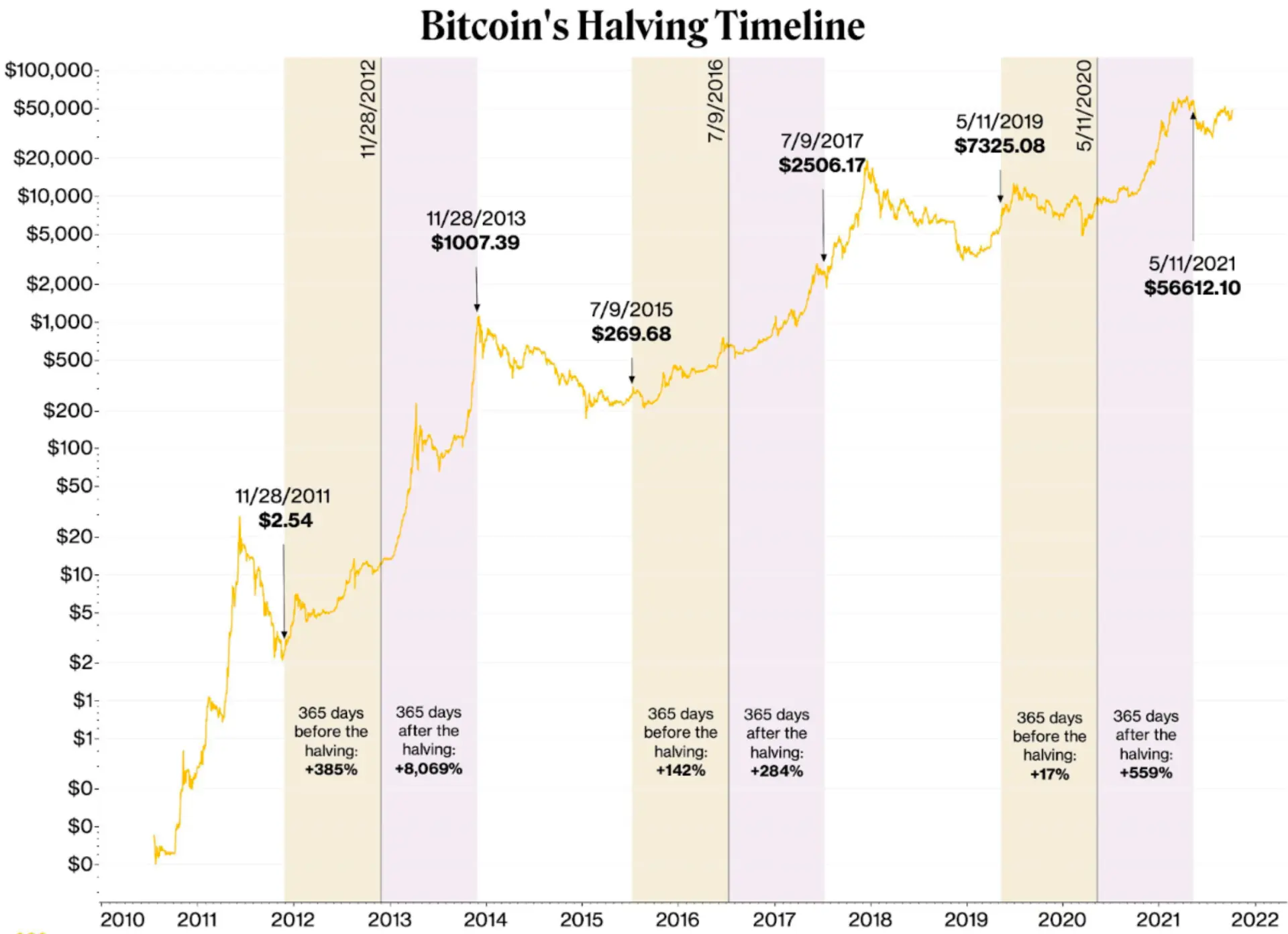
Bitcoin halving events have historically triggered significant price increases due to the reduced supply of new BTC entering the market. Here’s a breakdown of how previous halving events influenced Bitcoin’s price:
First Halving (November 2012)
- BTC Price Before Halving: $12
- BTC Price 1 Year After Halving: $1,000
- Growth Rate: +8,233%
Second Halving (July 2016)
- BTC Price Before Halving: $650
- BTC Price 1 Year After Halving: $2,500
- Growth Rate: +285%
Third Halving (May 2020)
- BTC Price Before Halving: $8,700
- BTC Price 1 Year After Halving: $61,000
- Growth Rate: +601%
Will the Fourth Halving in 2024 Follow the Same Pattern?
Although past halving events have triggered bull markets, no one can guarantee future outcomes. The crypto market is highly dynamic, influenced by a wide range of factors including macroeconomic conditions, investor sentiment, and regulatory developments.
Impact of Bitcoin Halving on Altcoins
Bitcoin halving doesn’t just affect BTC—it can have a ripple effect on altcoins (cryptocurrencies other than Bitcoin). When BTC prices rise following a halving event, investors often look to diversify their portfolios by investing in altcoins. This can lead to an altcoin season, where major altcoins like Ethereum (ETH), Binance Coin (BNB), and Solana (SOL) experience significant price gains.
Bitcoin vs. Altcoin Reaction
Bitcoin vs. Altcoin Reaction
Event
BTC Price Reaction
Altcoin Reaction
2012 Halving
+8,233%
Altcoins saw moderate growth
2016 Halving
+285%
ETH and other altcoins surged
2020 Halving
+601%
Altcoins like ETH hit new highs
Bitcoin Halving: Benefits and Challenges
For Miners
- Benefit: If BTC’s price increases significantly post-halving, miners can maintain profitability even with reduced block rewards.
- Challenge: If BTC’s price doesn’t rise enough to offset the loss of block rewards, miners may face financial strain.
For Investors
- Benefit: Long-term holders often benefit from price appreciation following halving events.
- Challenge: Short-term traders or those who buy during periods of high volatility may face losses if prices dip after a temporary rally.
Bitcoin Halving Cycles: Timing the Market
Historical data suggests that Bitcoin follows a predictable boom-bust cycle centered around halving events:
- 1-1.5 years before halving: BTC typically hits the cycle’s price bottom.
- 1-1.5 years after halving: BTC often reaches the cycle’s peak price.
Here’s a summary of BTC price movements during previous halving cycles:
Bitcoin Halving Cycle Peaks
Bitcoin Halving Cycle Peaks
Halving Cycle
Price Before Halving
Price Peak After Halving
Time to Peak
2012
$12
$1,000
~1 year
2016
$650
$19,500
~1.5 years
2020
$8,700
$67,000
~1.5 years
The Fourth Halving in 2024: What to Expect
The fourth Bitcoin halving is scheduled for April 2024, reducing the block reward from 6.25 BTC to 3.125 BTC. Analysts predict that this event could lead to another significant bull market, but macroeconomic factors, such as inflation rates, interest rates, and regulatory changes, will also play a crucial role.
Should You Care About Bitcoin Halving?
Bitcoin halving remains a pivotal event for both miners and investors. Its deflationary nature ensures that Bitcoin will become increasingly scarce over time, making it a potential hedge against fiat currency devaluation. While historical data suggests that BTC prices tend to rise post-halving, investors should remain cautious and consider market conditions before making investment decisions.