

“Stablecoins will disrupt and dominate payments,” predicts a16z crypto, highlighting their transformative potential. From bridging financial gaps to enabling seamless transactions, stablecoins are reshaping both global commerce and personal finance.
1. Remittances: Speed, Savings, and Efficiency
Stablecoins are revolutionizing cross-border remittances:
- Low Fees: Sending $200 from the U.S. to Colombia costs just $0.01 using stablecoins compared to $12.13 via traditional methods (a16z crypto, 2024).
- Instant Transfers: Transactions are processed almost instantly, eliminating delays of hours or days.
2. Simplifying B2B Cross-Border Payments
For businesses, stablecoins streamline international transactions:
- Eliminate complex procedures and intermediaries.
- Complete payments within minutes instead of days.
- Mitigate foreign exchange risks, improving operational efficiency.
3. Global Payroll: A Digital Workforce Solution
In the era of remote work, stablecoins have become a top choice:
- Transparency and Speed: Payments are swift and verifiable.
- Flexibility: Employees can easily convert stablecoins into local fiat currencies or central bank digital currencies (CBDCs).
4. Shielding Against Hyperinflation
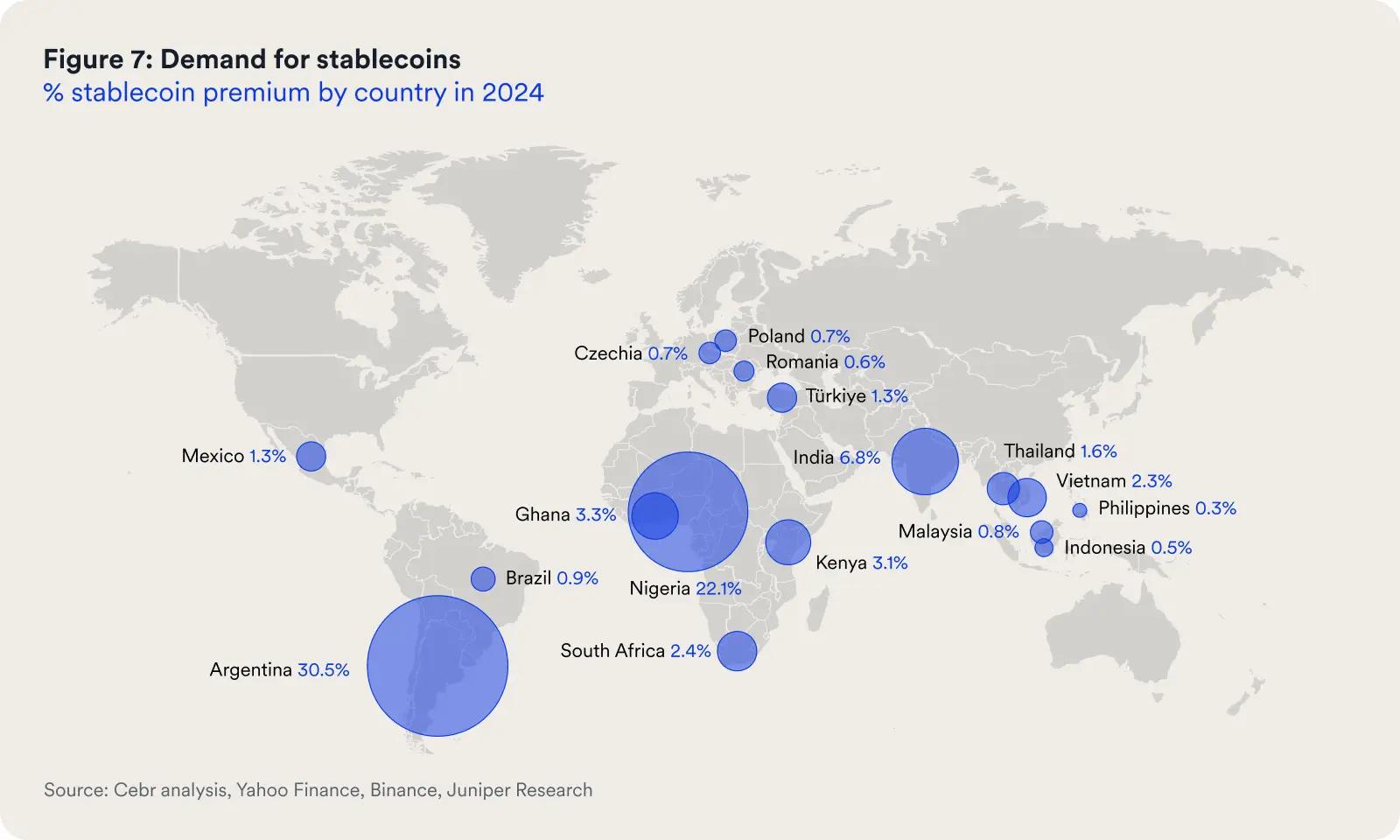
In nations with runaway inflation, such as Argentina (143% inflation rate in 2023), USD-pegged stablecoins (e.g., USDT, USDC) offer a lifeline:
- 60% of crypto transactions in Latin America involve stablecoins.
- Platforms like Bitso have seen transaction volumes surge as local currencies devalue.
5. E-Commerce Optimization
Stablecoins enhance e-commerce by:
- Reducing operational costs.
- Accelerating transaction processing times.
- Providing a smoother shopping experience.
👉 85% of merchants believe digital currencies will dominate payments within five years (Deloitte).
Stablecoins vs. Traditional Payment Systems
Feature
Stablecoins
Traditional Payments
Processing Speed
Instant
3-6 days (SWIFT)
Transaction Costs
Up to 99% cheaper
Higher, especially for small payments
Global Accessibility
Internet connection only
Limited by banking infrastructure
The Future of Global Payments
The stablecoin market is growing exponentially:
- Market Cap: $210 billion by the end of 2024, a 61% increase from the start of the year.
- Transaction Volume: Rising from $9.3 trillion (2023) to $27.1 trillion (2024).
- Visa’s Role: Handling $2.5 trillion in stablecoin transactions over 12 months, a 10x increase since 2020.
While the potential is enormous, the path to dominance requires:
- Regulatory Clarity: Regions like Europe (via MiCA legislation) and Latin America are leading the charge in creating favorable environments.
- Infrastructure Development: A robust and scalable ecosystem is essential for global adoption.
A Catalyst for Decentralized Finance
Stablecoins are more than just a payment tool; they are the foundation for a more efficient, decentralized financial ecosystem. As adoption grows, stablecoins promise to bridge the traditional and digital financial worlds, paving the way for a new era of global commerce.
Disclaimer
This content is for informational purposes only and does not constitute financial advice. Please consult a professional before making any financial decisions.